Autumn by the Water — History & Facts
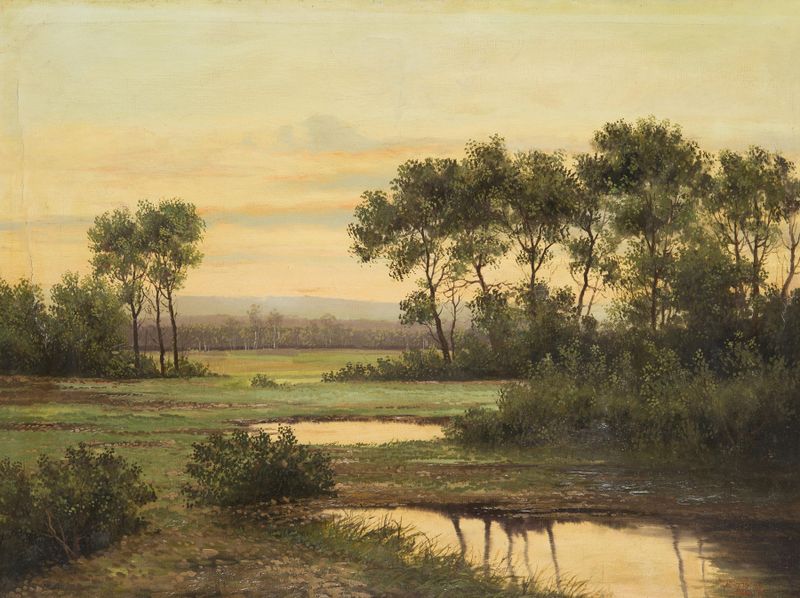
Did the painter know this moment would outlive them? The tranquility of a serene autumn landscape juxtaposes the underlying violence of change, urging us to confront the inevitable passage of time. Look closely at the canvas, where the rich, warm hues of burnt orange and deep gold reflect the embrace of fading daylight. Notice how the water, a mirror to the sky’s soft palette, shimmers with life, teetering on the brink of stillness. The composition draws your gaze towards a solitary figure standing at the water’s edge, their silhouette intricately defined against the vibrant backdrop, suggesting a moment of introspection.
The brushwork is both tender and assertive, with thick strokes creating a dynamic texture that evokes the crispness of the season. Yet, beneath this picturesque scene lies a tension rooted in the seasonal shift—an acceptance of the cycle that blends beauty with its inevitable decay. The stillness of the water contrasts with the rustling leaves that hint at an approaching storm. This duality of peace and impending chaos invites the viewer to reflect on their own experiences with transformation, revealing an emotional depth that resonates with the human condition.
The solitary figure, framed by nature’s splendor, embodies a poignant moment between nostalgia and the unknown. Ludvík Barták painted this work in a period where he sought to convey profound emotions through nature's lens. Living in the early 20th century, surrounded by the tumult of change in Europe, he was influenced by the shifting artistic movements that emphasized expression and abstraction. While the exact date of this painting is unknown, the themes resonate with a time marked by both beauty and unrest, capturing a fleeting moment that speaks to the heart of existence itself.