Winter Early Evening — History & Facts
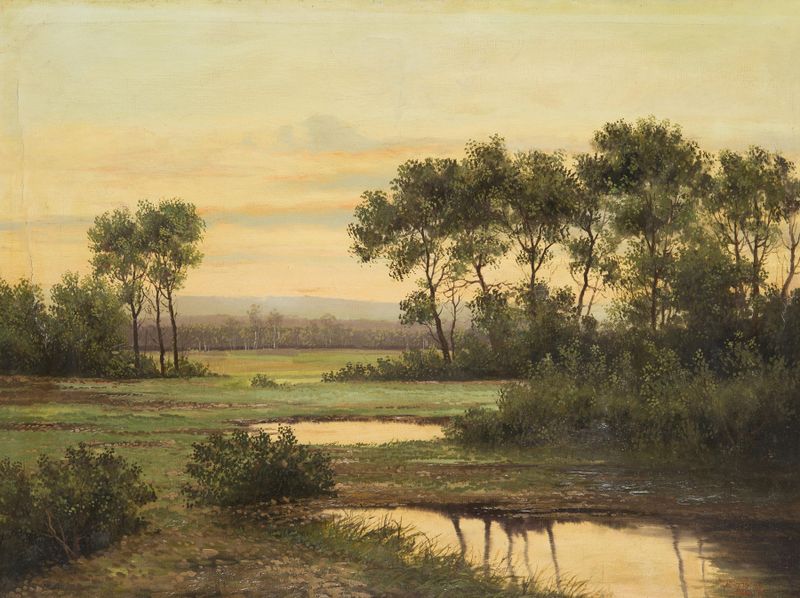
Could beauty survive in a century of chaos? In the stillness of a winter evening, one can sense the weight of destiny painted in subtle hues. As you gaze into the canvas, look to the gentle gradient of the sky, shifting from muted blues to soft, dusky pinks. The brushwork is delicate, almost whispering across the surface, evoking the ephemeral nature of twilight. Notice how the snow-covered ground reflects this light, creating a serene contrast with the dark silhouettes of trees lining the horizon.
Each element is thoughtfully layered, drawing your eye along the winding path that invites you deeper into the heart of the scene. Yet, beneath the tranquil beauty lies an undercurrent of tension. The coldness of the landscape hints at isolation, suggesting a world holding its breath, caught between the warmth of fading light and the encroaching darkness. The starkness of the trees, like sentinels, stands in poignant contrast to the ethereal sky, perhaps representing the struggle between hope and despair in a tumultuous era.
Each brushstroke conveys the dichotomy of serenity and unease, inviting contemplation of nature's resilience. During the time this piece was created, Ludvík Barták navigated the shifting tides of the art world, influenced by the socio-political upheavals of his time. The atmosphere was marked by uncertainty, yet the artist found inspiration in the beauty of the world around him. This work reflects his ability to encapsulate both the profound stillness of nature and the intricacies of human emotion in an ever-changing landscape.