Autumn Landscape with Hunters — History & Facts
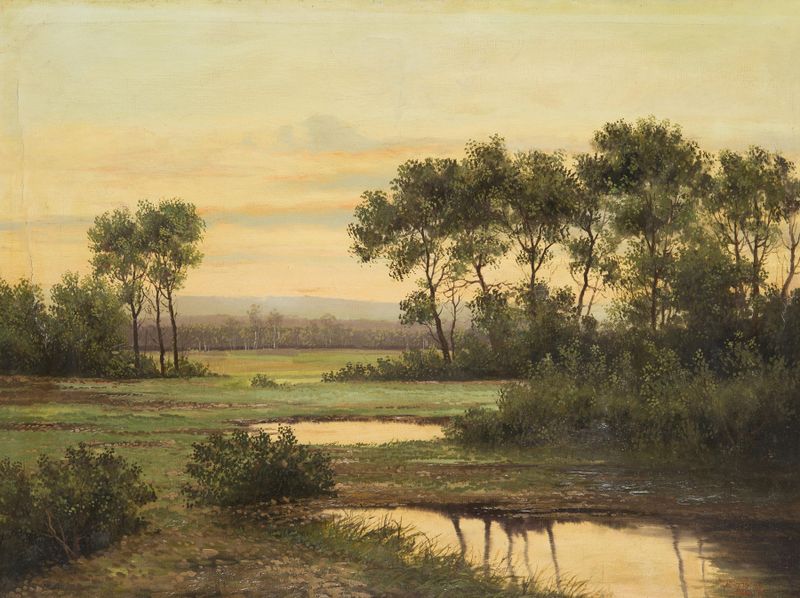
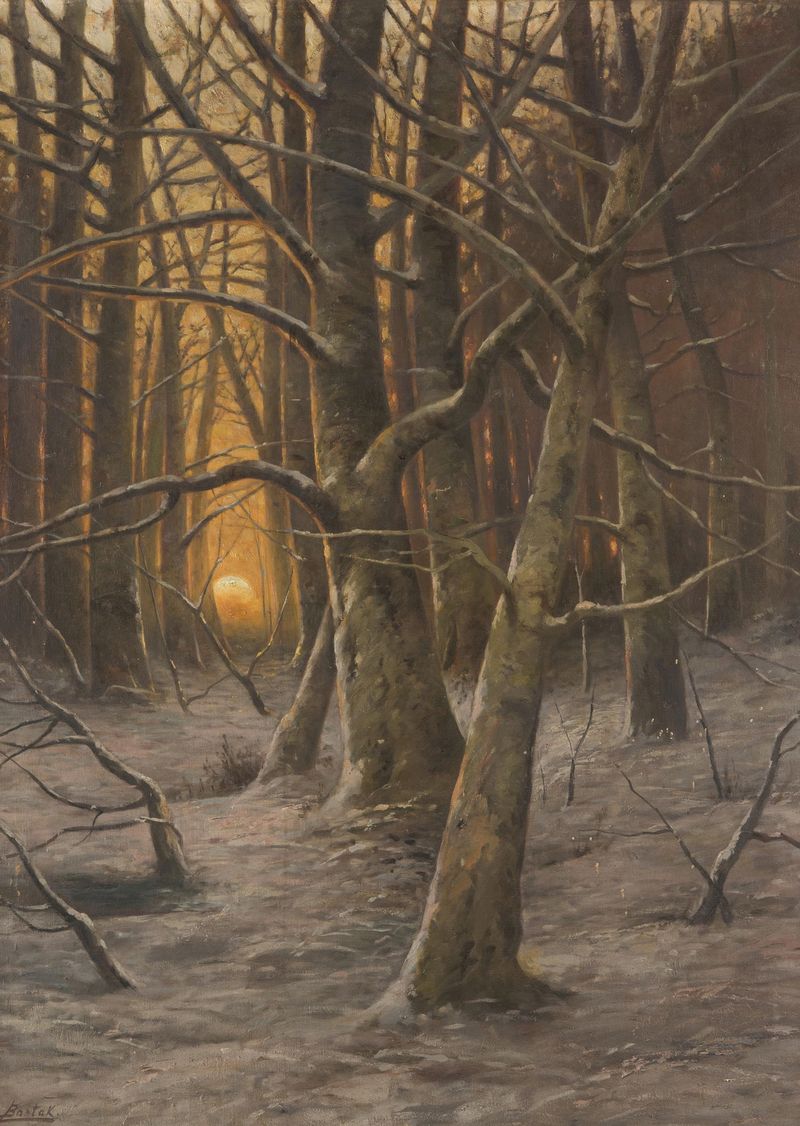
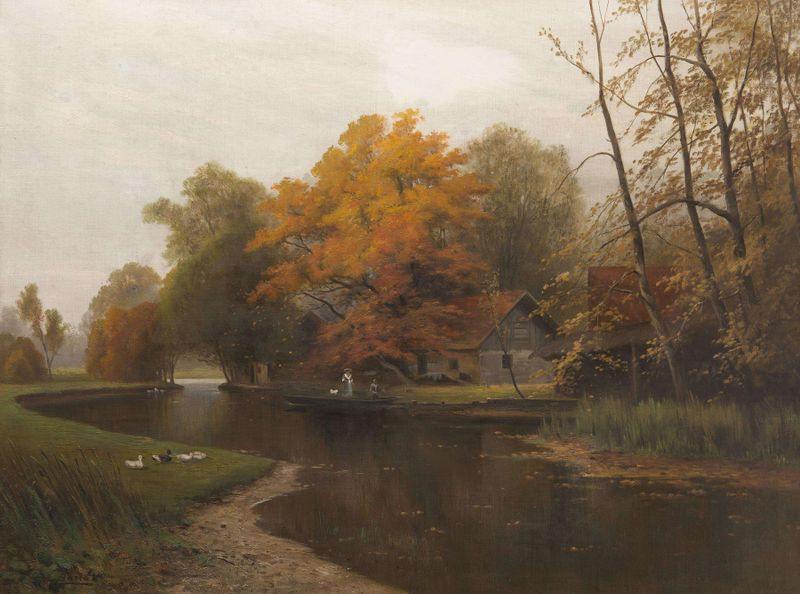
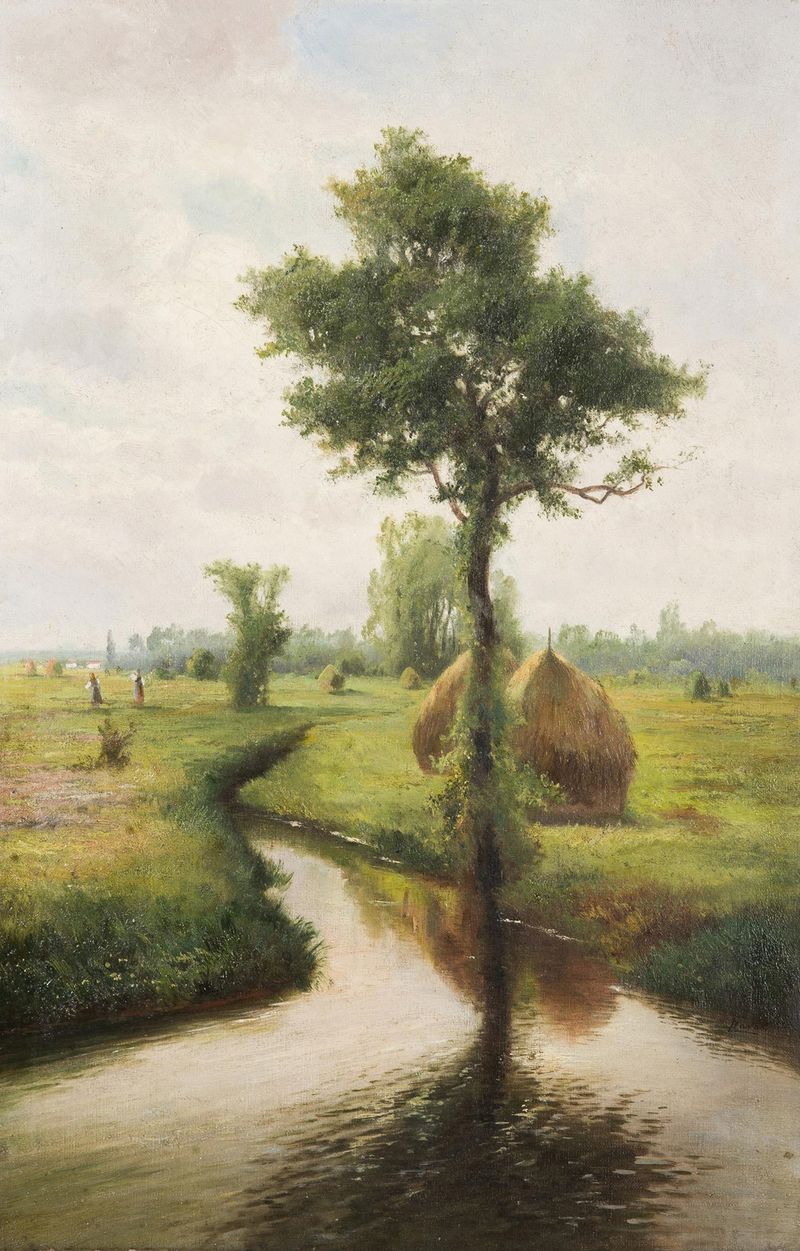
This profound notion resonates in the untouched depths of desire captured within the frame of this remarkable landscape. Look closely at the gentle slope on the left, where the warm hues of autumn foliage blend seamlessly with the cool shadows of the forest. Notice how the hunters, poised with anticipation, are almost silhouetted against the vibrant backdrop, their figure a contrast of earthly tones against the sky's fiery palette. The brushwork, both fluid and deliberate, creates a sense of movement in the leaves, suggesting the whisper of a breeze that teases the stillness of the moment. Beneath the surface of this picturesque scene lies a palpable tension between the tranquil beauty of nature and the predatory instincts of humanity.
The hunters stand as symbols of longing, not just for the game they pursue but for a deeper connection to the wild, to the primal. Their gaze, fixated on an unseen target, reveals an insatiable desire that mirrors the fleeting beauty of the season—each moment vibrant yet tinged with inevitability, a reminder that all things must come to an end. Ludvík Barták painted this piece during an era marked by shifting artistic currents, likely influenced by the rise of Romanticism in the late 19th and early 20th centuries. Crafting his vision amidst the backdrop of a changing Europe, he explored themes of nature and humanity, reflecting both the cultural tides of his surroundings and his personal journey as an artist.
In this work, he combines observation with emotion, capturing a fleeting moment that resonates with our own desires and introspections.