Winter Landscape — History & Facts
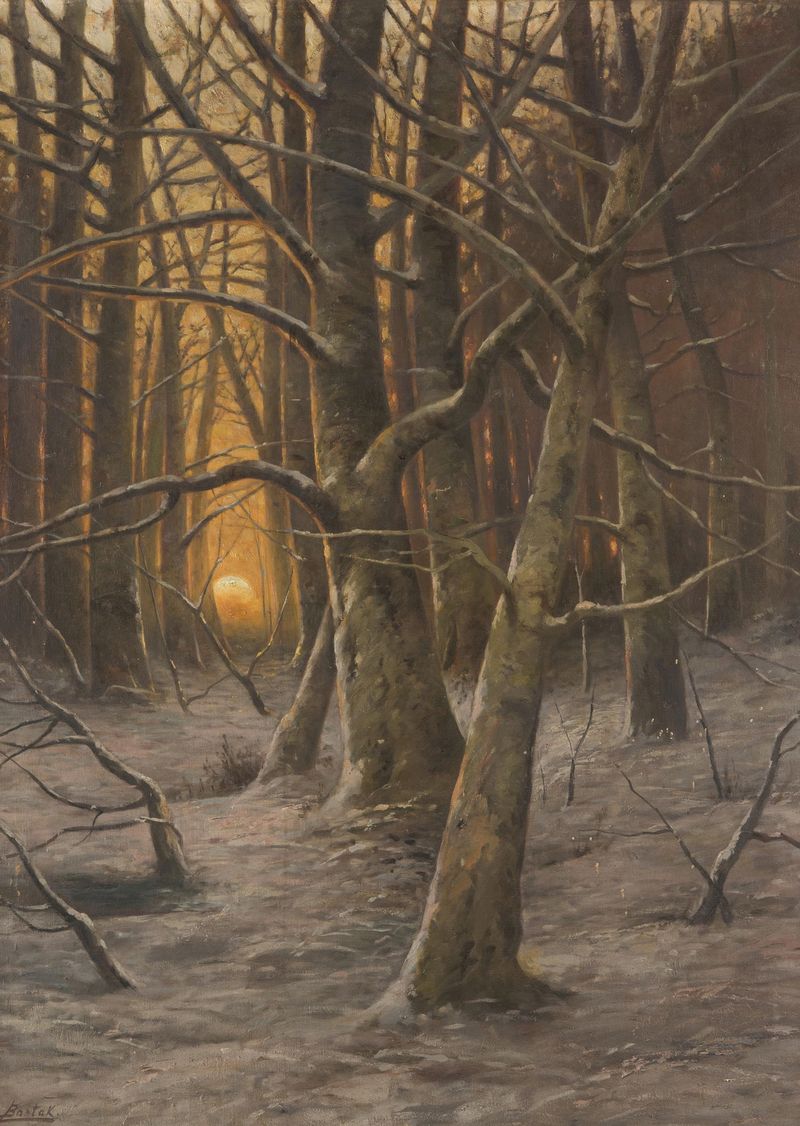
In the stillness of winter, a longing whispers through the crystalline air, inviting us to ponder the unseen stories within a landscape blanketed in white. Look to the foreground where soft, muted tones blend seamlessly with an expanse of snow. Notice how the gentle brushstrokes create a sense of depth, leading your eye towards the horizon. The cool blues and grays contrast sharply with flecks of warm ochre, suggesting the presence of life beneath the frost.
Each element—the bare trees, the distant hills—stands in quiet dialogue, their subtle gestures revealing the interplay between desolation and the enduring hope of renewal. Beneath the surface, this winter scene encapsulates an emotional tension. The starkness of the trees, stripped of their leaves, speaks to vulnerability, while the expansive sky hints at infinite possibilities. The mingling of light and shadow suggests a moment caught between day and dusk, evoking a bittersweet nostalgia.
As silence envelops the landscape, we are drawn into a contemplation of absence and the promise of return, where longing finds its voice in the heart of winter. During the time Winter Landscape was created, Ludvík Barták was deeply engaged with the themes of nature and human emotion. Although the exact date remains uncertain, he painted in a period marked by a growing interest in capturing the essence of feelings through landscapes. As the art world began shifting towards modern interpretations, Barták's work resonated with a raw sincerity, reflecting both personal and universal experiences of solitude and reflection.