Autumn Foliage — History & Facts
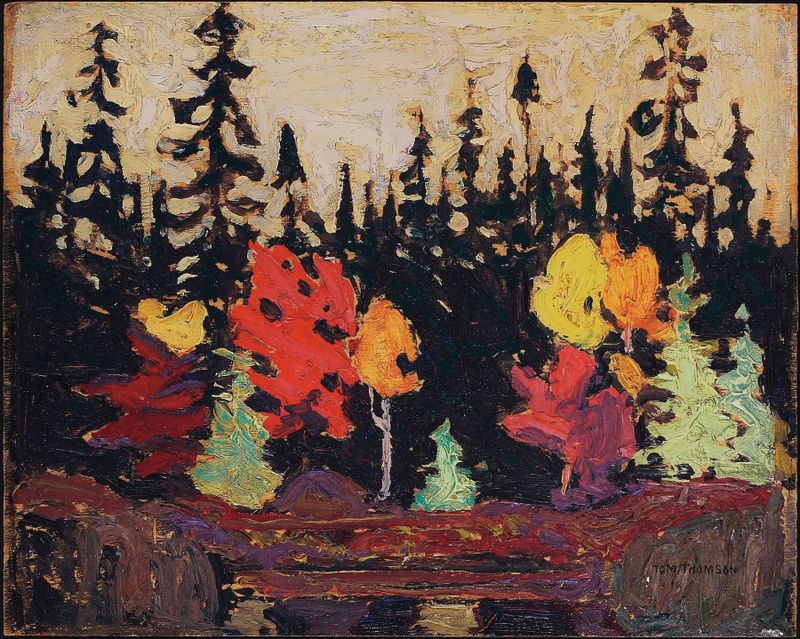
Could a single brushstroke hold eternity? In Autumn Foliage, Tom Thomson captures the fleeting beauty of nature's transformation with a silence that resonates deeply, inviting viewers into a moment suspended in time. Look closely at the canvas, where vibrant reds and golds dance across the surface, drawing your eye to the heart of the composition. Notice how the brushwork varies—some strokes are delicate and feathered, while others are bold and sweeping, suggesting both the gentleness and ferocity of autumn winds. The interplay of light and shadow conveys depth, creating an illusion of movement within the foliage, as though the trees themselves are whispering secrets to one another. The emotional tension is palpable, rooted in the contrast between the lush warmth of the leaves and the impending chill of winter.
Each color vibrates with a life that hints at both celebration and melancholy. The cycle of nature is embodied in this moment, as the beauty of the foliage signifies a transient glory, reminding us of the inevitability of change and the silence that follows the vibrant moments of our lives. In 1915, Thomson painted this piece during a time of great personal reflection, amid the untamed beauty of Algonquin Park in Canada. A founding member of the Group of Seven, he was deeply engaged in exploring Canadian landscapes and nature's emotional power.
His works from this period reflect not only his mastery of color and form but also his growing awareness of the quiet yet profound connection between humanity and the environment surrounding it.