The West Wind — History & Facts
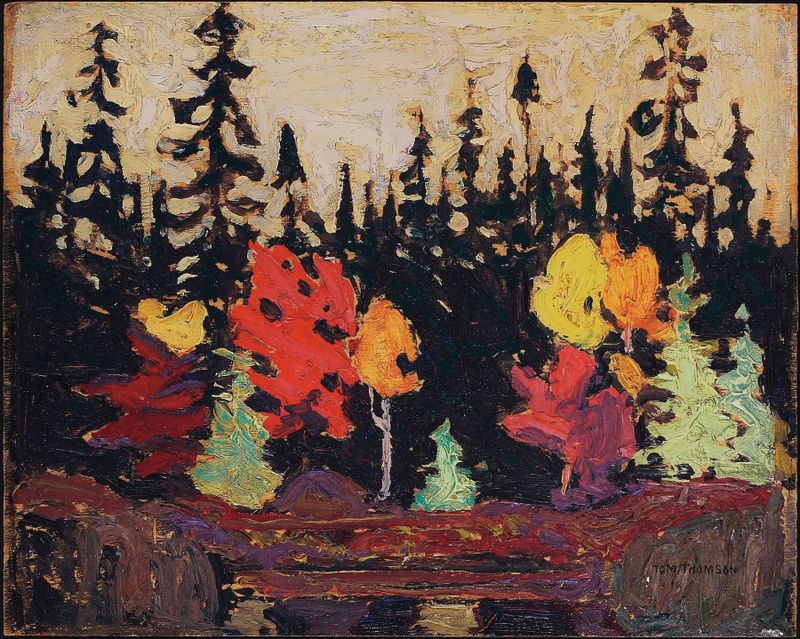
Can paint confess what words never could? In The West Wind, the vibrant hues whisper the secrets of a memory too weighty for language, inviting us to listen closely to the brushstrokes of the past. Look to the center where the wind sweeps through a dense thicket of evergreens, each tree bending in a graceful dance. Notice how the painter has employed a vivid palette of greens and dark blues, capturing the almost tactile essence of the forest as sunlight filters through the branches. The dynamic strokes create a sense of movement, painting not just the landscape but the very air around it—alive and pulsating with nature's energy.
This interplay of light and shadow gives depth, drawing the eye deeper into the canvas as if to chase the unseen breeze. Embedded in the artwork is a dialogue between stillness and turbulence, a contrast that mirrors the artist's own struggle with his inner turmoil. The trees, though swayed by the wind, stand resolutely, a testament to resilience against nature's force. Each brushstroke seems to echo a heartbeat, suggesting both the beauty and chaos of fleeting moments.
This tension resonates with the viewer, reminding us of the ephemeral nature of memory, as it bends and contorts over time like the trees in the wind. In the years 1916-1917, while working on this piece, the artist was deeply engaged in the Canadian wilderness, reflecting on his own experiences and the broader context of a world at war. Amidst personal challenges and the tumult of the Great War, he sought solace in nature, channeling his emotions into his art, which resonated with the spirit of the Group of Seven—a collective dedicated to capturing the Canadian landscape with raw, unfiltered honesty.