Black Spruce and Maple — History & Facts
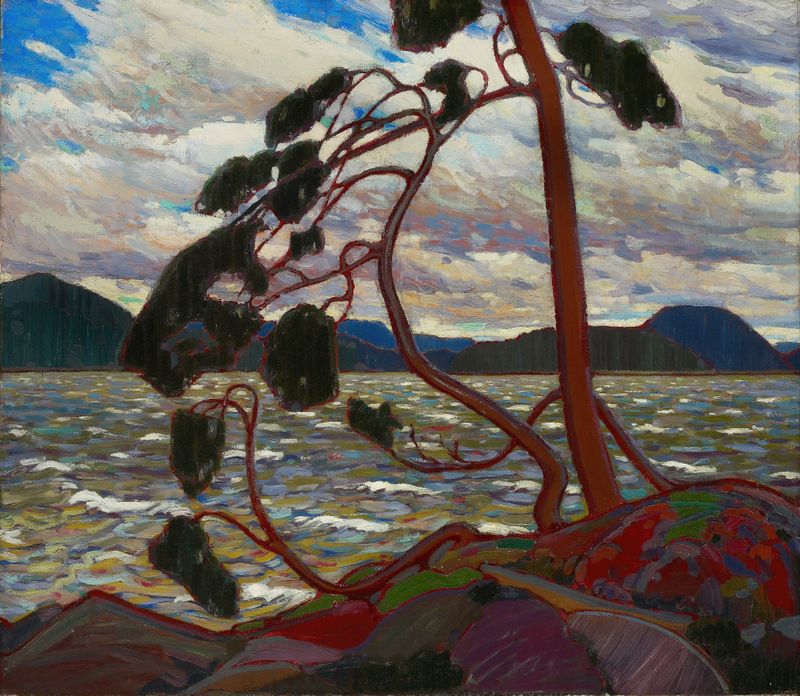
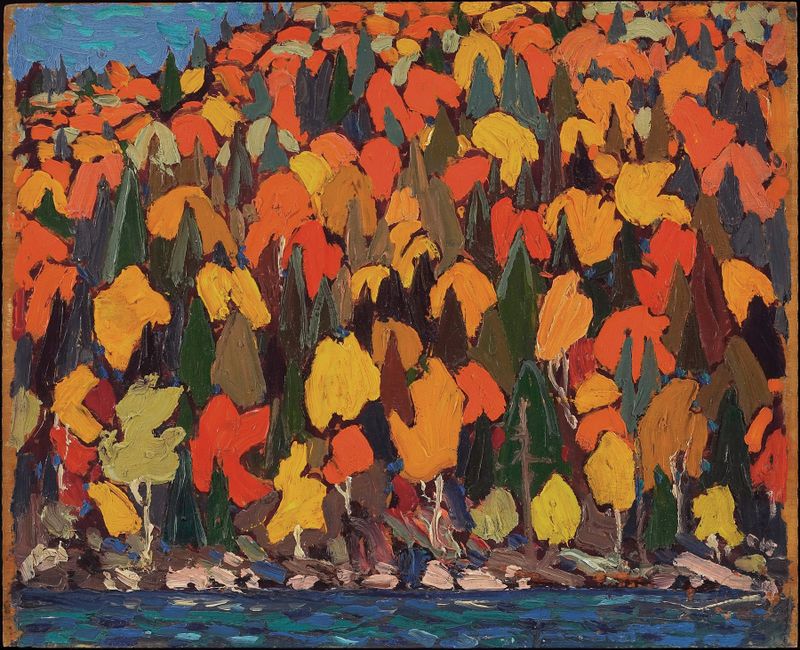
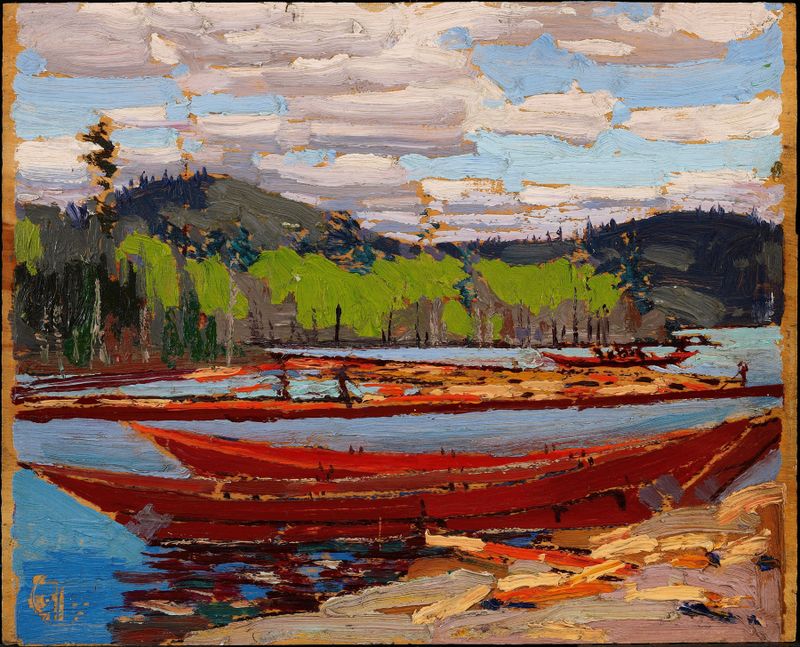
Can paint confess what words never could? The rich, deep hues of nature breathe a kind of life that language struggles to capture, hinting at untold stories nestled within the landscape. Look to the left, where dark, towering black spruces rise majestically, their jagged forms contrasting against the softer, warmer tones of the maple trees. Notice how the artist skillfully plays with the depth of color, ranging from the nearly inky greens of the conifers to the vibrant oranges and yellows of autumn foliage. The brushstrokes are both deliberate and fluid, creating an interplay between the sturdy trunks and the trembling leaves, reflecting a sense of movement that draws the eye deeper into the canvas. Yet it is in the delicate balance of light and shadow that one finds the emotional core of the piece.
The sunlight filters through the branches, creating dappled patterns on the forest floor, symbolizing the fleeting nature of beauty and existence. In this contrast, there lies a tension between solidity and transience, a reminder that even the most steadfast trees will eventually yield to time’s embrace. Each stroke carries a weight of introspection, inviting viewers to ponder their own place within the cycle of nature. Created in 1915, this work emerged during a transformative period for its creator, as Tom Thomson was deeply engaged in the early Canadian art scene, exploring the wilderness of Ontario.
His experiences in the Algonquin Park region profoundly influenced his artistic vision, and he became a pivotal figure in the Group of Seven, a collective dedicated to capturing the essence of the Canadian landscape. The world was on the brink of change, with the upheaval of World War I casting a shadow over society, yet in this painting, the artist found solace and a timeless connection to nature.