Early Snow, Algonquin Park — History & Facts
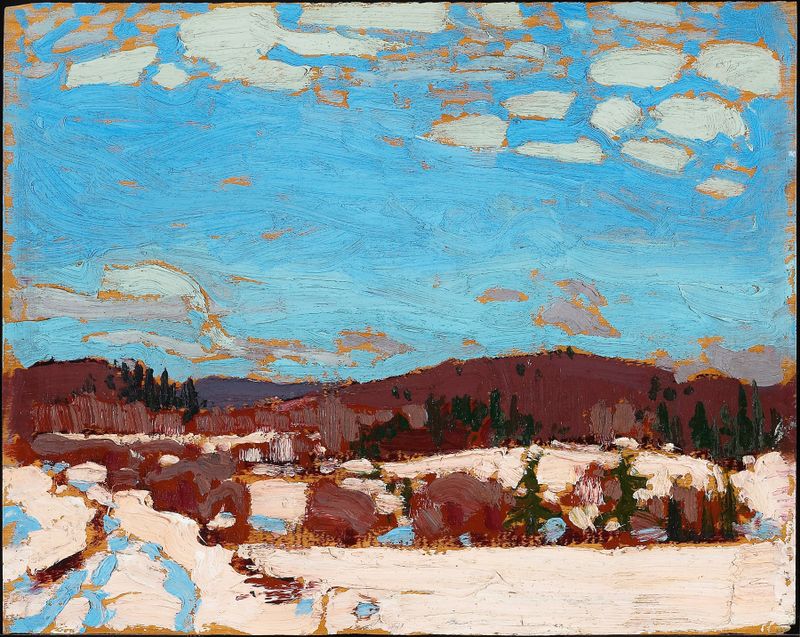
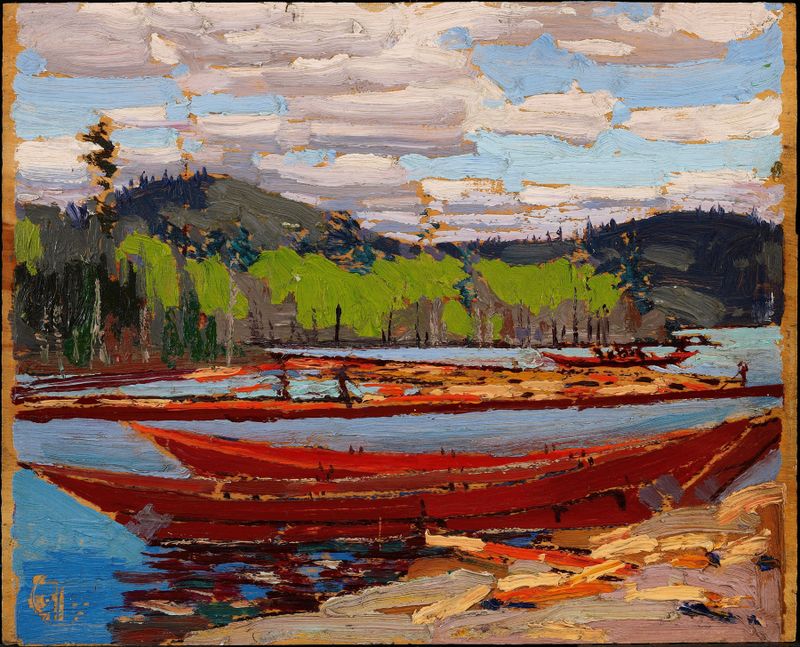
In the stillness of winter, the landscape whispers secrets of betrayal, both personal and profound. The chill in the air seems to echo the weight of unspoken sorrows, urging us to peer deeper into the tranquility of a snowy scene that belies its emotional undertones. Look to the foreground where the drifts of snow blend with the dark forms of evergreens, their stark silhouettes cutting through the blank canvas of white. Notice how the light dances off the snow’s surface, glimmering like fleeting memories, while deeper shadows loom ominously in the background.
Thomson's use of vibrant blues and soft whites contrasts with the sharpness of the tree trunks, creating a tension that invites the viewer to linger, hinting at the complexities hidden under this serene facade. Amid the beauty, there lies a sense of loss and isolation. The quietness of the park, rather than comforting, feels suffocating, suggesting unfulfilled desires and unresolved conflicts. The juxtaposition of the bright snow and the dark woods reflects a betrayal of nature’s calm, as if the landscape itself mourns an undisclosed grief that lingers beneath the surface.
Each element in the composition plays a role in this emotional narrative, revealing a deeper story that resonates with the human experience. In 1914, the artist immersed himself in the Canadian wilderness, finding solace and inspiration in its beauty. This year marked a pivotal moment in Thomson's life, as he faced personal struggles while navigating the emergence of the Group of Seven, who sought to define Canadian art against the backdrop of a changing world. Early Snow, Algonquin Park stands as a testament to his profound connection with nature, encapsulating both the clarity and complexity of his emotions during a time of uncertainty.