Autumn Landscape — History & Facts
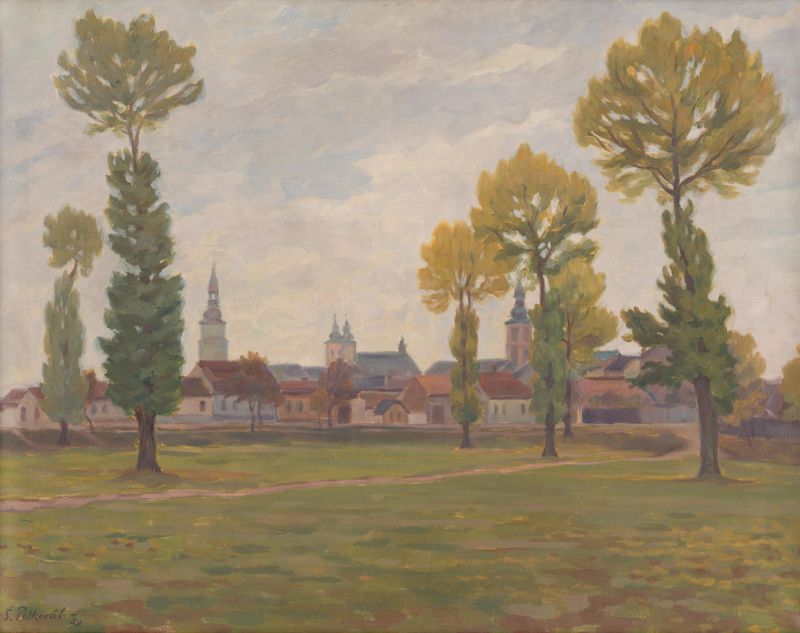
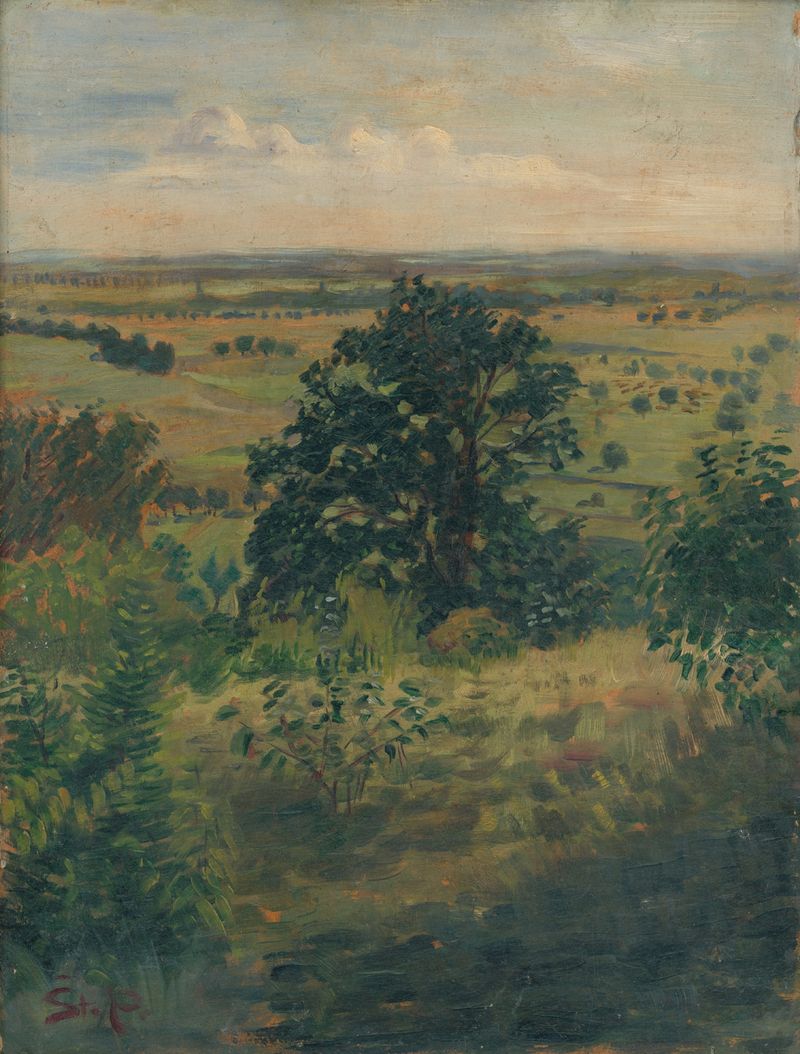
Who listens when art speaks of silence? In Autumn Landscape, the stillness wraps around us like a shroud, inviting introspection and evoking a deep, haunting grief that lingers in the air. Look to the foreground, where the trees stand tall, their leaves an array of burnt oranges and muted yellows, whispering tales of change and loss. The brushstrokes are both deliberate and fluid, as nature blends into itself, creating a harmony that belies the sorrow inherent in autumn’s inevitable farewell. Notice how the soft light filters through the branches, dappling the ground—a gentle reminder of fleeting moments rather than a catastrophic end. Yet, beneath the serene beauty lies a contrast between the vibrant foliage and the subtle decay of the landscape.
The horizon stretches wide, hinting at a vast emptiness that mirrors the artist's exploration of solitude. Each leaf that falls may be seen as a symbol of what has been lost, while the fading light serves as a metaphor for the transient nature of life itself. This interplay of color and emotion speaks to a deeper narrative, one that intertwines the beauty of nature with the weight of remembrance and sorrow. Štefan Polkoráb painted Autumn Landscape in 1927, a time when he sought to capture the essence of his Slovak homeland.
Following the tumult of World War I, artists were grappling with themes of loss and identity, and Polkoráb was no exception. His work emerged during a period of personal and cultural reflection, where the reconciliation of beauty and grief became both a personal journey and a collective dialogue within the realm of art.