Autumn trees — History & Facts
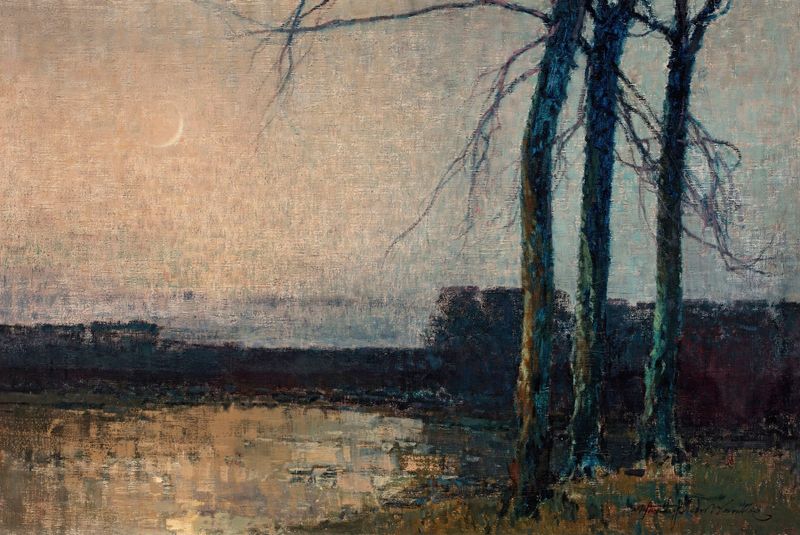
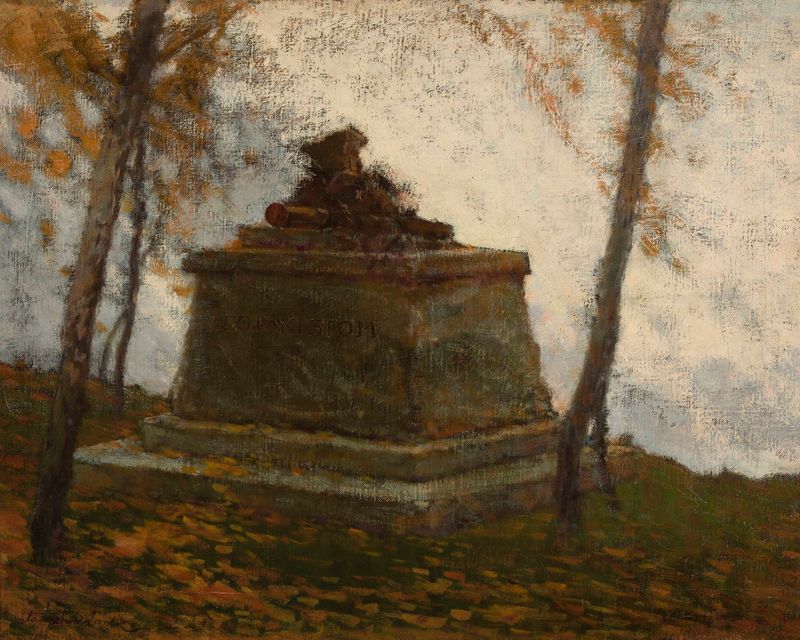
In the stillness of autumn, when nature sheds its vibrant cloak, the world speaks in hushed tones. There is a delicate yet profound movement in the air, an unspoken dialogue of transformation that invites contemplation. Look to the left, where the trees stand like sentinels, their branches reaching out in a gentle sway, painted in rich hues of amber and ochre. The artist’s brush has captured the essence of wind, evident in the soft, flowing strokes that suggest a moment caught on the cusp of change.
Notice how the light filters through the foliage, illuminating the scene with a warm glow that contrasts with the cool shadows lurking beneath the canopy, creating layers of depth that pull you into this tranquil, yet dynamic setting. Here, the movement of the leaves whispers stories of change, evoking feelings of nostalgia and impermanence. The juxtaposition between the vibrant colors of the trees and the encroaching shadows suggests a tension between life and decay, beauty and loss. Each brushstroke encapsulates the fleeting essence of autumn, inviting viewers to reflect on their own cycles of change and the quiet confessions that accompany them. In 1920, Władysław Wankie painted this serene landscape during a time of personal and artistic exploration.
Having witnessed the aftermath of World War I, the artist found solace in nature, using his canvas to express the emotional currents of the era. As the world grappled with loss and renewal, Wankie turned to the landscapes around him, creating works that resonated deeply with the human experience of transition.