Sea and a sail boat — History & Facts
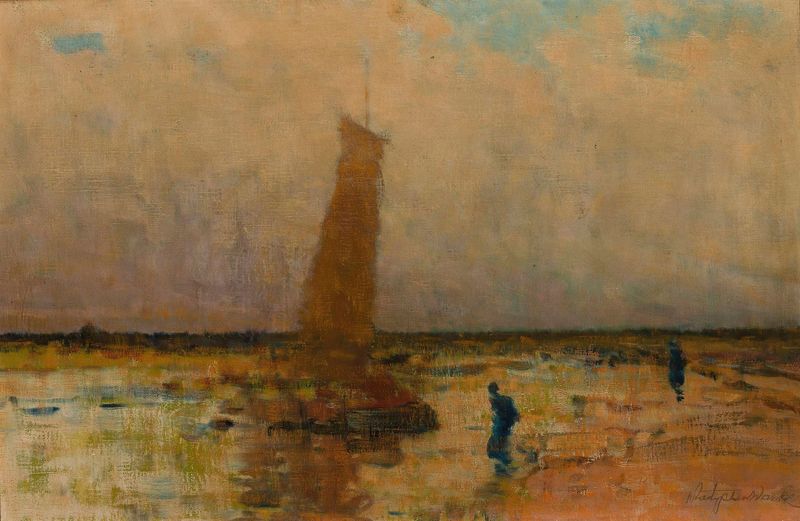
Where does light end, and longing begin? In a world where horizons blur into an endless sea, the essence of melancholy finds its voice. Focus on the gentle undulation of the waves across the canvas, where shimmering blues and greens meld effortlessly. Notice how a solitary sailboat, mere strokes of white, emerges against the vast expanse, a fragile vessel amidst the vastness. The light casts a soft glow, illuminating parts of the water, evoking a sense of calm yet hinting at the vast emptiness surrounding the tiny craft. In this artwork, the contrast between the sea and the sailboat suggests a poignant narrative of solitude.
The boat, representing a journey or quest, juxtaposes against the infinite water—a symbol of dreams and desires unfulfilled. The light plays a crucial role; it’s both a guide and a reminder of the elusive nature of human aspirations, where the pursuit of freedom often feels just out of reach. Władysław Wankie painted this piece during a transformative era in the early 20th century, amidst a burgeoning art scene influenced by Impressionism. Living in the dynamic cultural landscape of Poland, his works often reflected the tension between nature and human existence.
Wankie’s exploration of light and color in Sea and a sail boat captures a moment of introspection, inviting viewers to ponder their own journeys upon the vast sea of life.