Avenue of Trees — History & Facts
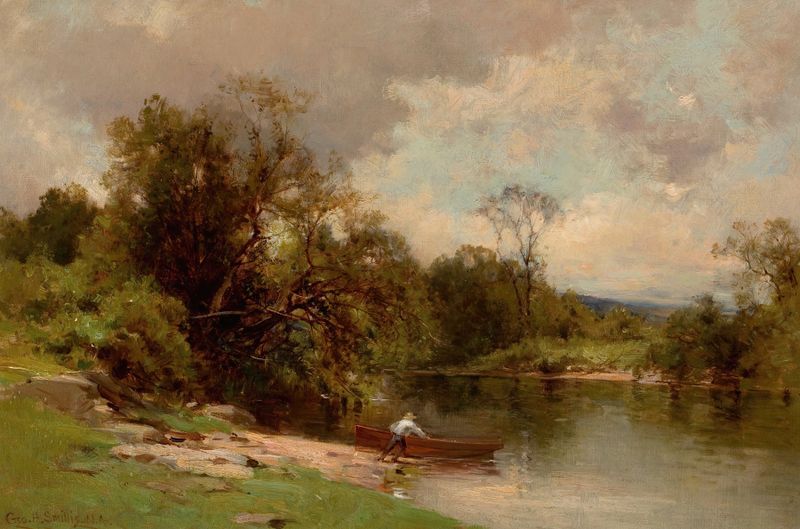
In that stillness, a world unfolds, breathing quietly beneath the surface of paint. Each brushstroke becomes a whisper, inviting contemplation and reflection. Look to the left at the looming trunks of the trees, their bark textured and rich, grounding the composition in earthly stability. As your gaze travels upward, notice how the interplay of light and shadow creates a dappled effect, illuminating the serene path that stretches into the distance.
The use of green hues, mingled with soft browns and hints of sunlight, evokes a sense of lush tranquility, making the viewer feel both present and at peace amidst nature's embrace. Beneath the calm exterior lies a deeper conversation about solitude and the passage of time. The trees, steadfast guardians of the path, seem to share secrets with the viewer, hinting at stories of those who have walked this way before. The soft brushwork suggests movement, yet the scene remains frozen — a moment caught between the past and the present, between silence and the whispers of memory. In 1878, George Henry Smillie painted this piece during a period of great transformation in American art.
The Hudson River School had already paved the way for a deeper appreciation of nature, and Smillie’s work reflects that influence while also hinting at the burgeoning shift toward Impressionism. He painted Avenue of Trees while developing his signature style, capturing the quiet beauty of landscapes that resonated deeply with a society increasingly fascinated by the natural world.