Gone Fishing — History & Facts
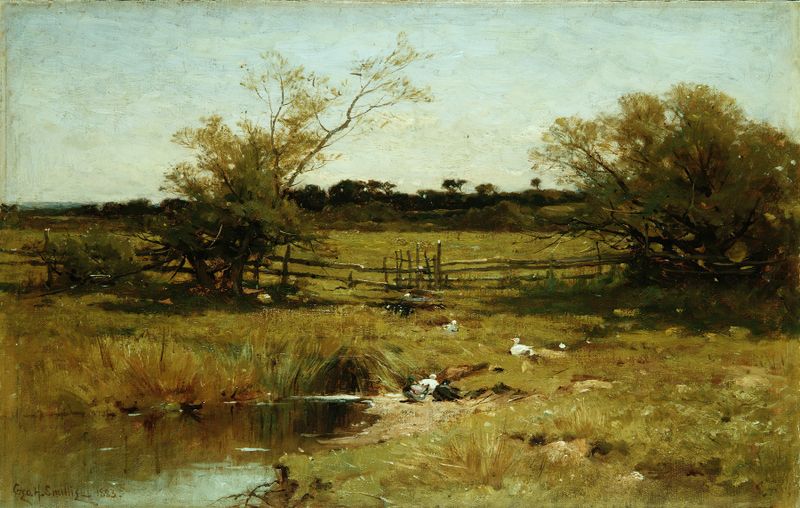
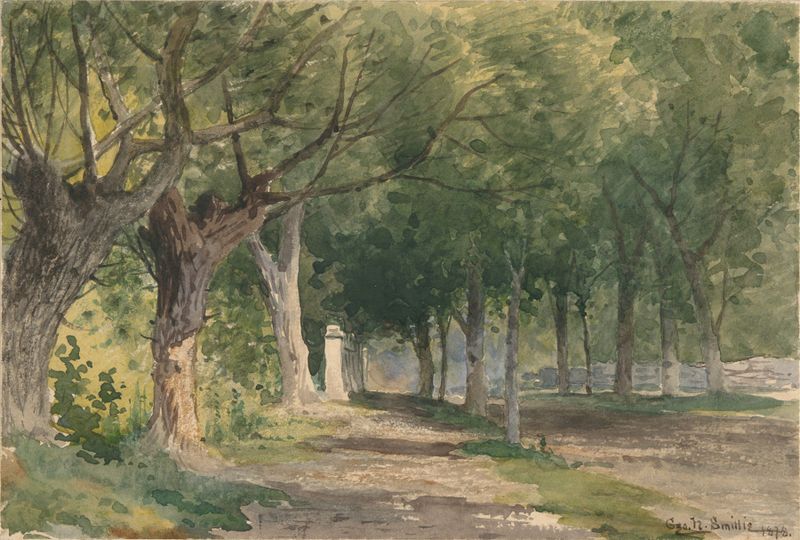
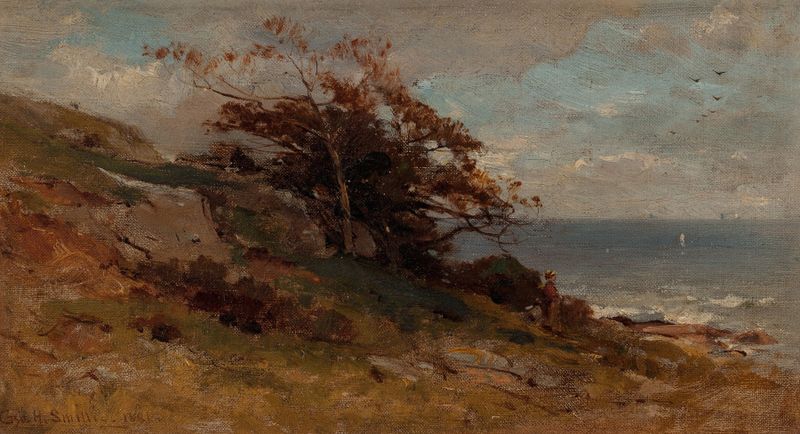
Who listens when art speaks of silence? In Gone Fishing, beauty is not just an aesthetic; it becomes a language of its own, whispering the tranquility of solitude and the gentle rhythms of nature. Look to the left at the serene figure of a fisherman, his silhouette wrapped in soft hues of blue and green, a perfect harmony against the backdrop of a still, reflective lake. The brushwork is delicate, conveying the essence of the water’s surface with shimmering strokes that catch the light just so. Notice how the dappled sunlight filters through the trees, casting playful shadows that dance around the scene, igniting the landscape with life while simultaneously evoking a sense of calm.
Such a composition draws the eye inward, inviting viewers to linger in the moment. Beyond the immediate beauty lies a profound commentary on isolation and introspection. The fisherman, alone, embodies both the joy and the weight of solitude. The stillness of the water mirrors the quietude of his thoughts, while the surrounding nature seems to protect this moment, creating a sanctuary where time pauses.
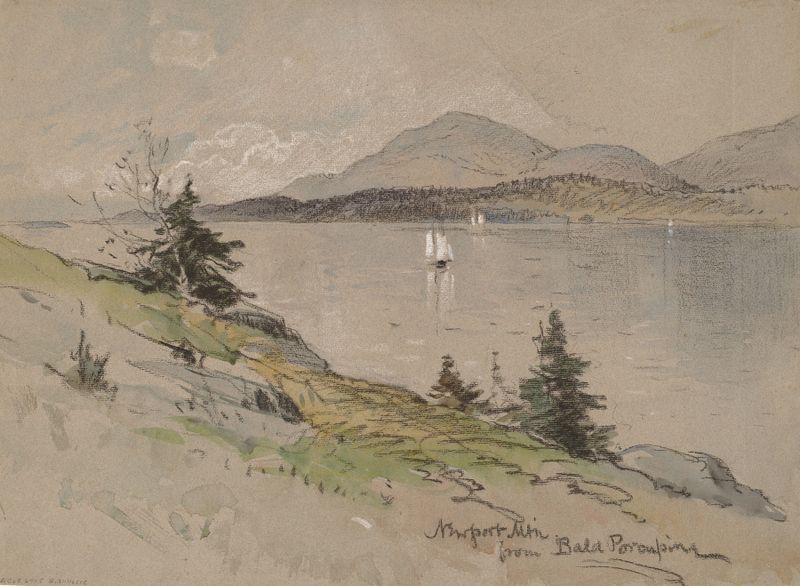
The juxtaposition of light and shadow speaks of inner conflict—between a yearning for connection and the solace found in solitude—echoing a universal human experience. At the time he painted this work, the artist was likely exploring the intersection of realism and impressionism, reflecting the evolving art world of the late 19th century. Living and working in the United States, Smillie captured the beauty of American landscapes, drawing inspiration from his surroundings and a growing appreciation for nature's simplicity. This painting, though undated, reflects not just the artist's skill but also a cultural moment that celebrated the introspective journey of the individual.