Backyard of a Butcher’s Shop — History & Facts
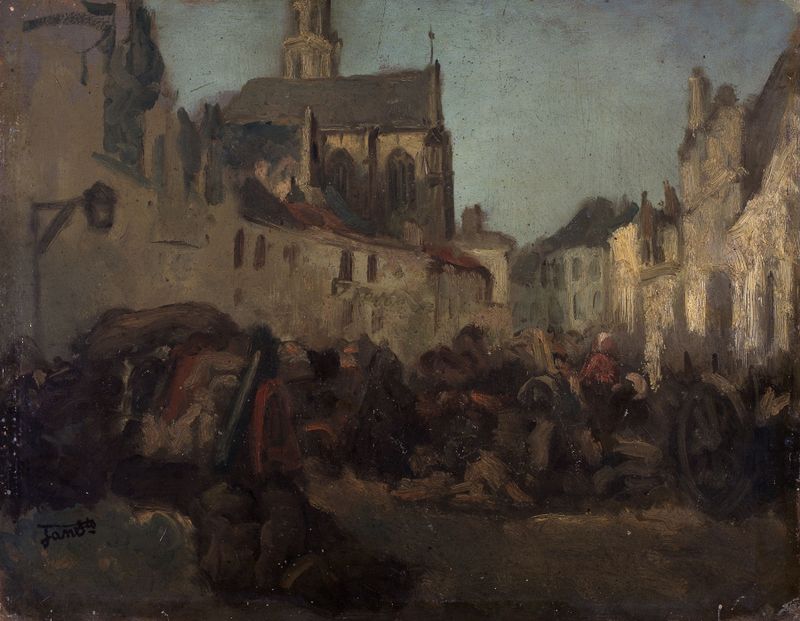
In the quiet aftermath of life’s dismissals, we often uncover the profound pain beneath the surface of the everyday. Focus on the stark contrast in this piece, where the ghastly hues of red and muted earth tones emerge from the chaos of a butcher's world. Look to the left, where shadows linger around a weathered table, hinting at the remnants of labor and life. The composition feels cramped, with the cluttered tools of the trade intertwining with fragments of flesh and bone, evoking a visceral discomfort that stirs the viewer's curiosity.
Each color choice amplifies the emotional weight; the deep crimson speaks to sacrifice and loss, while the grays suggest a haunting stillness. Yet, beneath the surface lies a poignant narrative of duality. The butcher's shop, a place of sustenance, also embodies a cycle of death. The remnants of slaughter juxtapose the vibrant life that once thrived, resonating with the viewer's own experience of grief and the acceptance of loss.
There’s an unsettling intimacy in the way the objects are arranged, suggesting not only what has been taken but also what remains — the invitation to confront mortality and the fragility of existence. In the 20th century, Jan Stobbaerts worked during a time of socio-political upheaval and transformation in art. Living in Belgium, he experimented with this layering of meaning and emotion in his works, seeking to capture the complexities of life and death. The butcher’s shop serves as a powerful metaphor in his oeuvre, reflecting his observations of human nature and societal struggles, while inviting viewers into a dialogue about the deeper truths hidden in the mundane.