The Market Place — History & Facts
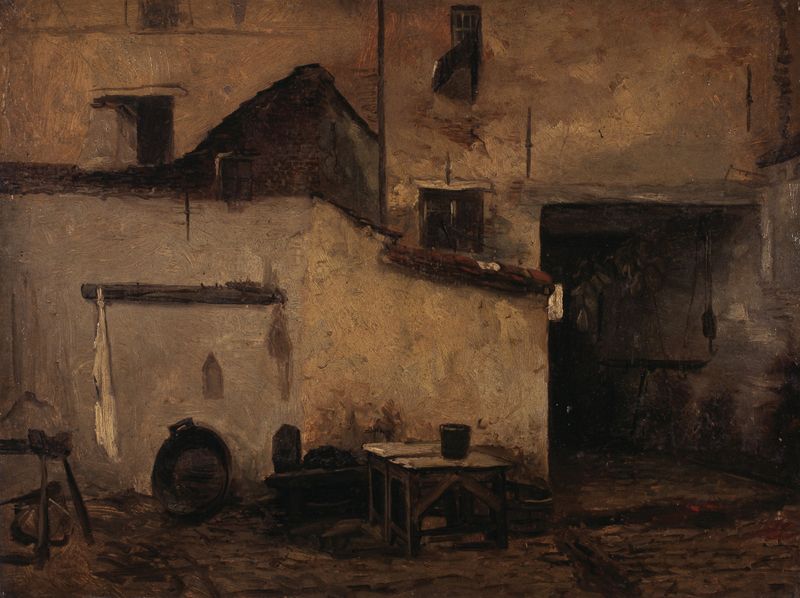
In Jan Stobbaerts’ The Market Place, the viewer is invited to explore the delicate interplay between commerce and the human condition, where vibrant colors suggest life yet conceal deeper anxieties. Look to the center of the composition, where bustling figures engage amidst a vivid market scene. The warm sunlight dances upon the merchants’ wares, illuminating their intricate details while casting long shadows that hint at unspoken stories. The artist’s careful use of rich, earthen tones juxtaposes the vibrancy of the market, creating a lifelike richness that pulls the viewer into its dynamic atmosphere.
Notice how the diagonal lines of the stalls guide your gaze, leading to the horizon where an expansive sky signals both possibility and the encroaching reality of the day. Yet beneath the cheerful surface lies a subtle tension. The expressions of the figures, though engaged in their exchanges, reveal hints of weariness amid the hustle. Stobbaerts captures the contrast between the joy of community and the isolation each person feels in their pursuit of sustenance.
This dichotomy is echoed in the interplay of light and shadow, where moments of brightness signify hope, while the darker corners of the painting suggest the burdens carried by those who inhabit this lively space. In the 19th century, Stobbaerts painted The Market Place during a time of social change and economic upheaval in Europe. Settled in the vibrant artistic milieu of the Netherlands, he was influenced by the burgeoning realism movement, which sought to depict everyday life with authenticity. As he brought this scene to life, Stobbaerts mirrored not only the vibrancy of the marketplace but also the underlying complexities of human existence in a world rapidly transforming.