Baldenweger Hut on the Feldberg — History & Facts
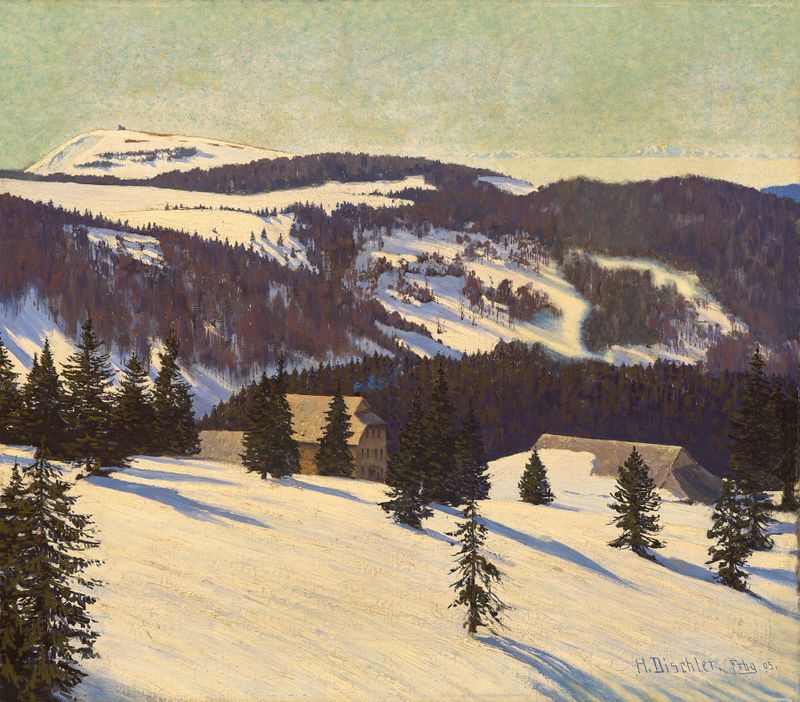
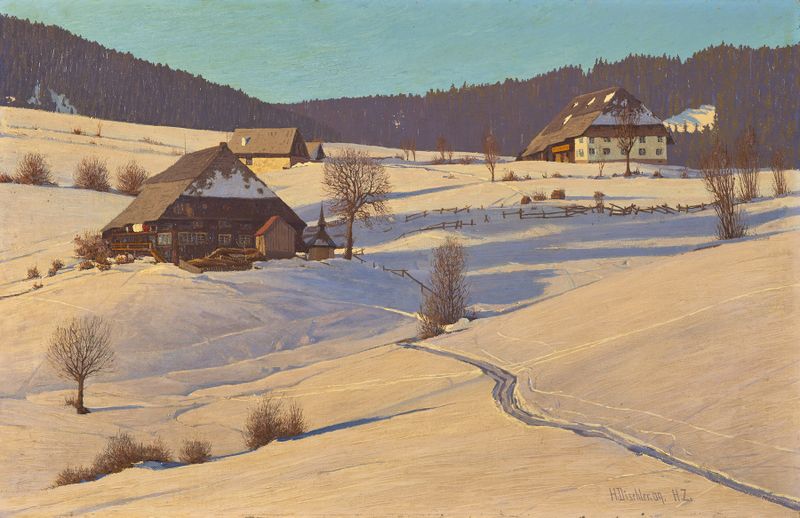
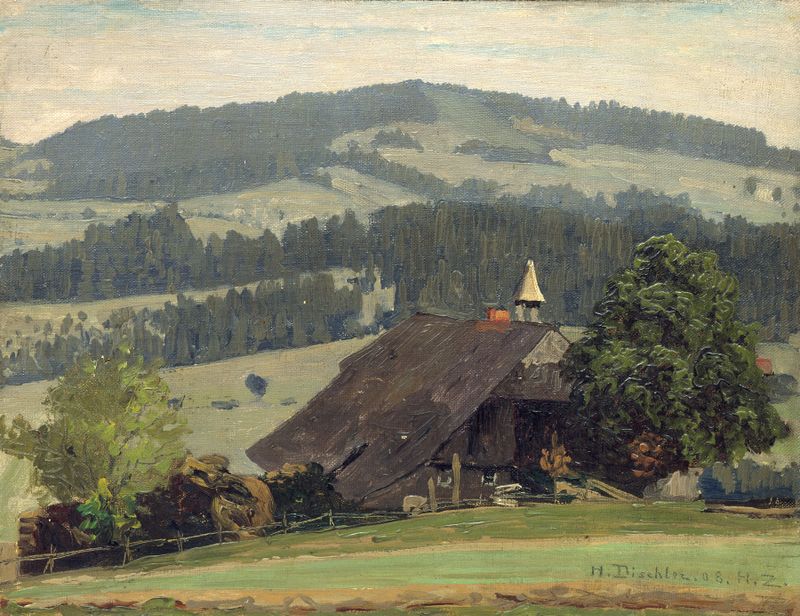
Each brushstroke is a testament to the passage of time, a silent witness to decay and the inevitable embrace of nature. Direct your gaze to the upper left, where the sun breaks through a shroud of clouds, illuminating the crumbling facade of the Baldenweger Hut. Notice how the golden light contrasts with the muted greens and browns of the landscape, breathing life into the weathered wood and stone. The meticulously rendered details draw you in; the peeling paint on the hut evokes memories of stories long forgotten, while the surrounding foliage encroaches, a gentle but firm reclaiming of space. As you explore further, observe the dichotomy between the vibrant flora and the dilapidated structure.
This juxtaposition speaks to the transient nature of human creation against the relentless march of nature. The soft brushwork around the edges contrasts with the sharper outlines of the hut, suggesting that while human presence may fade, the world continues to flourish. The emotional weight of decay is palpable, conveying a sense of nostalgia and acceptance, as the environment breathes life into what once was. In 1904, Hermann Dischler painted this evocative piece at a time when the Art Nouveau movement was gaining momentum, emphasizing natural forms and organic growth.
Residing in Germany, he witnessed a burgeoning interest in the interplay between nature and architecture. This work reflects both personal and societal themes, capturing a moment of introspection as the world around him evolved, yet remained at the mercy of nature's timeless process.