Winter Morning in the Black Forest — History & Facts
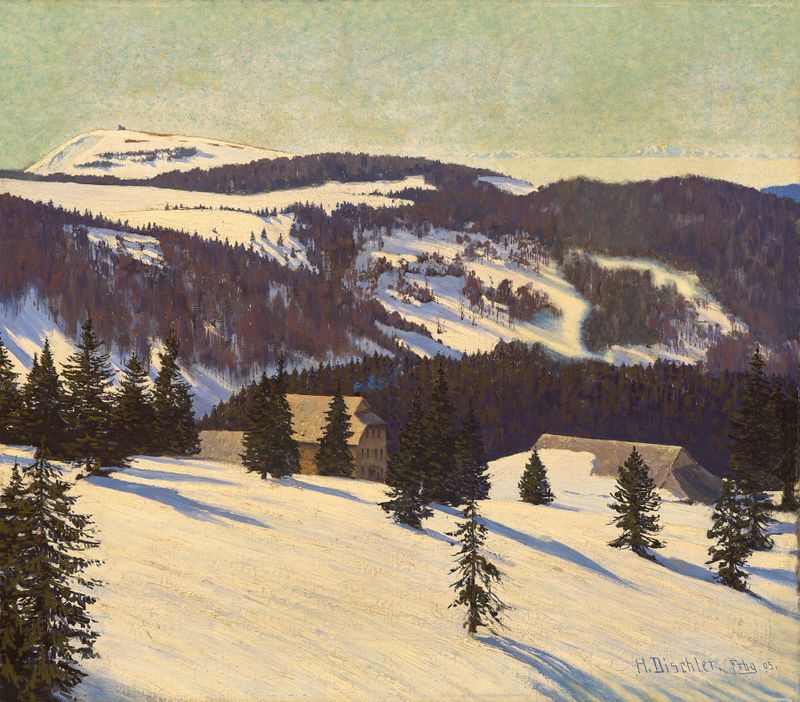
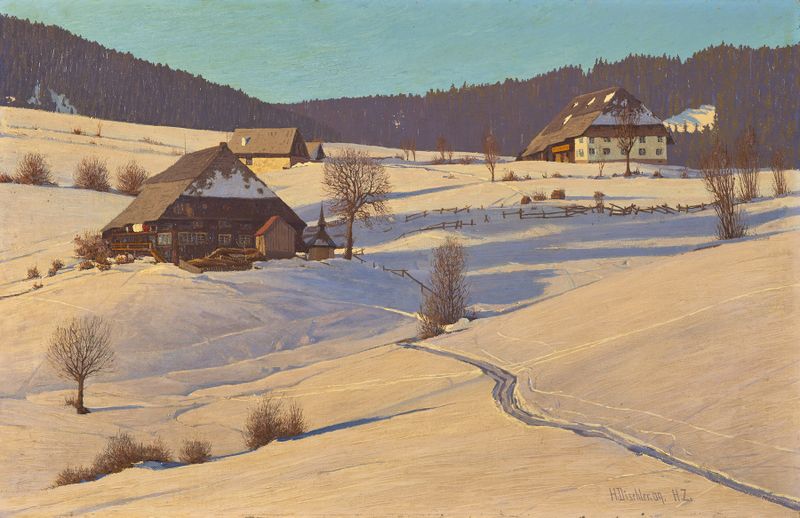
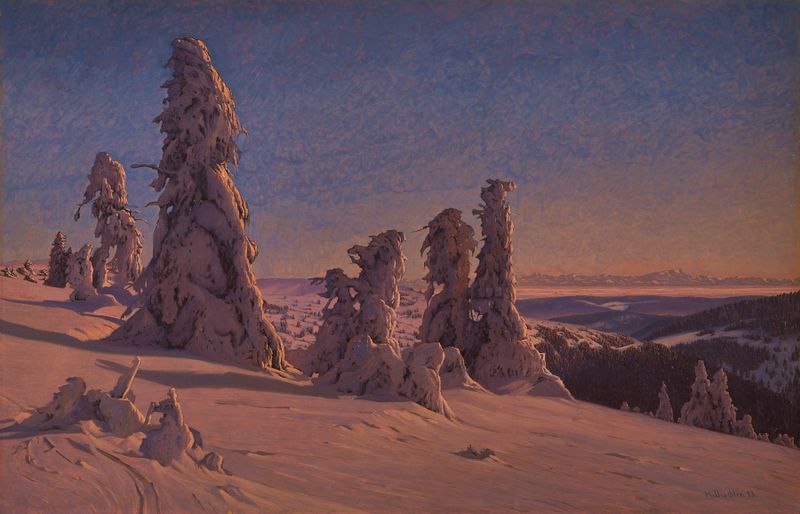
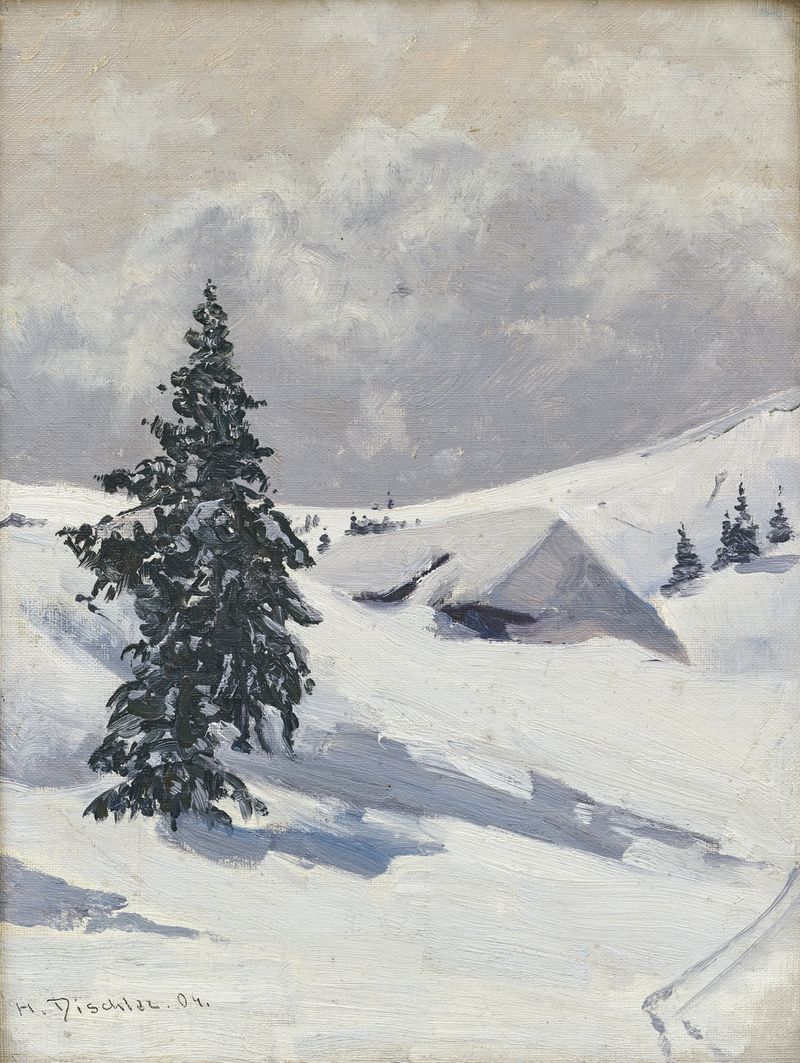
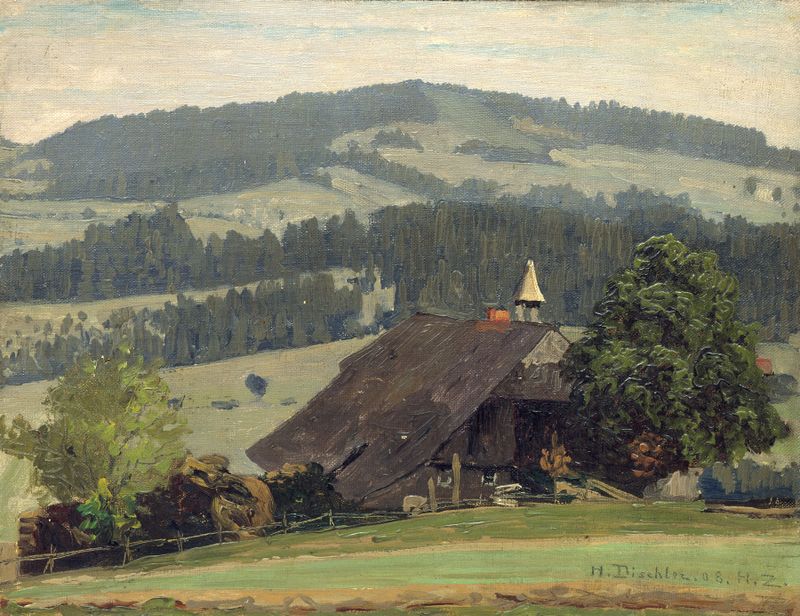
What if silence could speak through light? In Winter Morning in the Black Forest, a haunting stillness envelops the scene, inviting viewers to confront their own reflections of loss and longing. Look to the left at the delicate interplay of light filtering through the bare branches, casting intricate shadows on the powdery snow. The soft, muted palette of whites and grays evokes a sense of tranquility, while the starkness of the trees standing sentinel against the pale sky hints at an emotional weight beneath the serene exterior. The composition draws your eye deeper into the forest, inviting you to wander through the depth of the scene, where every inch is painted with careful precision. In this work, grief becomes palpable through the contrast between the desolation of winter and the ethereal beauty of the landscape.
The trees, stripped of their leaves, echo the vulnerability of heartache, while the glimmers of sunlight serve as flickering memories of warmth and hope. Each brushstroke captures not just a place, but a feeling—a moment frozen in time that resonates with the viewer’s own experiences of sorrow and reflection. Dischler painted this piece in 1904 while living in Germany, a time marked by the burgeoning modernist movement. The artistic landscape was evolving, yet he remained anchored in the traditions of realism, capturing nature’s beauty with an emotional depth that resonated with many during this period of change.
His work reflects a personal connection to the natural world, interwoven with the complexities of human emotion, making each canvas a story waiting to be unraveled.