Frozen Fir Trees on the Feldberg — History & Facts
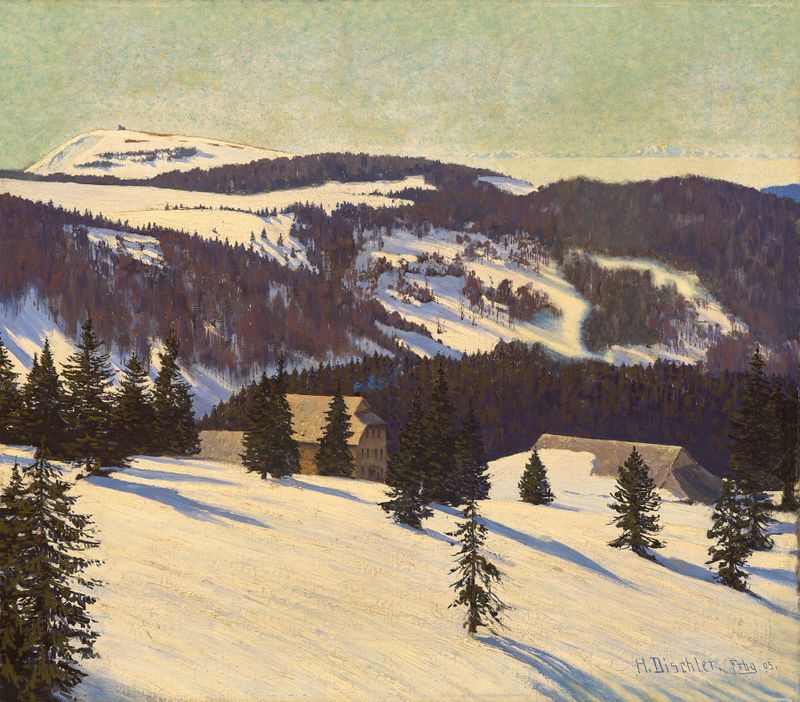
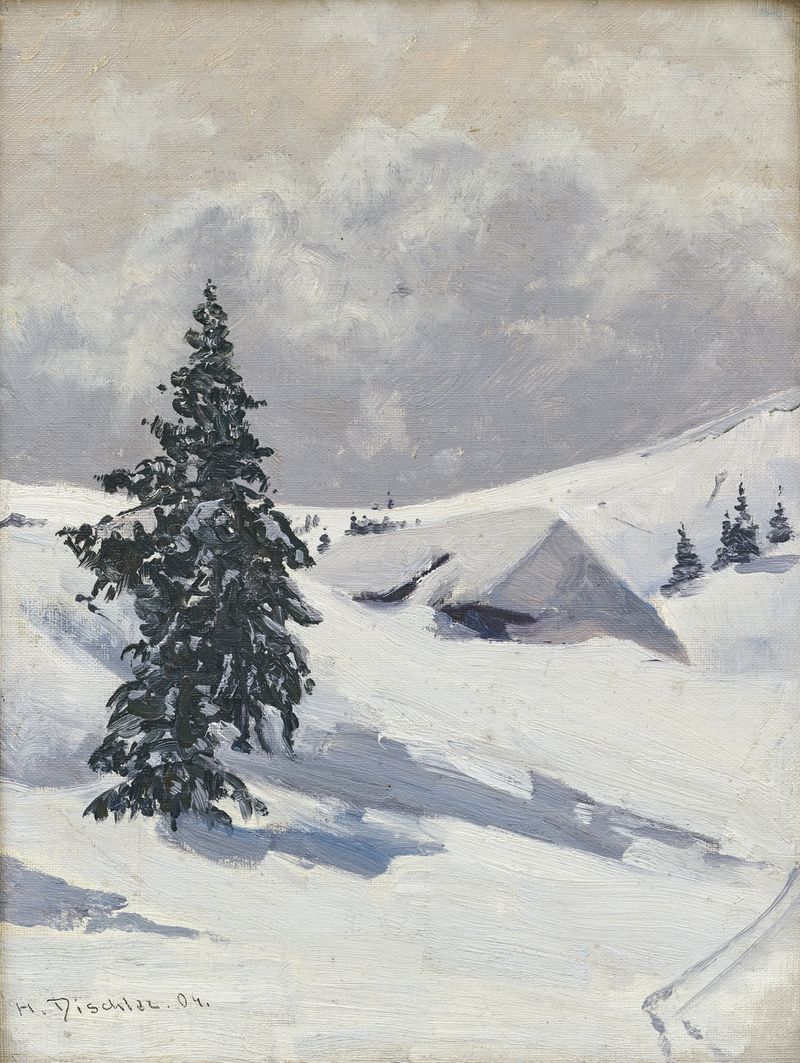
In Frozen Fir Trees on the Feldberg, the longing for warmth in a world of frost resonates deeply, inviting the viewer to confront the duality of beauty and desolation. Look to the foreground, where the intricate branches of fir trees stand solemnly against the crisp white snow. Notice how the play of light dances upon the icy surfaces, creating an ephemeral glow that suggests life beneath the frozen exterior. The cool palette of blues and whites captures the chill of the scene, while subtle hints of amber evoke a fleeting warmth, reminiscent of the sun struggling to break through the dense canopy. As you explore deeper, the stark contrast between the vibrant details of the trees and the stark, empty expanse of the snow offers a poignant tension.
Each frozen branch seems to embody a silent yearning, a moment suspended in time, as if the trees are yearning for the return of spring. The stillness conveys a profound sense of separation, evoking emotions of solitude and contemplation that linger in the air like a gentle sigh. In 1923, Hermann Dischler was navigating the complexities of post-war Germany, a period marked by both recovery and introspection. Living and working in the shadow of the unresolved trauma of World War I, he sought solace in the landscapes around him.
Frozen Fir Trees on the Feldberg reflects this personal and national tension, merging the beauty of nature with the melancholic echo of a society still in search of renewal.