Winter in the Black Forest — History & Facts
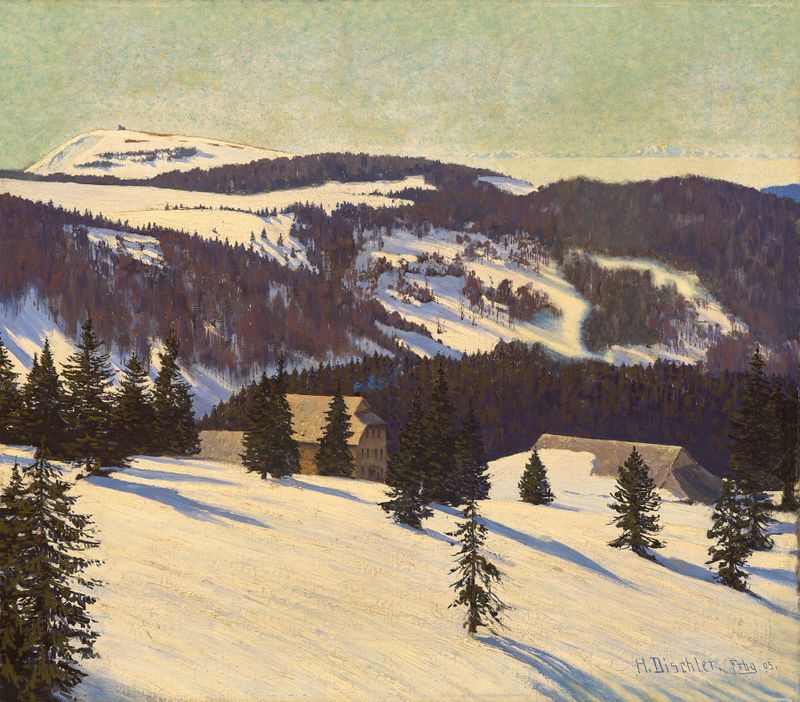
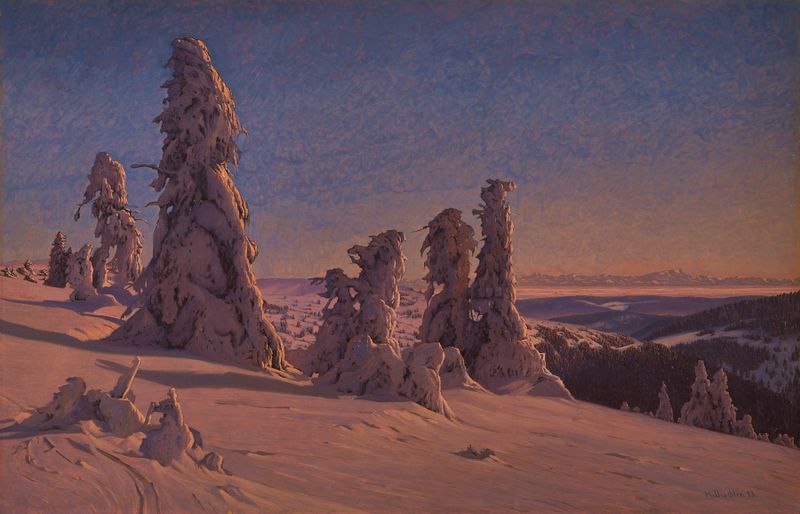
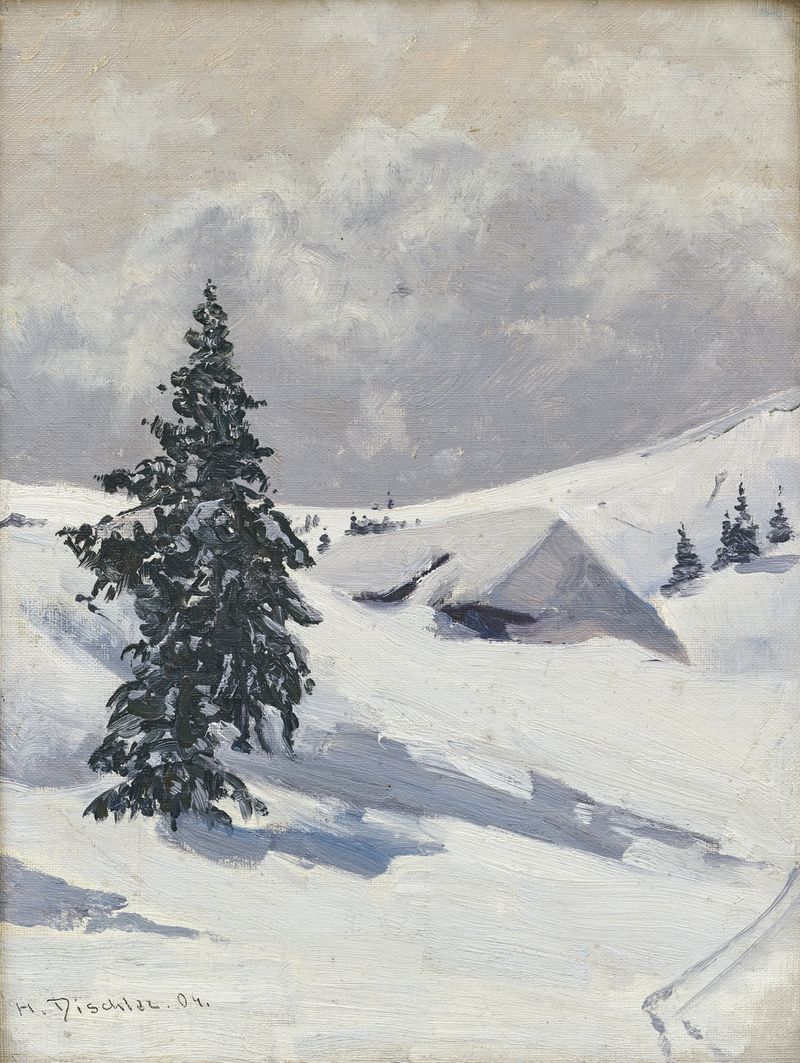
Could beauty survive in a century of chaos? This poignant question lingers in the stillness of a winter landscape, where silence reigns, and emotions are delicately woven into the fabric of nature. Look to the foreground at the thick, snow-draped trees, their stark silhouettes etched against an ethereal blue sky. Notice how the light filters through the branches, casting a gentle glow on the untouched snow below, establishing a serene yet melancholic atmosphere. The subtle gradations of white and gray create a dreamlike quality, while the painter's brushstrokes evoke the chill of winter, inviting a deep reflection on solitude and beauty. Beneath this serene surface lies a profound tension between isolation and serenity.
The contrasting colors of the background—a blend of deep greens and muted blues—suggest a world shrouded in grief, evoking memories of loss and the enduring nature of beauty amidst desolation. Each snow-covered branch stands as a testament to resilience, reminding us of life's quiet strength even in the face of harsh realities. In 1909, during a time of social and political upheaval in Europe, the artist immersed himself in the tranquil yet haunting scenery of the Black Forest. Dischler was grappling with the complexities of modernity, seeking solace in the natural world.
This work reflects not only his personal quest for peace but also resonates with a broader artistic movement that intertwined the beauty of nature with deeper existential themes.