
Bamboo — History & Facts
When Katsushika Hokusai created Bamboo in 1804, he was already a restless innovator, but this work stands out for its place at the very dawn of his mature period, just as he was beginning to sign his works as "Hokusai." The year marked a turning point: Hokusai had recently changed his artistic name and was experimenting with new subjects and brush techniques, breaking from the rigid conventions of earlier ukiyo-e artists. The simple subject of bamboo, so common in Japanese painting, is here elevated by Hokusai’s bold, expressive brushwork—an approach that would soon influence generations of painters and printmakers. The painting captures a stand of bamboo, rendered with quick, confident strokes that suggest both strength and flexibility. Each leaf and stalk is painted with a directness that mirrors the qualities of the plant itself: resilience in the face of wind, and an elegant simplicity.
The empty background focuses the viewer’s attention on the living forms, while the varied thickness of the ink lines creates a sense of depth and movement. Unlike the more decorative bamboo scenes by artists such as Sesshū Tōyō, Hokusai’s version feels spontaneous, almost as if the plant were swaying before our eyes. In Japanese culture, bamboo is a symbol of endurance and purity—a meaning Hokusai underscores through his energetic, unadorned composition. The precise medium of Bamboo is not documented, though it was likely executed in ink on paper, following the traditions of Nanga and ukiyo-e.
There is little record of its early ownership, but works of this type were often created for private collectors or as demonstrations of the artist’s skill. Bamboo belongs to a period when Hokusai was prolific, producing paintings, prints, and illustrated books that would soon make him famous worldwide. Today, the work is recognized as a testament to Hokusai’s versatility and his ability to find drama and beauty in the most familiar subjects.
Its current location is not widely published, but it remains a touchstone for those studying the evolution of Japanese painting in the early 19th century.
More Artworks by Katsushika Hokusai

The Great Wave off Kanagawa
Katsushika Hokusai
Fine Wind, Clear Morning (Red Fuji)
Katsushika Hokusai
South Wind, Clear Dawn
Katsushika Hokusai
Rainstorm Beneath the Summit
Katsushika Hokusai
Clear Weather with a Southerly Wind
Katsushika Hokusai
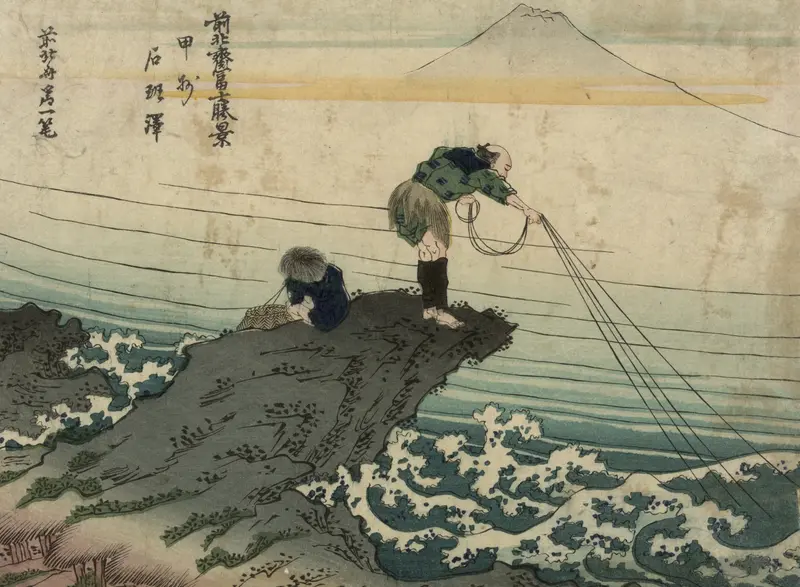
Kōshū kajikazawa
Katsushika Hokusai
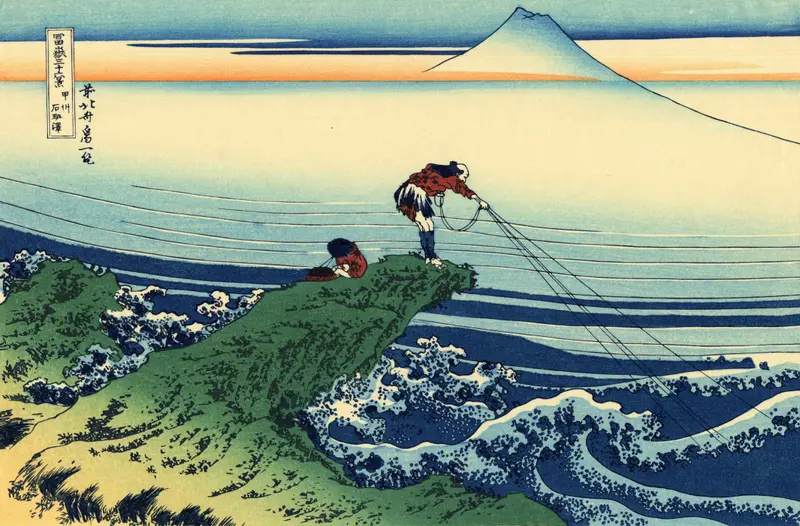
Kōshū kajikazawa 2
Katsushika Hokusai
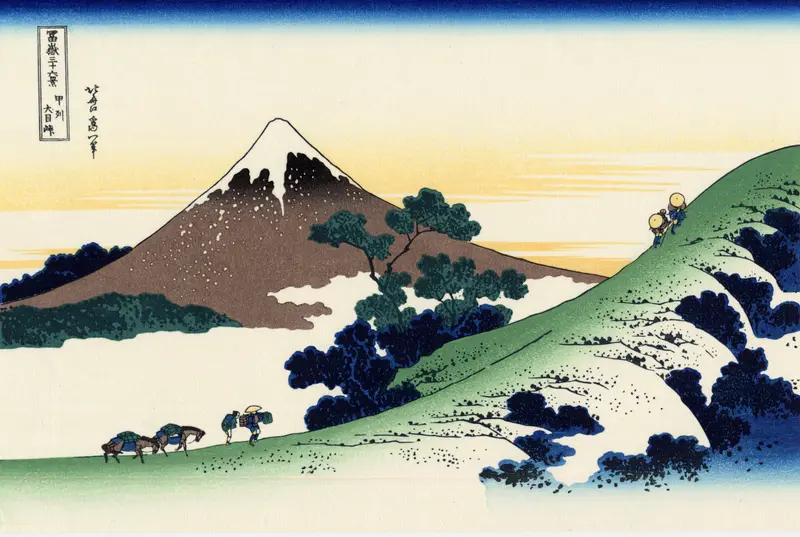
Inume Pass in Kai Province (Kôshû inume-tôge)
Katsushika Hokusai

Yoro Falls in Mino Province (Mino no Yoro no taki), from the series "A Tour of Waterfalls in Various Provinces (Shokoku taki meguri)"
Katsushika Hokusai
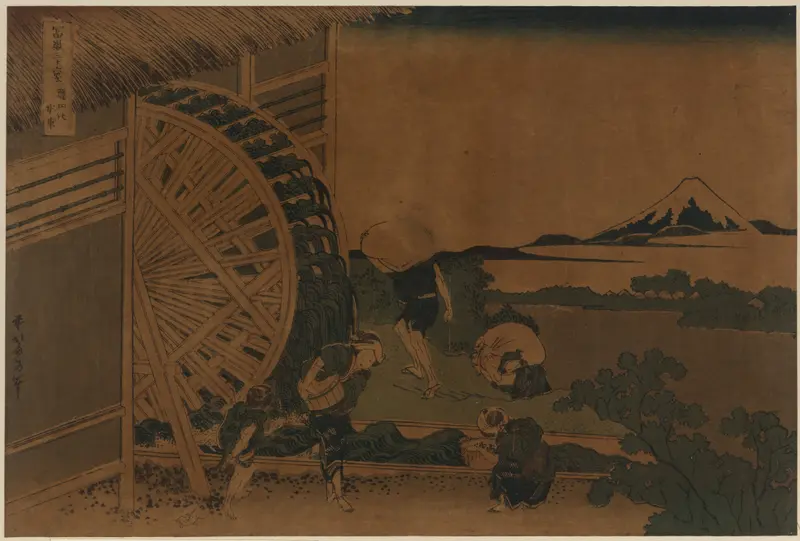
Onden no suisha
Katsushika Hokusai





