Banks of the Oise at Dawn — History & Facts
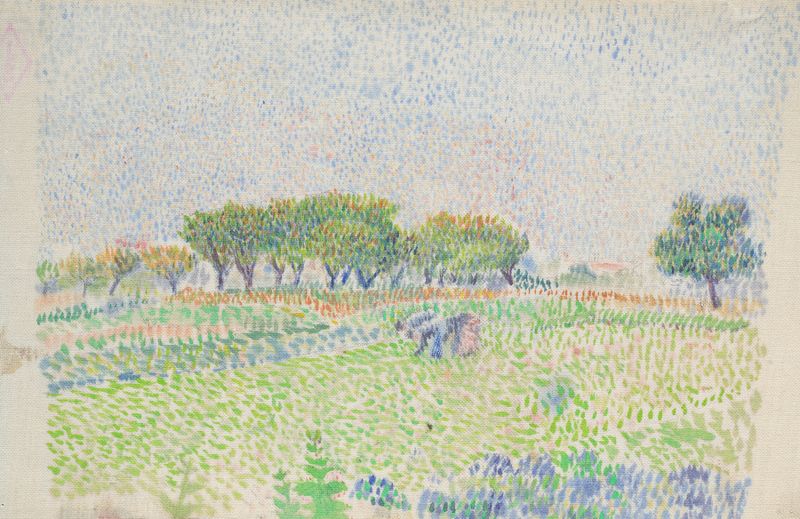
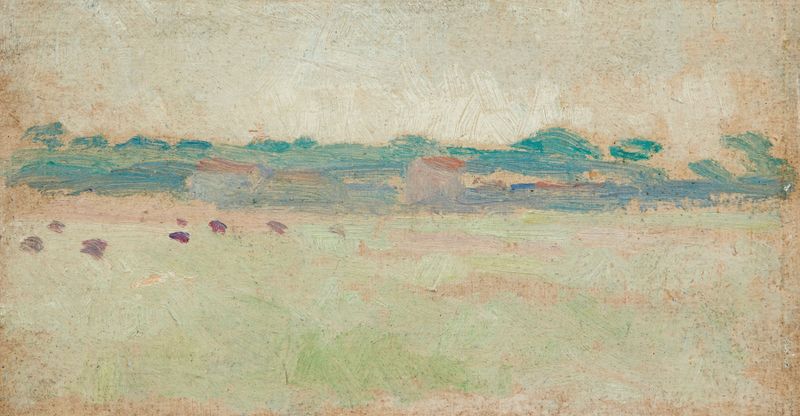
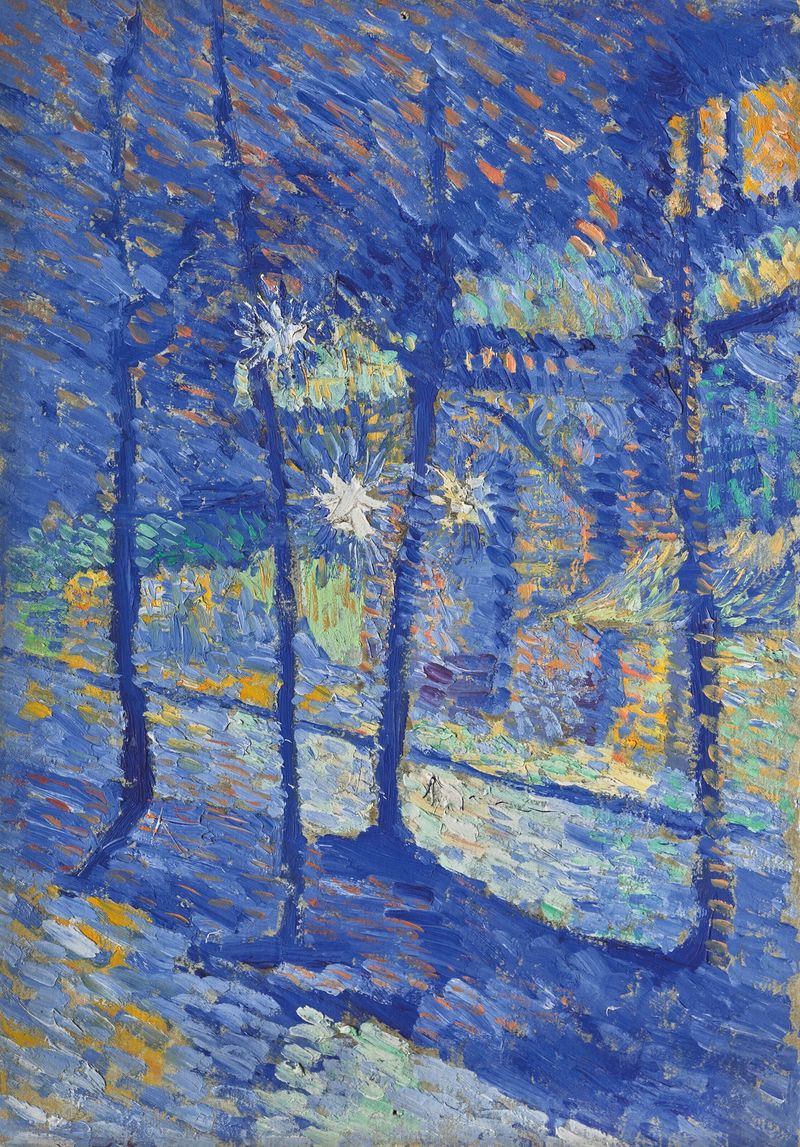
In the stillness of dawn, where the world holds its breath, melancholy drapes the landscape like a whispering fog. The essence of this moment lingers, inviting contemplation on the beauty and solitude of nature. Look to the left at the delicate interplay of soft purples and blues that kiss the water’s surface, reflecting the awakening sky. The brushwork is both loose and intentional, creating a sense of movement in the ripples while anchoring the scene in stillness.
Notice how the light filters through the trees, casting dappled shadows on the banks, enhancing the sense of intimacy with nature. This delicate balance between color and light draws the viewer into a serene embrace, inviting a moment of quiet reflection. Beneath this tranquil surface lies a tension between beauty and solitude. The looming silhouettes of trees frame the scene, suggesting a boundary between the observer and the world beyond.
The still water suggests depth, both physically and emotionally, hinting at the unresolved complexities of the human experience. In this silent dawn, there exists a profound sense of yearning—an invitation to confront the unspoken sorrows that dwell within. Louis Hayet painted this work in 1888 while living in France, a time when Impressionism was blossoming. He was influenced by the changing light and color of the natural world, seeking to capture fleeting moments.
As industrialization began to reshape society, the artist turned to the countryside, finding solace and inspiration in the landscapes that echoed his own contemplative spirit.