
Battle Scene — History & Facts
Dust swirls in the air as swords clash, the sound echoing like thunder across the battlefield. Soldiers, faces contorted in fierce determination, charge towards one another, their silhouettes framed against a sky tinged with fiery orange. Amidst the chaos, a lone horse rears back, its mane flying in the wind, embodying the raw energy of combat. Look to the left, where the vibrant reds and browns of the soldiers’ uniforms pull you in, a stark contrast to the darkening sky overhead.
Notice how the artist employs dynamic brushstrokes, giving life to the chaos, while light cascades over the figures, illuminating their expressions—anger and fear intertwined. The composition draws you into the fray, inviting you to witness the very moment where honor conflicts with survival. Beneath the surface of this tumultuous scene lies a commentary on the brutality of war and the fleeting nature of glory. The positioning of figures—some valiantly fighting while others lie fallen—serves as a poignant reminder of sacrifice and mortality.
The tension between the vivid colors and the looming shadows speaks to the duality of victory and loss, awakening a sense of reflection on the cost of conflict. In the early 1820s, while residing in Paris, the artist created Battle Scene during a time marked by political upheaval and a growing interest in historical themes. This period saw the rise of Romanticism, where artists like him began to explore intense emotion and the visceral realities of human experience. Bellangé's work reflects not only his personal artistic evolution but also the broader societal fascination with heroism and the dramatic narratives of history.
More Artworks by Hippolyte Bellangé
Browse all →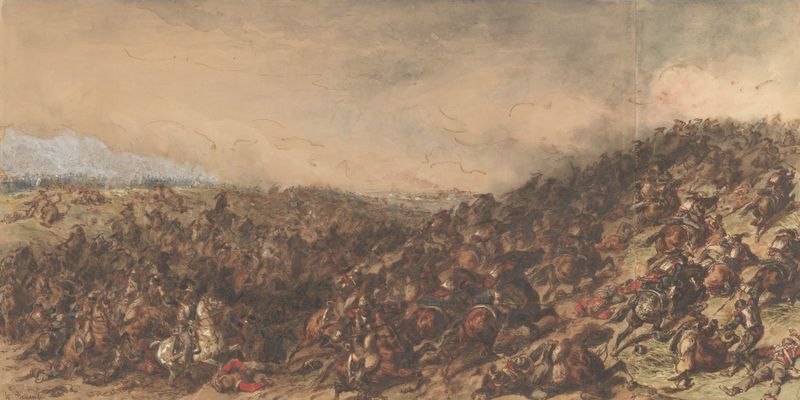
More Historical Art
Browse all →
The Night Watch Militia Company of District II under the Command of Captain Frans Banninck Cocq
Rembrandt van Rijn

Lincoln Memorial
Henry Bacon

The Third of May 1808
Francisco de Goya

Isaac and Rebecca, Known as ‘The Jewish Bride’
Rembrandt van Rijn

The Charge of the Mamelukes (1814)
Francisco de Goya

De vier ruiters van de apocalyps
Albrecht Dürer