
Battle Scene (Waterloo) — History & Facts
Smoke billows across the battlefield, shrouding the chaos of war in an ethereal haze. In the midst of the tumult, soldiers clash, their faces etched with fear and determination, their bodies moving in a desperate dance of survival. The sun struggles to pierce the gloom, casting a dim light that flickers across glistening swords and muddied uniforms, amplifying the tension between life and death. Look to the center of the canvas, where the focal point captures a fierce cavalry charge.
Notice how Bellangé masterfully employs dynamic lines to guide the eye through the fray, leading to the dramatic clash of riders and horses. The rich palette of deep reds and muted browns conveys the brutality of the scene, while sharp contrasts illuminate moments of valor and despair. The brushwork is both frenetic and precise, echoing the chaotic energy of battle. Hidden within the tumult are stories of individual sacrifice and camaraderie.
Observe the expressions etched on the soldiers’ faces—loss, bravery, and a flicker of hope in the throes of despair. The juxtaposition of the vibrant uniforms against the oppressive backdrop of smoke suggests a fleeting life amidst the relentless march of history, urging viewers to reflect on the cost of glory and the fragility of human existence. Painted between 1815 and 1866, this work captures a pivotal moment in European history—the aftermath of the Battle of Waterloo. Hippolyte Bellangé, influenced by the Romantic movement, sought to depict not just the physicality of war but the emotional weight it carried.
This canvas reflects a society grappling with the echoes of conflict, as the artist navigated his own artistic identity in a world emerging from the shadows of revolution.
More Artworks by Hippolyte Bellangé
Browse all →
More Historical Art
Browse all →
The Night Watch Militia Company of District II under the Command of Captain Frans Banninck Cocq
Rembrandt van Rijn
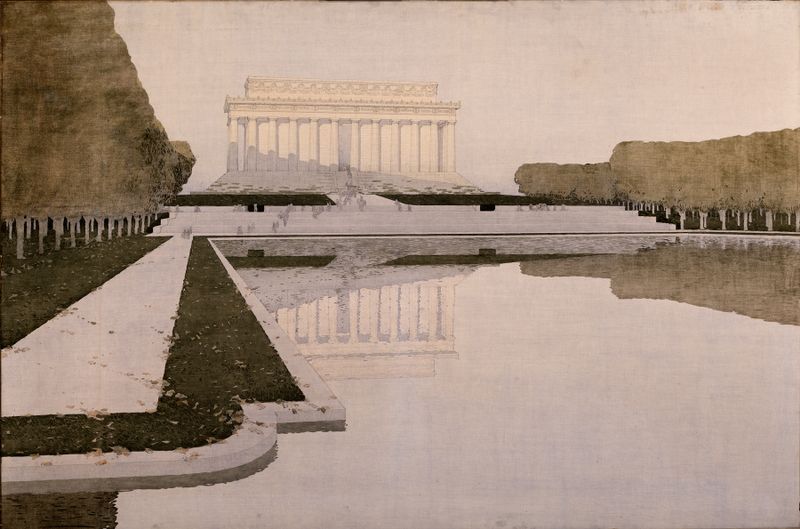
Lincoln Memorial
Henry Bacon
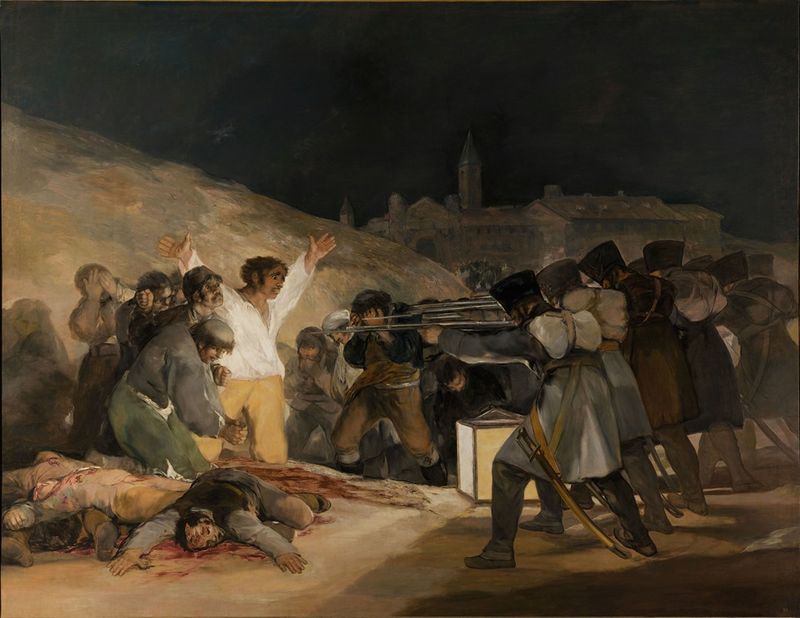
The Third of May 1808
Francisco de Goya

Isaac and Rebecca, Known as ‘The Jewish Bride’
Rembrandt van Rijn
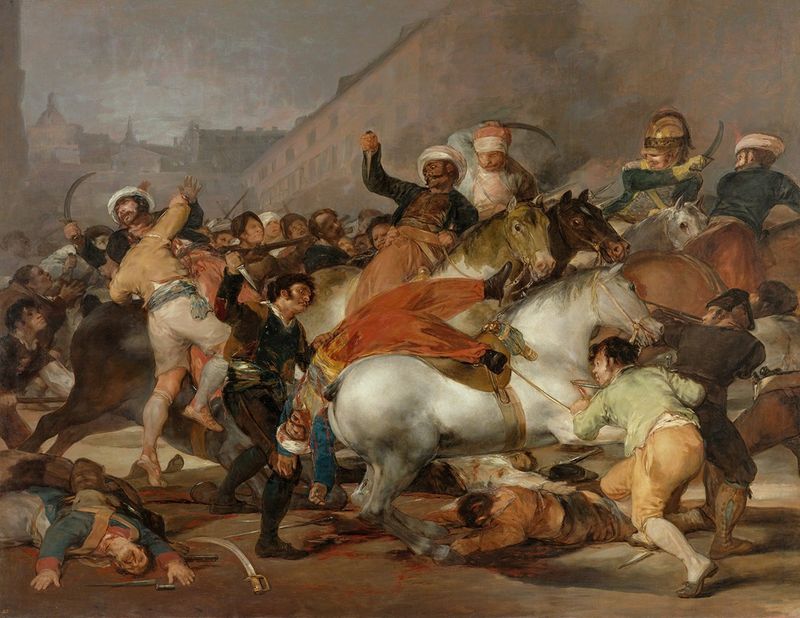
The Charge of the Mamelukes (1814)
Francisco de Goya

De vier ruiters van de apocalyps
Albrecht Dürer