Battle with the Turks — History & Facts
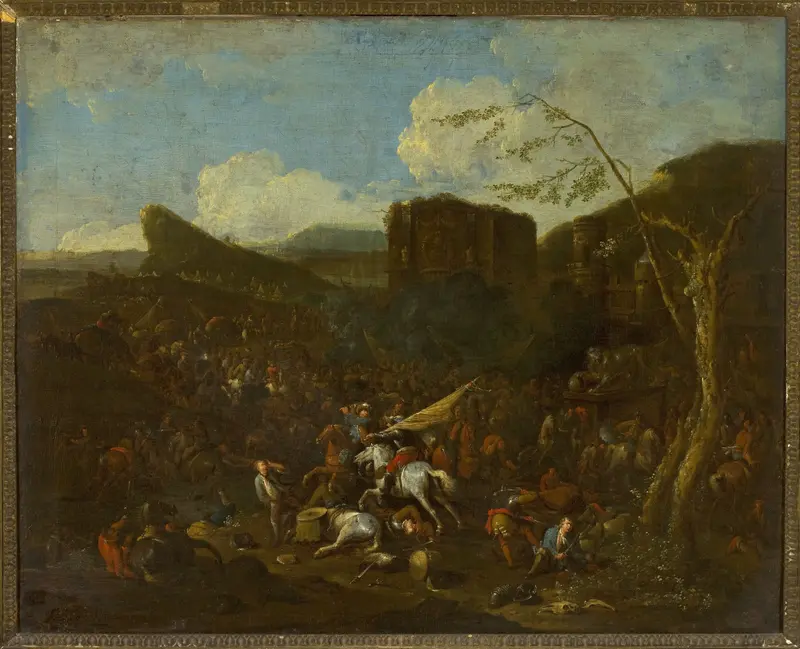
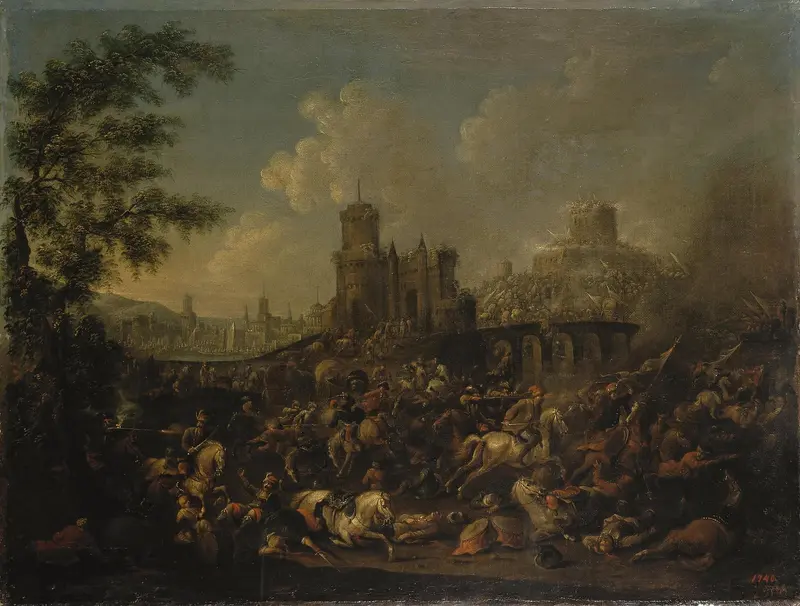
A swirl of chaos grips the viewer from the first glance: horses rear, bodies tumble, and the clash of steel seems to echo off the battered stone walls. The drama is heightened by the painter’s command of light and shadow—smoke billows under a bruised sky, swallowing the horizon and thrusting the figures into urgent relief. At the center, a mounted figure in a white turban twists backward, sword raised, his expression caught between fear and defiance.
Fallen horses and soldiers litter the foreground, their scattered forms and discarded turbans underscoring the cost of the struggle. The eye is drawn to the fluttering banners and the broken siege equipment, visual cues that this is a moment of crisis, not triumph. Works like this by Arnold Frans Rubens belong to a tradition of Baroque battle scenes, painted for patrons eager to commemorate victories or simply to revel in the spectacle of war. In the seventeenth century, such canvases were prized for their energy and detail, often displayed in noble homes or civic halls as reminders of both peril and valor.
The presence of this painting in the National Museum in Warsaw hints at the enduring fascination with the Ottoman conflicts that shaped much of Eastern and Central Europe’s early modern history. History has kept few traces of this particular work’s journey, but its tumultuous vision invites us to linger, searching the smoke and dust for stories left untold.