
Bauernbub, am Gatter sitzend — History & Facts
Can paint confess what words never could? The silent unease of a young boy perched upon a gate resonates through every brushstroke, capturing a moment steeped in innocence yet shadowed by fear. Look closely at the boy's expression, his wide eyes reflecting not just the world around him but an internal struggle. Focus on the interplay between light and shadow across his face—the soft illumination highlighting his youthful features while the darker hues gather behind him, enveloping him in a palpable tension. The fence serves as both a physical barrier and a metaphorical one, suggesting isolation in the midst of rural beauty. Delve deeper into the composition, and you'll notice the subtle contrasts at play—the vivid greens of the countryside juxtaposed with the boy's muted clothing, emphasizing his vulnerability.
The gentle breeze seems to whisper secrets, yet the boy remains still, frozen in contemplation. This stillness speaks volumes, hinting at fears that lurk beneath the surface, possibly about his future or the struggles of rural life, making the viewer question what lies beyond the gate. In 1887, during a time of change in Bavaria, Josef Wenglein created Bauernbub, am Gatter sitzend. His career was blossoming as he participated in important exhibitions, yet he remained deeply connected to the rural life he depicted.
The artwork reflects a moment of introspection, perhaps influenced by the socio-political anxieties surrounding agrarian communities as industrialization loomed on the horizon, leaving a lasting impression of a boy caught between worlds.
More Artworks by Josef Wenglein
Browse all →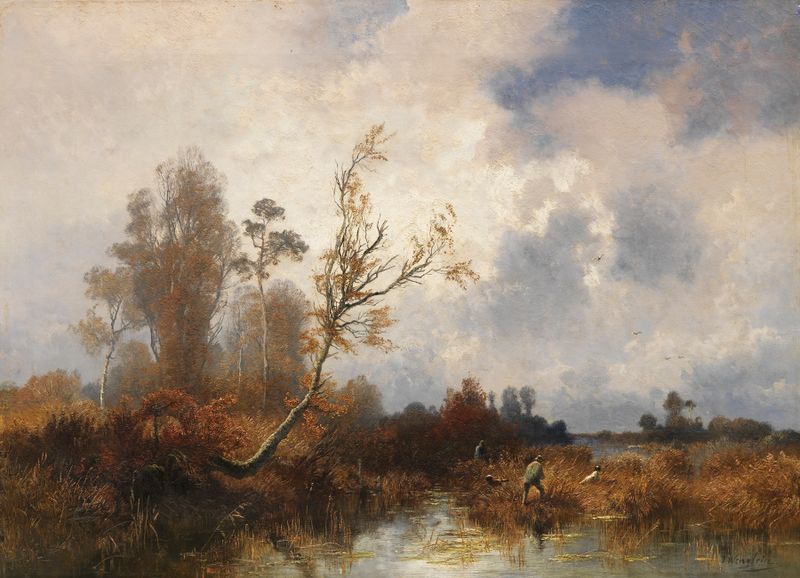
Herbstliche Landschaft mit Jägern im Dachauer Moos
Josef Wenglein
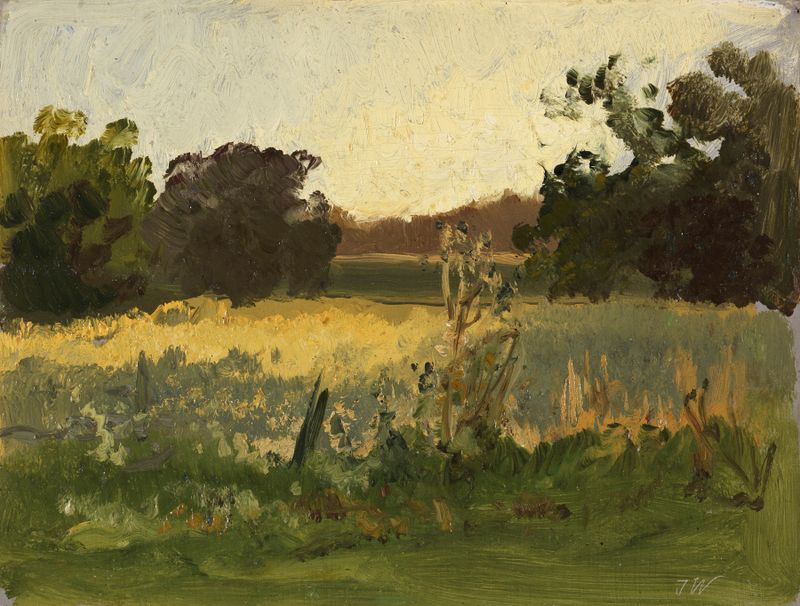
Am Simssee
Josef Wenglein
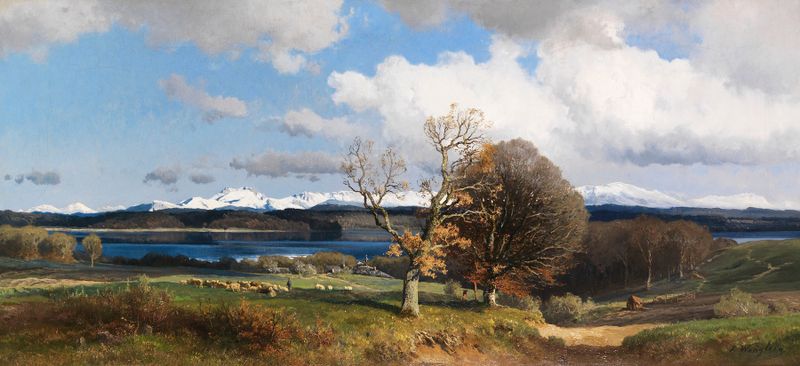
Blick auf den Simssee im Frühling
Josef Wenglein
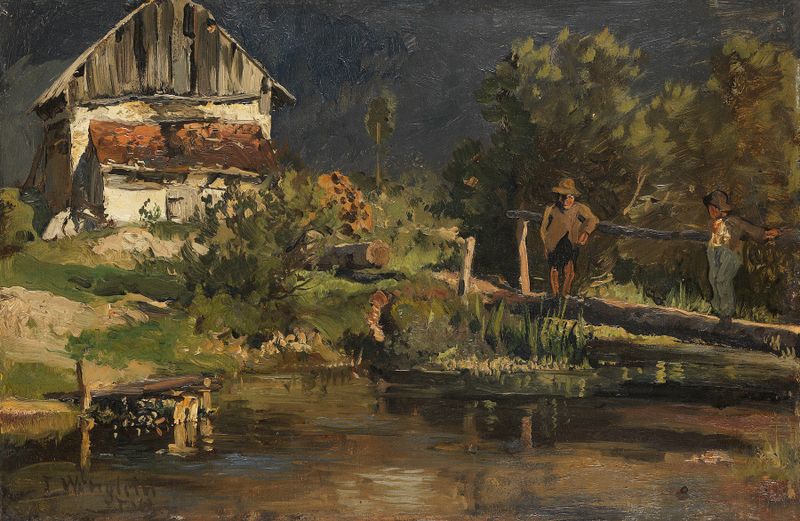
Am Weiher mit Kalkofen
Josef Wenglein
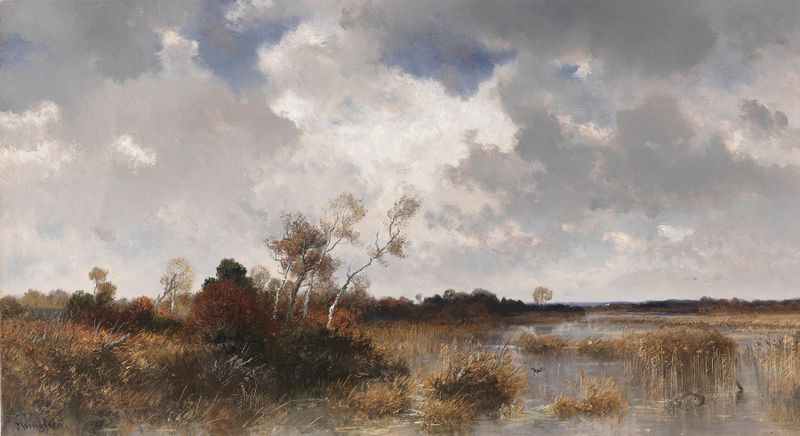
Mooslandschaft im Herbst
Josef Wenglein
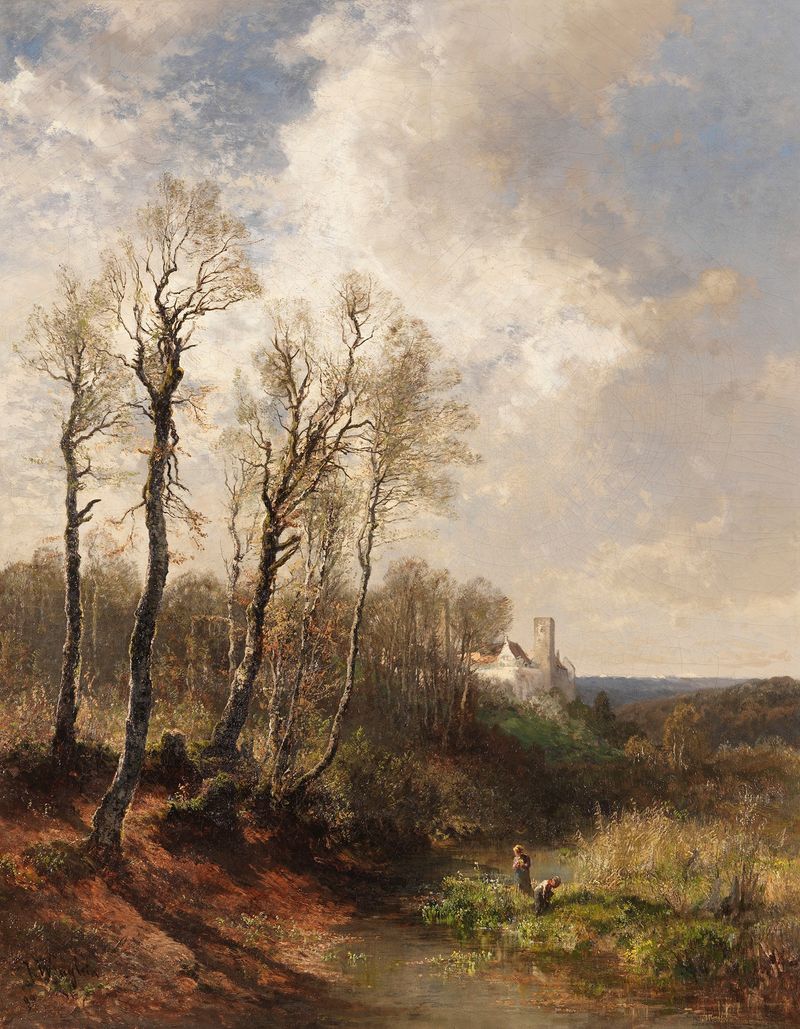
Kinder am Isarhochufer mit Blick auf Burg Grünwald
Josef Wenglein
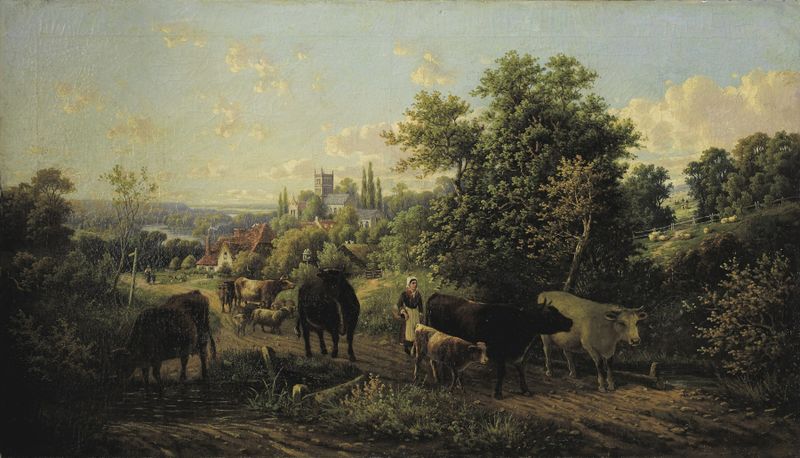
Landscape with Cattle
Josef Wenglein
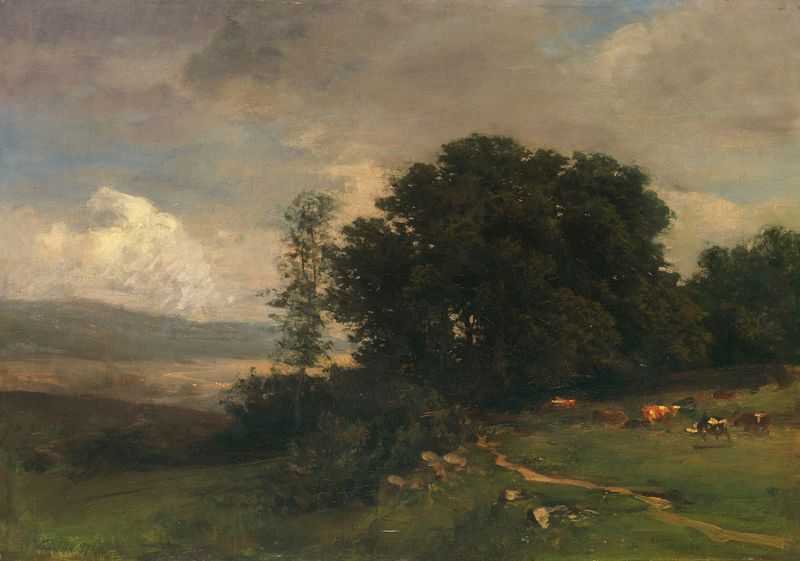
Blick von Buchberg auf Bad Tölz
Josef Wenglein
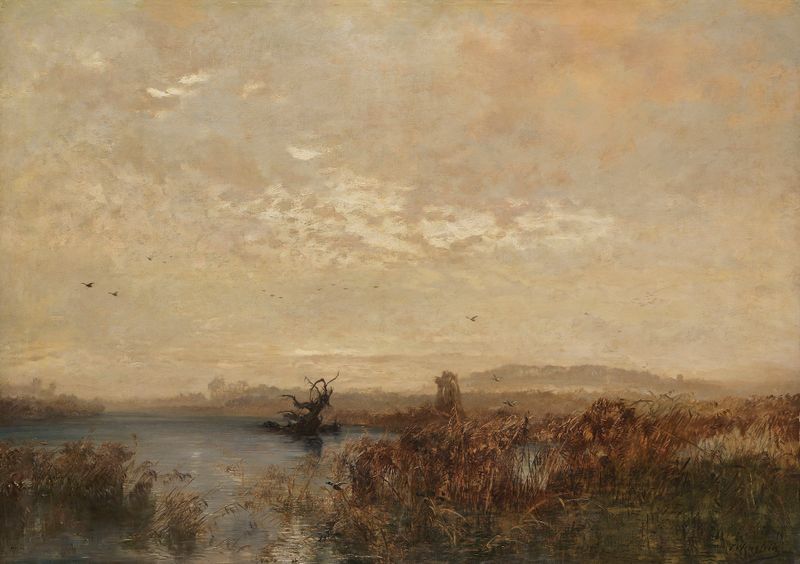
Im Ampermoos
Josef Wenglein





