
Mooslandschaft im Herbst — History & Facts
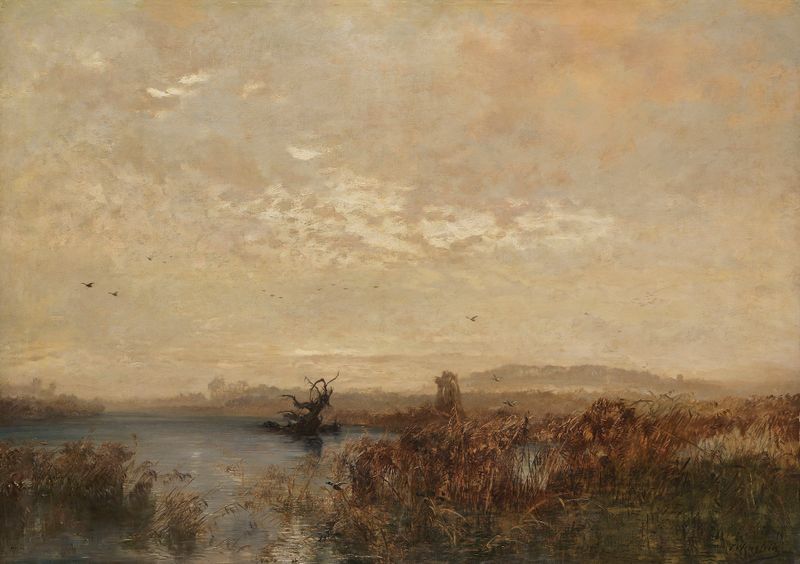
Can beauty exist without sorrow? In Josef Wenglein's Mooslandschaft im Herbst, the essence of nature intertwines with the melancholic whisper of autumn, inviting contemplation on the duality of experience. Focus on the vibrant hues that adorn the landscape. Look to the left, where the earth is drenched in gold and crimson, the leaves swirling like forgotten dreams. Notice how the delicate brushstrokes evoke movement, each stroke a testament to the fleeting nature of the season.
In contrast, the shadows stretch across the foreground, hinting at the somber undertones of transition. The soft, muted blues in the sky cradle the scene, fostering an atmosphere of stillness that contrasts with the vivid colors below. Yet beneath the surface beauty lies an emotional tension—the interplay of life and decay. The brilliant foliage, teeming with life, contrasts starkly with the encroaching shadows of winter, suggesting that every vibrant moment is laced with the inevitability of change.
The serene pond reflects both the brightness of the foliage and the brooding clouds above, symbolizing a delicate balance between hope and despair. This duality invites viewers to appreciate the transitory nature of beauty, and how it can flourish in the face of sorrow. Wenglein painted Mooslandschaft im Herbst in 1900, a period marked by artistic exploration in Germany. As a part of the Munich School, he embraced the Impressionist movement, drawing inspiration from the natural world surrounding him.
The turn of the century was a time of both optimism and uncertainty, as new artistic movements challenged traditional forms. In this context, Wenglein captures the essence of autumn, revealing the complexities of nature and human emotion entwined within it.
More Artworks by Josef Wenglein
Browse all →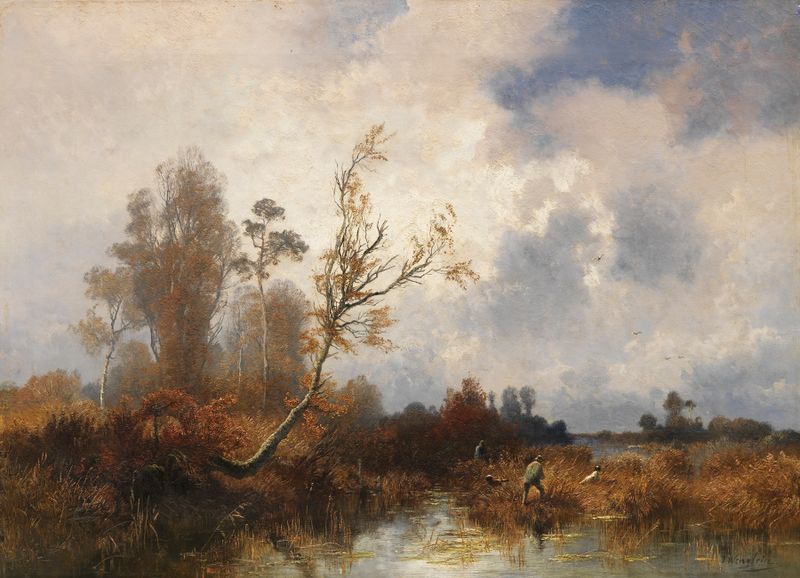
Herbstliche Landschaft mit Jägern im Dachauer Moos
Josef Wenglein
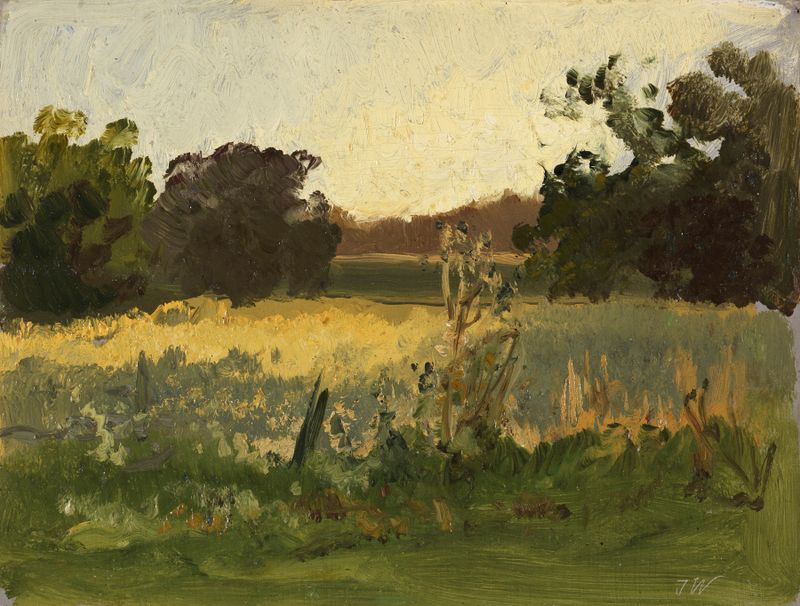
Am Simssee
Josef Wenglein
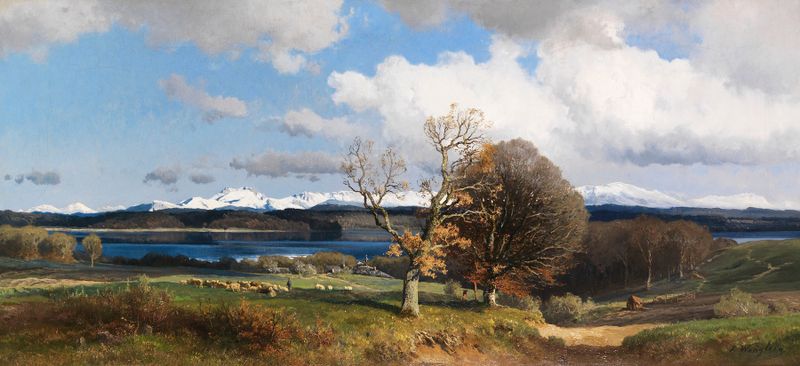
Blick auf den Simssee im Frühling
Josef Wenglein
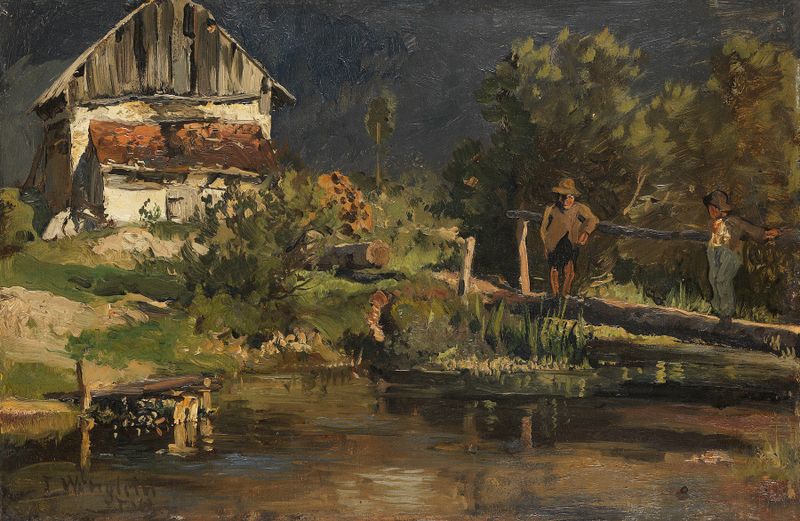
Am Weiher mit Kalkofen
Josef Wenglein
Bauernbub, am Gatter sitzend
Josef Wenglein
Kinder am Isarhochufer mit Blick auf Burg Grünwald
Josef Wenglein
Landscape with Cattle
Josef Wenglein
Blick von Buchberg auf Bad Tölz
Josef Wenglein
Im Ampermoos
Josef Wenglein





