
Blick von Buchberg auf Bad Tölz — History & Facts
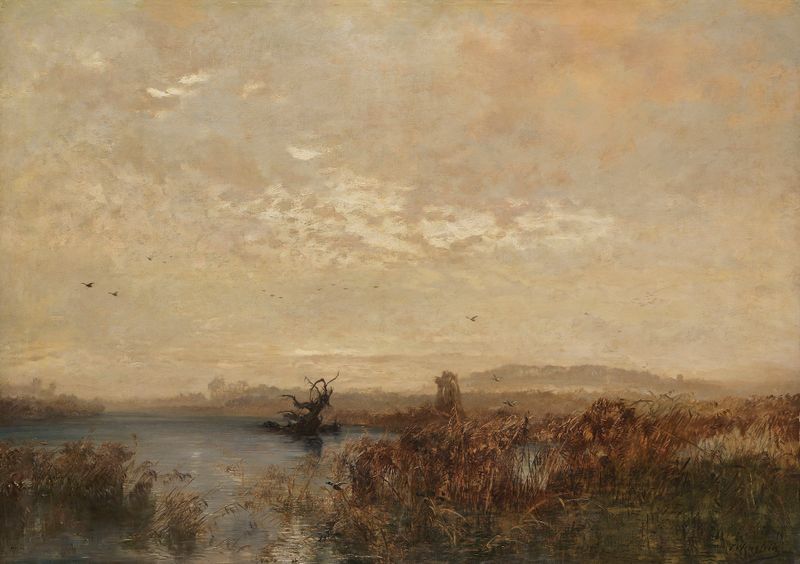
When did color learn to lie? In the hush of twilight, hues bleed into one another, a sentimental echo of a bygone era, where the past lingers like a sweet melody. Look to the left of the canvas, where the soft greens of the hills cradle the town, with Bad Tölz sprawled beneath a fading sky. The artist employs a delicate palette, infused with warmth as gold and rose hues transition into deepening blues. Notice how the brushwork captures the gentle undulation of the landscape, inviting you to trace the flowing lines of the river, which meanders through as if to whisper secrets of time. Within this serene vista, a contrast emerges between the idyllic portrayal of nature and the encroaching shadows of evening.
The serene setting evokes nostalgia, yet a subtle tension brews in the deepening colors, hinting at the passage of time and the inevitable shift from day to night. Wenglein captures not just a landscape, but the emotional resonance of memory, reflecting on a place that may exist only in dreams. In 1897, while painting this work in Bavaria, the artist was immersed in the late romantic movement, where personal expression fused with a growing interest in nature's beauty. This period was marked by a longing for authenticity, resonating with broader societal shifts in Europe.
Wenglein's brushstrokes are a testament to a time when art sought to convey deeper truths, inviting viewers to reflect upon their own connections to the past.
More Artworks by Josef Wenglein
Browse all →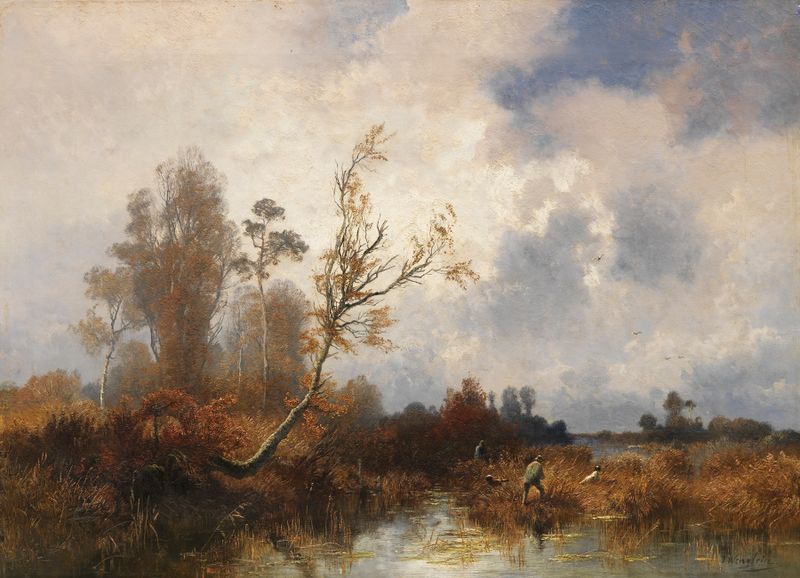
Herbstliche Landschaft mit Jägern im Dachauer Moos
Josef Wenglein
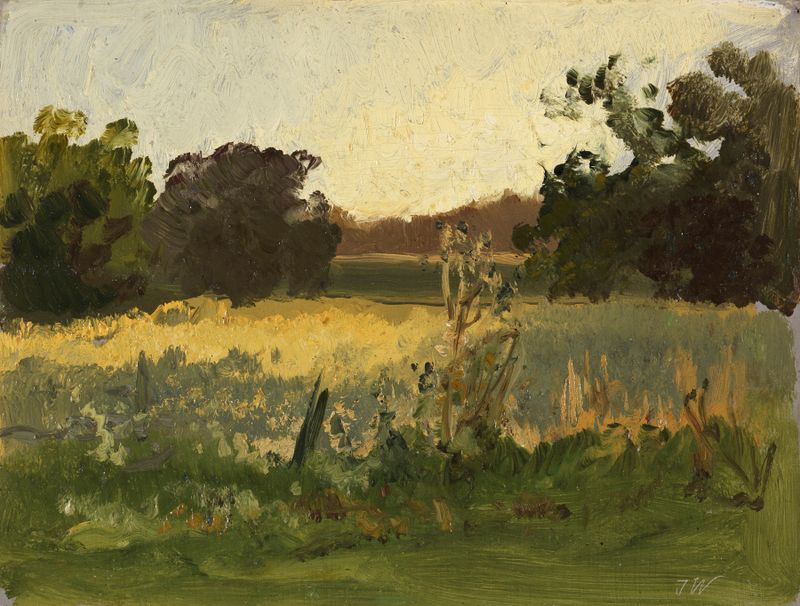
Am Simssee
Josef Wenglein
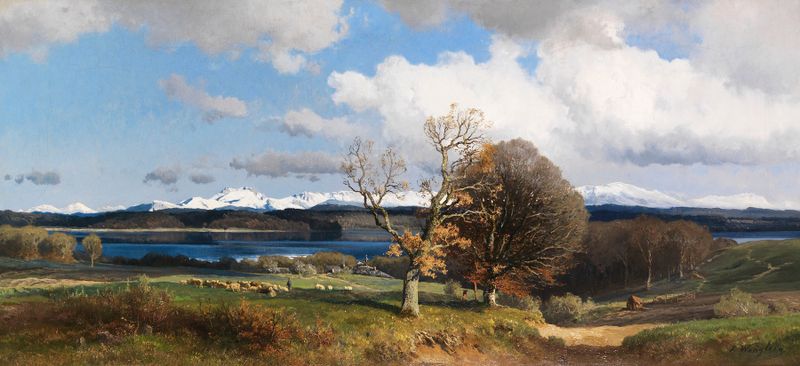
Blick auf den Simssee im Frühling
Josef Wenglein
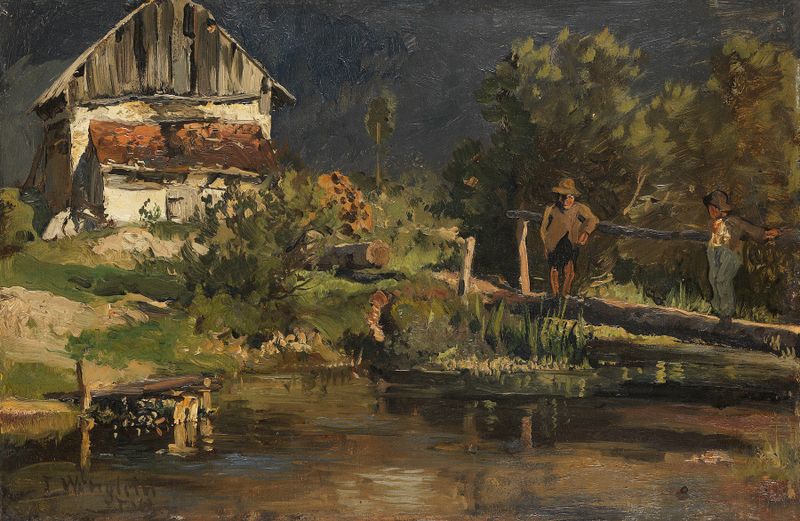
Am Weiher mit Kalkofen
Josef Wenglein
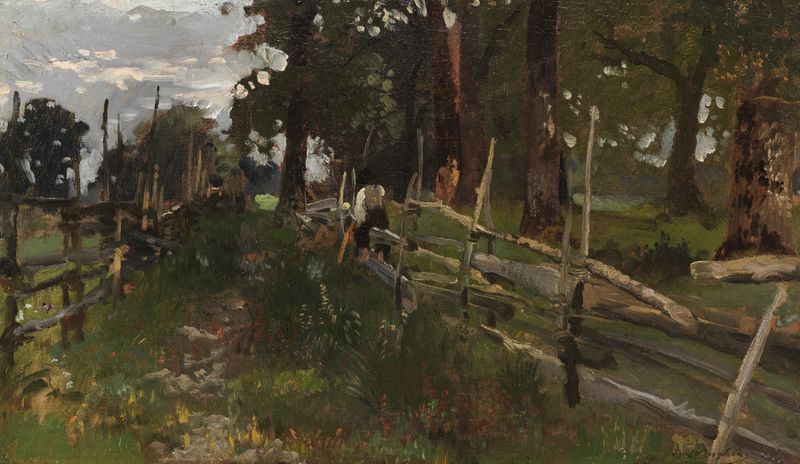
Bauernbub, am Gatter sitzend
Josef Wenglein
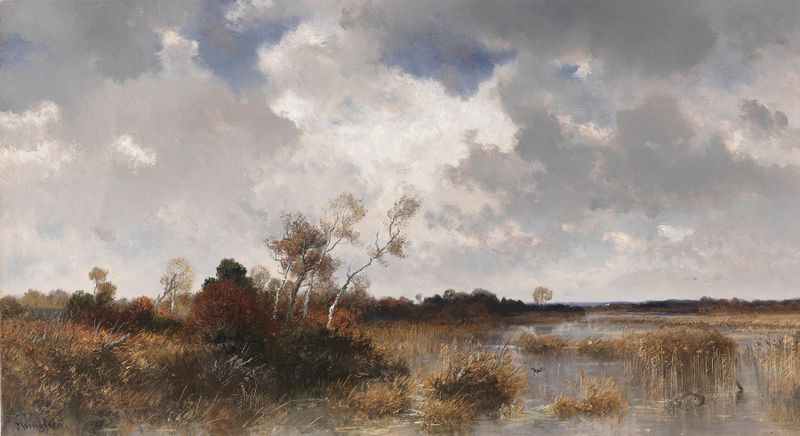
Mooslandschaft im Herbst
Josef Wenglein
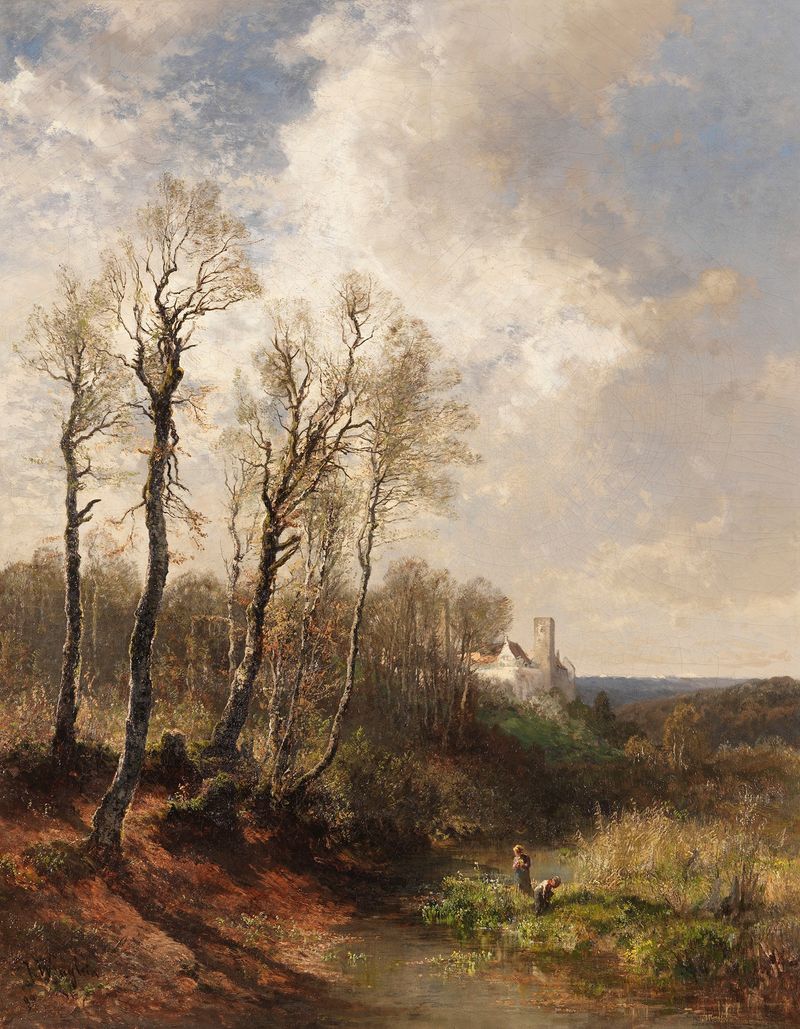
Kinder am Isarhochufer mit Blick auf Burg Grünwald
Josef Wenglein
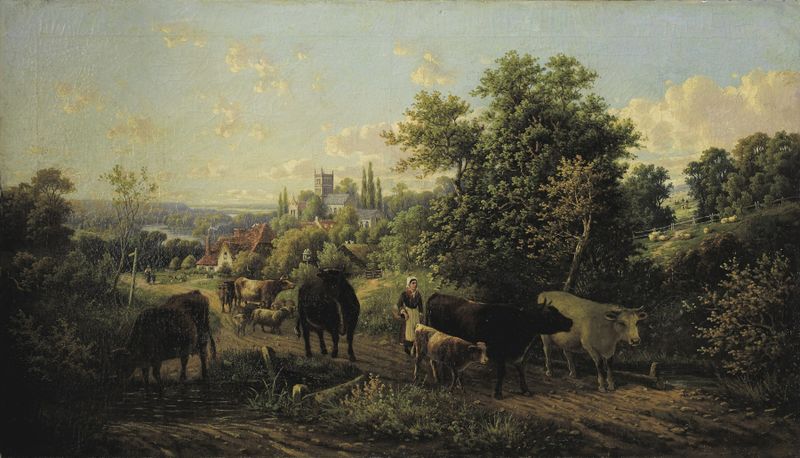
Landscape with Cattle
Josef Wenglein
Im Ampermoos
Josef Wenglein





