
Bauernhof mit Brunnen — History & Facts
When did color learn to lie? In the realm of art, hues and shadows often mask deeper truths, revealing only what the artist dares to expose. Look closely at the painting’s foreground, where a quaint well stands surrounded by grassy knolls, its stones rendered with a tactile realism that invites touch. Notice how the warm browns and soft greens intermingle, creating a pastoral serenity that feels both inviting and deceptive. The delicate play of light seems to dance across the surface, illuminating the scene while hinting at the fragility of this idyllic existence. As your gaze wanders, consider the contrast between the vibrant life depicted and the underlying melancholy that permeates the composition.
The well, a symbol of sustenance and community, simultaneously shadows an air of entrapment. The curious child peering into its depths invites contemplation on innocence and the burdens of understanding. Such details suggest a fragile balance between joy and despair, evoking a subtle tension in the idyllic landscape. In 1850, Heinrich Bürkel created this work during a time of artistic exploration and transition in Europe.
Living in Bavaria, he was influenced by the burgeoning Romantic movement, which sought to capture the beauty of nature and the human experience. While the art world was evolving, Bürkel’s focus on rural life and its complexities offered a poignant reflection of stability against a backdrop of societal change.
More Artworks by Heinrich Bürkel
Browse all →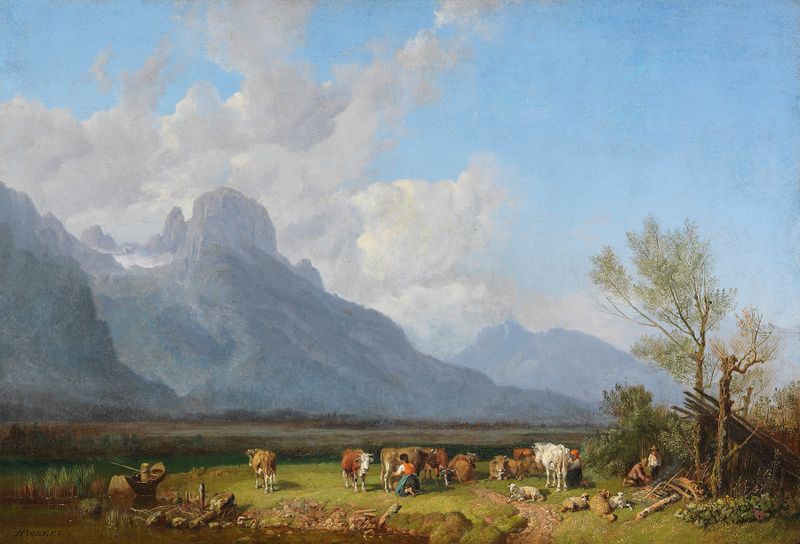
Viehhirten am Seeufer
Heinrich Bürkel
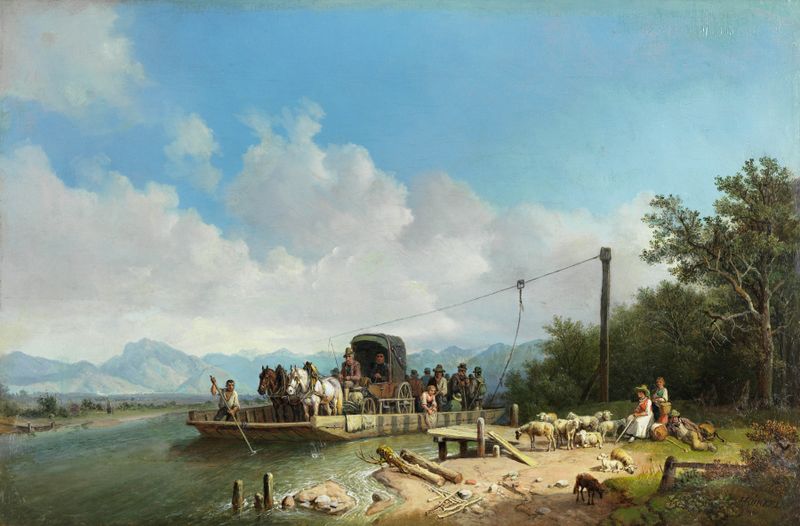
Fähre am Inn
Heinrich Bürkel

Am Dorfbrunnen in den italienischen Bergen
Heinrich Bürkel

Italienische Hirtenfamilie in der Felsenhöhle
Heinrich Bürkel
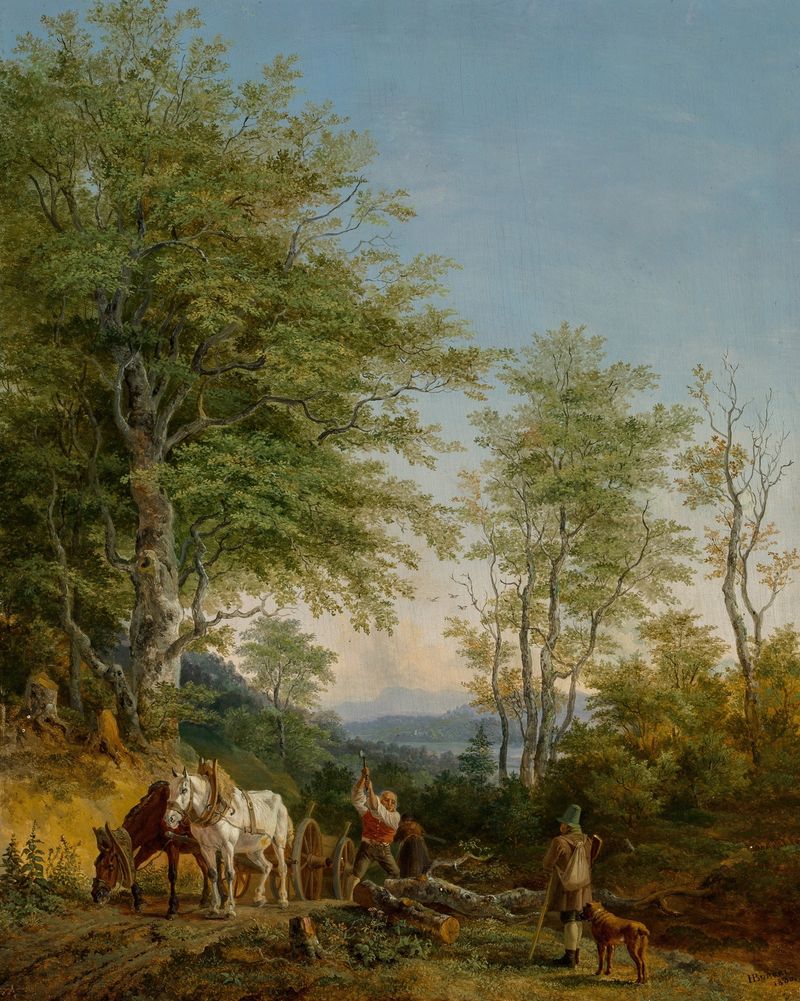
An Italianate wooded landscape with a woodcutter and his team of horses and a passerby with his dog
Heinrich Bürkel
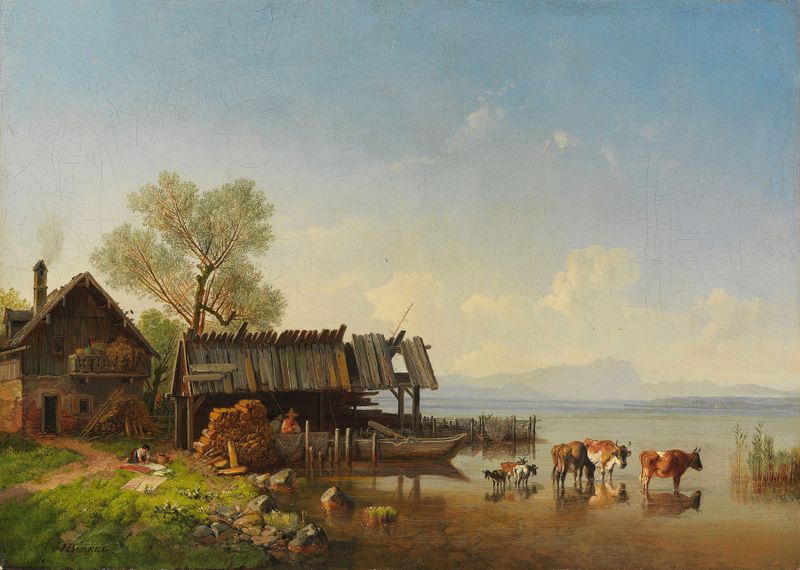
Der Starnberger See mit Blick auf das Wettersteingebirge
Heinrich Bürkel
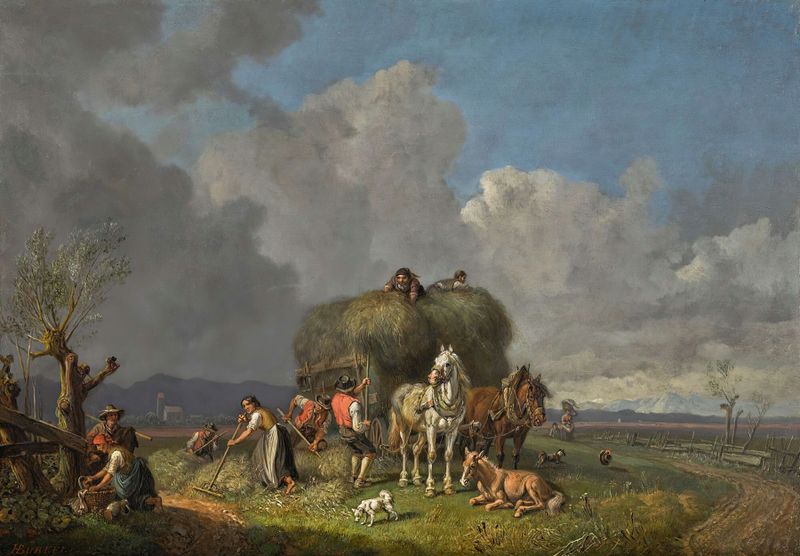
The Hay Harvest
Heinrich Bürkel
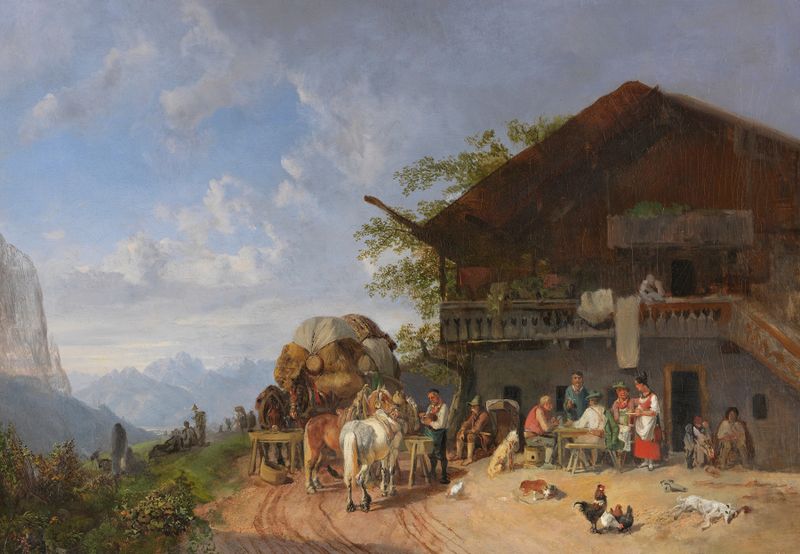
Rast vor einem Gasthof in den Bergen
Heinrich Bürkel

Blick auf den Monte Circeo
Heinrich Bürkel

Out To Pasture
Heinrich Bürkel





