
Italienische Hirtenfamilie in der Felsenhöhle — History & Facts
Can beauty exist without sorrow? In Italienische Hirtenfamilie in der Felsenhöhle, the answer seems hidden beneath layers of rustic charm and unyielding shadows. Look to the left at the gentle curves of the rock formations, where the cave's interior cradles the shepherd family in a protective embrace. The soft light filtering through the crevices draws our gaze to their worn faces, each line a story steeped in toil and tenderness. Notice how the artist employs a warm palette of earthy tones; the ochres and browns evoke a sense of deep connection to the earth, while the highlights dance delicately on their garments, underscoring their humble existence amidst nature's grandeur. Yet, beneath this serene surface lies an unsettling tension.
The family's collective pose, clustered together, suggests both unity and vulnerability, as if they are aware of an unseen threat lurking just beyond the cave's mouth. The interplay between light and shadow amplifies this duality, hinting at their struggle against both nature's unforgiving elements and the violence of an uncertain world. Each gaze holds a reservoir of unspoken fears and unfulfilled dreams, drawing the viewer to confront the fragility of their idyllic life. During the early 1830s, Bürkel painted this scene while navigating his own challenges in the evolving landscape of European art.
At this time, Romanticism was taking hold, celebrating the beauty of nature and the human spirit amidst chaos. The artist sought to merge these ideals, reflecting both the serenity of rural life and the underlying violence of socio-political upheaval, capturing a moment both timeless and transient.
More Artworks by Heinrich Bürkel
Browse all →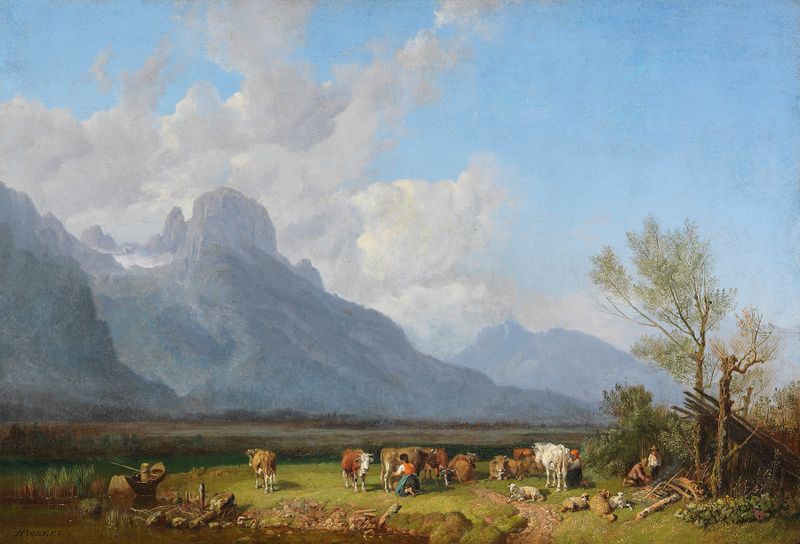
Viehhirten am Seeufer
Heinrich Bürkel
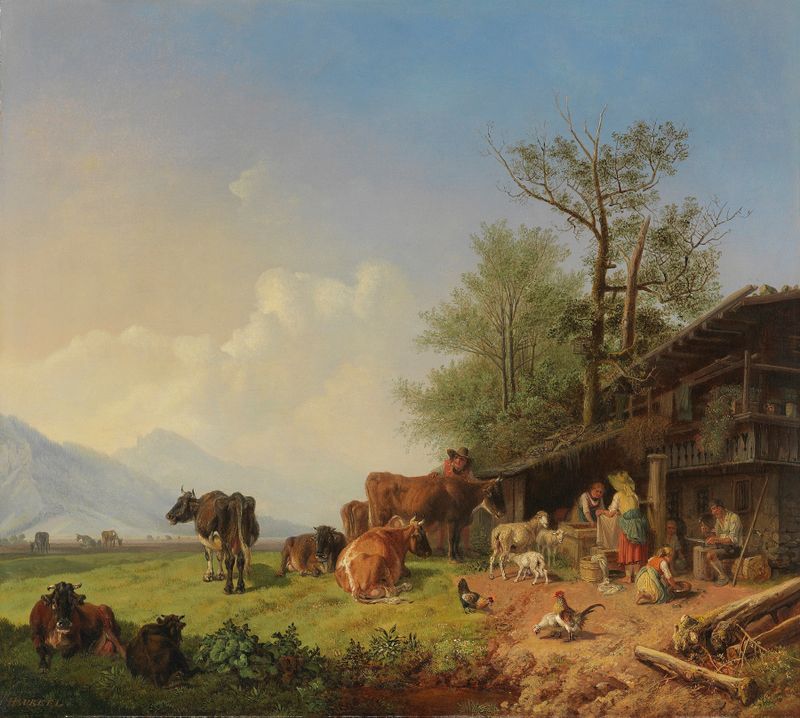
Bauernhof mit Brunnen
Heinrich Bürkel
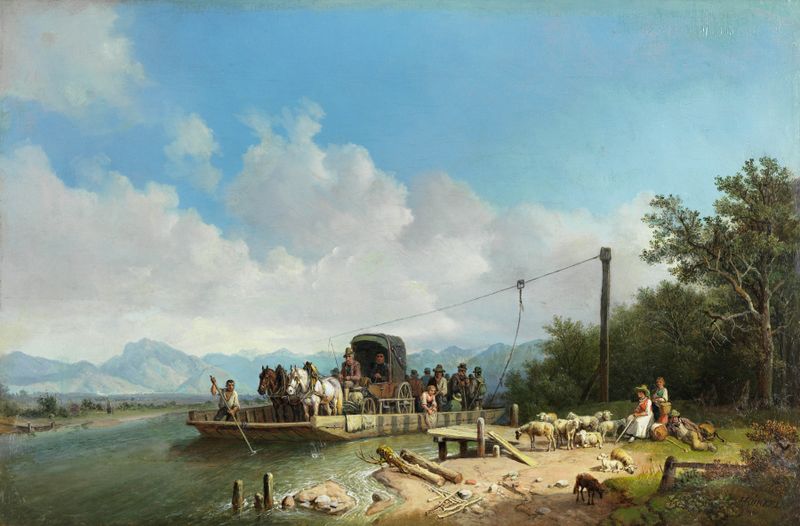
Fähre am Inn
Heinrich Bürkel

Am Dorfbrunnen in den italienischen Bergen
Heinrich Bürkel
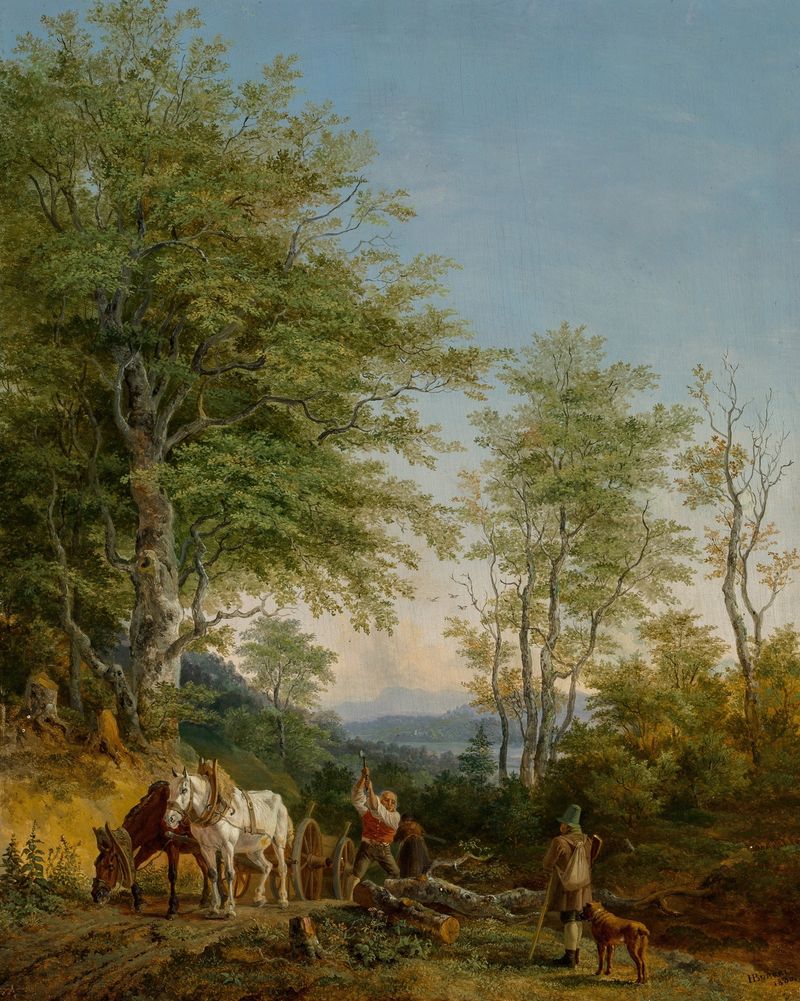
An Italianate wooded landscape with a woodcutter and his team of horses and a passerby with his dog
Heinrich Bürkel
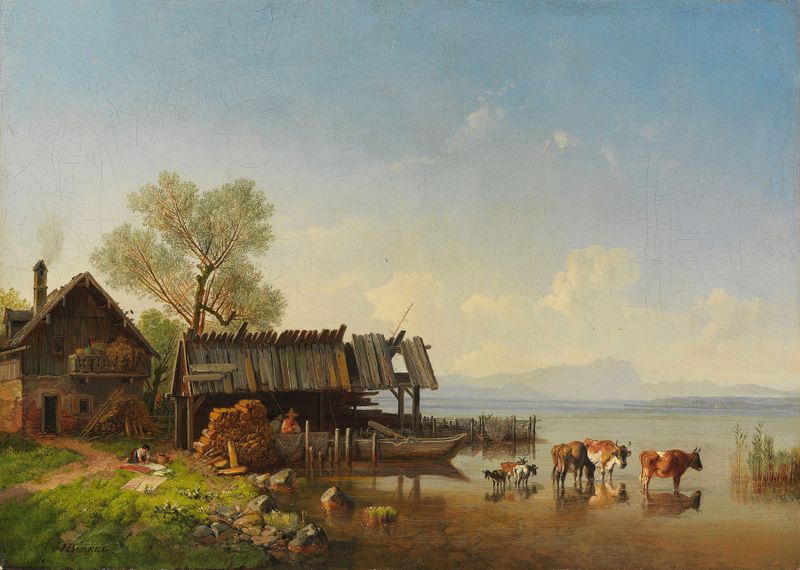
Der Starnberger See mit Blick auf das Wettersteingebirge
Heinrich Bürkel
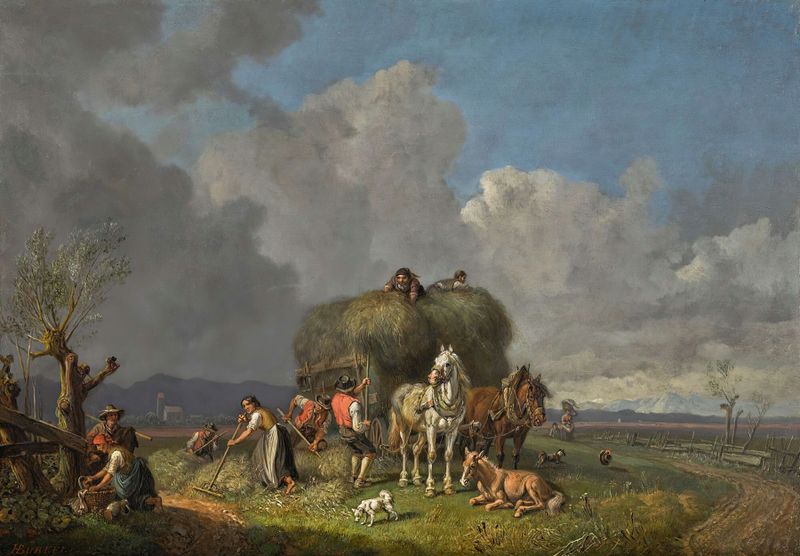
The Hay Harvest
Heinrich Bürkel
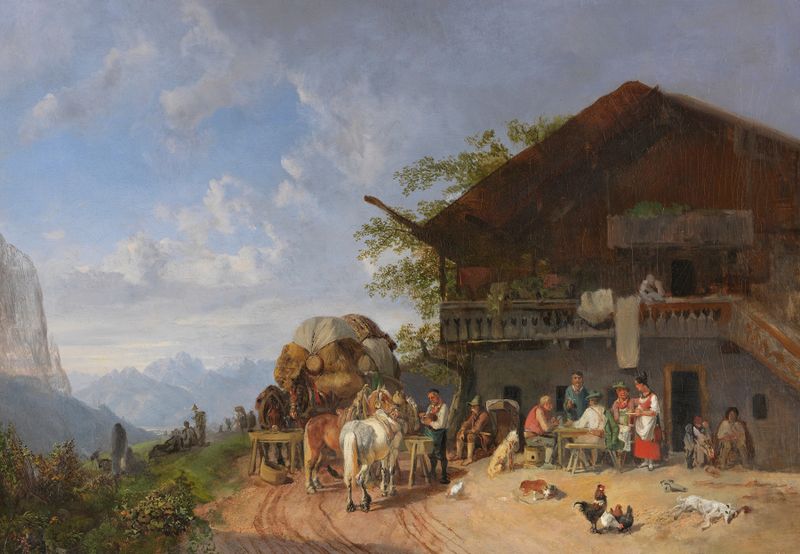
Rast vor einem Gasthof in den Bergen
Heinrich Bürkel

Blick auf den Monte Circeo
Heinrich Bürkel

Out To Pasture
Heinrich Bürkel





