
Am Dorfbrunnen in den italienischen Bergen — History & Facts
What secret hides in the quiet of the canvas? A stillness radiates from the painting, inviting us to peer deeper into the tranquil moment captured within its frame. Focus on the serene village scene that unfolds before you, where a well-placed fountain serves as the heart of the composition. Look to the left, where an elderly man with a weathered face leans against the fountain, the dappled light casting gentle shadows across his contemplative expression. The rustic architecture and vibrant greenery frame the scene beautifully, with earthy tones of ochre and muted greens evoking a warm, inviting atmosphere.
Bürkel’s meticulous brushwork creates a sense of texture, allowing you to almost feel the coolness of the stone and the warmth of the sun. Beneath this surface tranquility lies a rich tapestry of emotional contrasts. The fountain, a symbol of life and community, also suggests the passage of time as it flows silently, reflecting both the serene present and the quiet nostalgia of the past. The villagers engaging with each other form a subtle commentary on connection and isolation, while the distant peaks loom majestically, evoking both grandeur and solitude.
Each detail, from the splashes of sunlight to the gentle gestures of the figures, resonates with a deeper sense of calm amidst the ceaseless flow of life. Heinrich Bürkel painted this piece in 1852 while living in the picturesque landscape of Bavaria, where he was deeply influenced by the Romantic movement. At this time, the world of art was witnessing a shift towards capturing more intimate, personal experiences against the backdrop of sweeping natural beauty. Bürkel’s work reflects this evolution, celebrating both the simplicity of rural life and the profound emotions that reside within it.
More Artworks by Heinrich Bürkel
Browse all →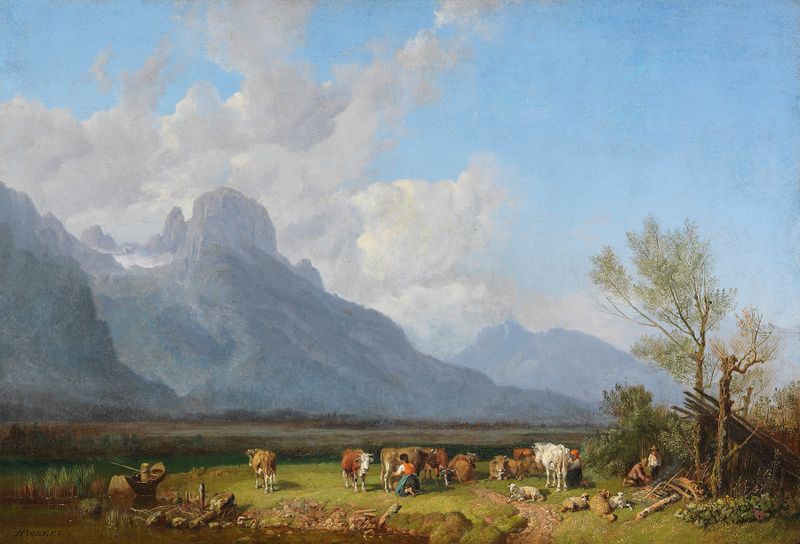
Viehhirten am Seeufer
Heinrich Bürkel
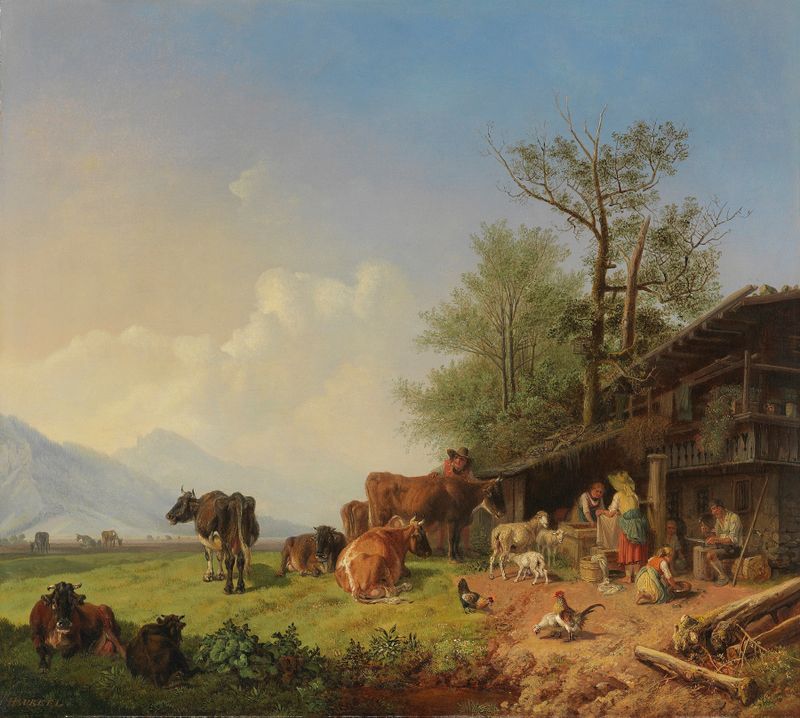
Bauernhof mit Brunnen
Heinrich Bürkel
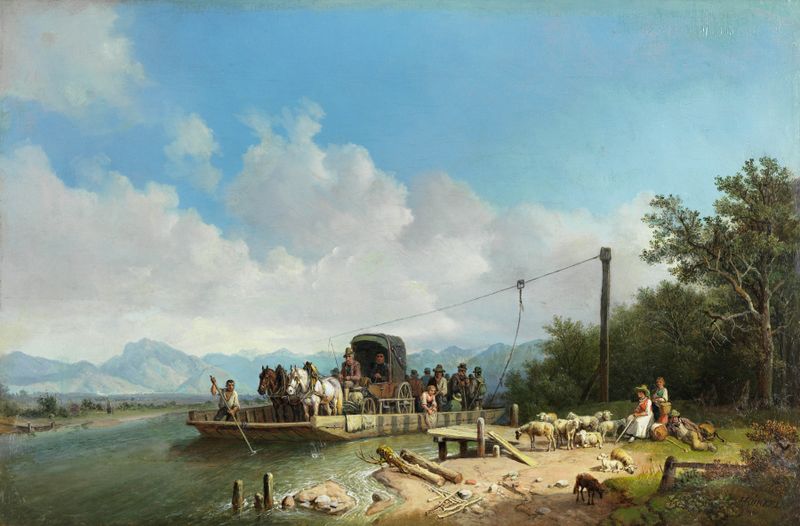
Fähre am Inn
Heinrich Bürkel

Italienische Hirtenfamilie in der Felsenhöhle
Heinrich Bürkel
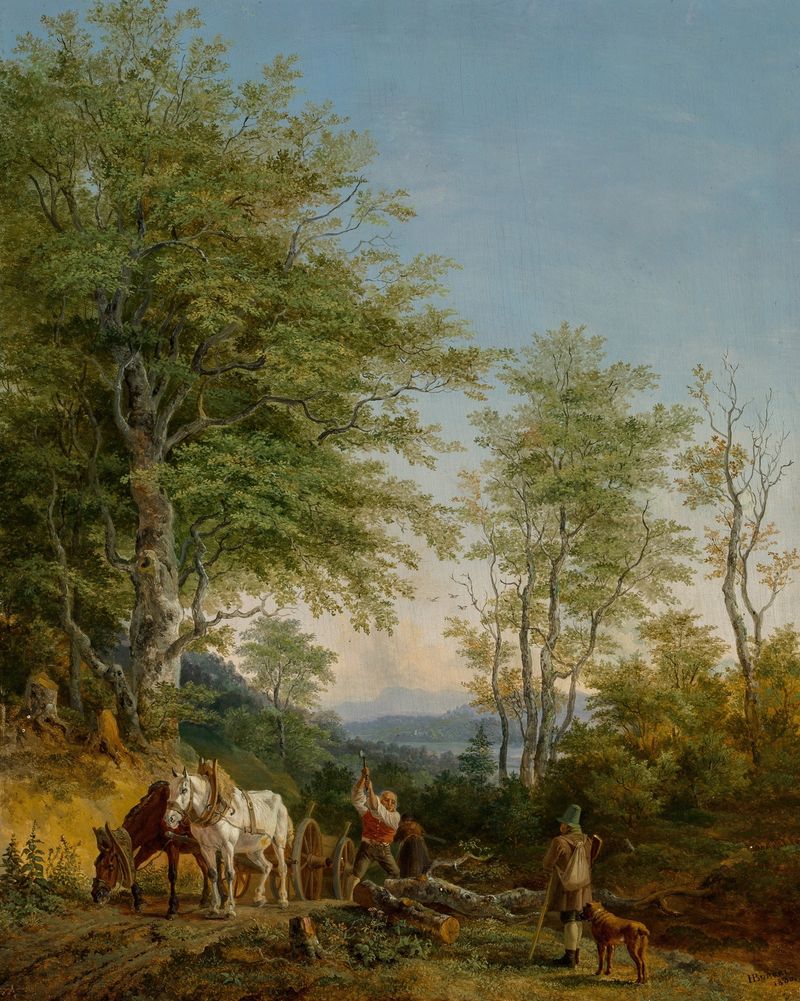
An Italianate wooded landscape with a woodcutter and his team of horses and a passerby with his dog
Heinrich Bürkel
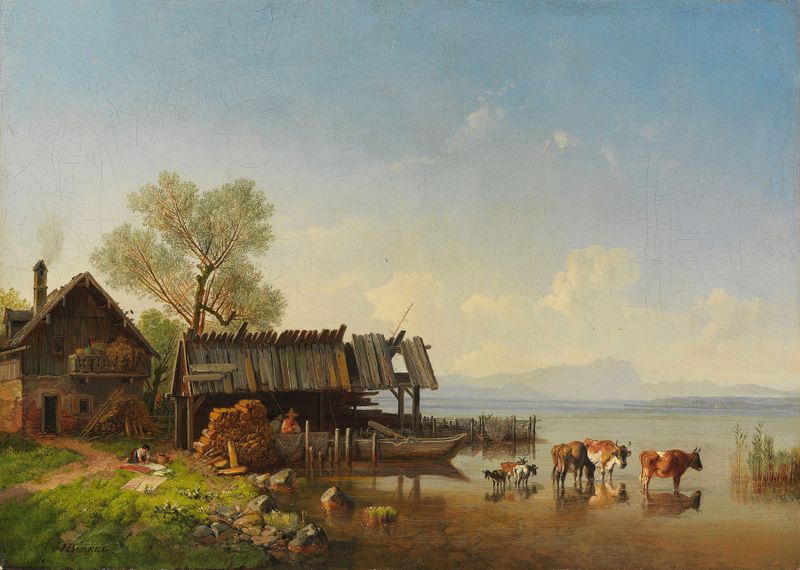
Der Starnberger See mit Blick auf das Wettersteingebirge
Heinrich Bürkel
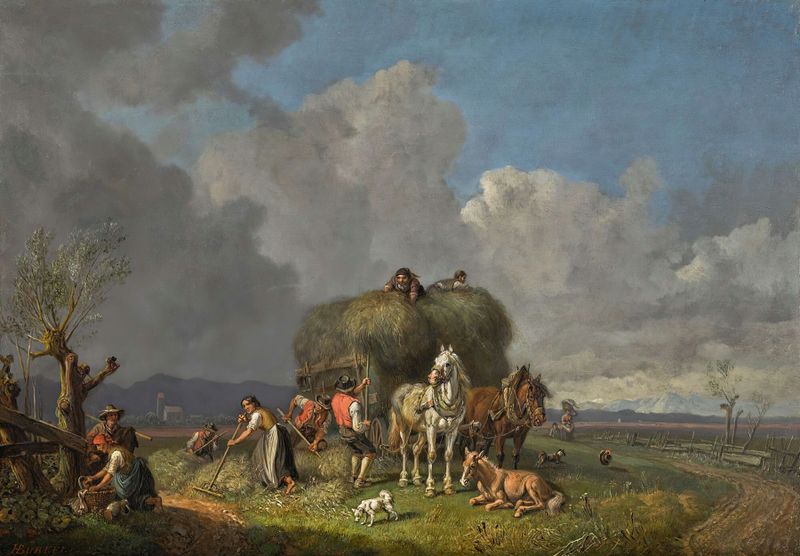
The Hay Harvest
Heinrich Bürkel
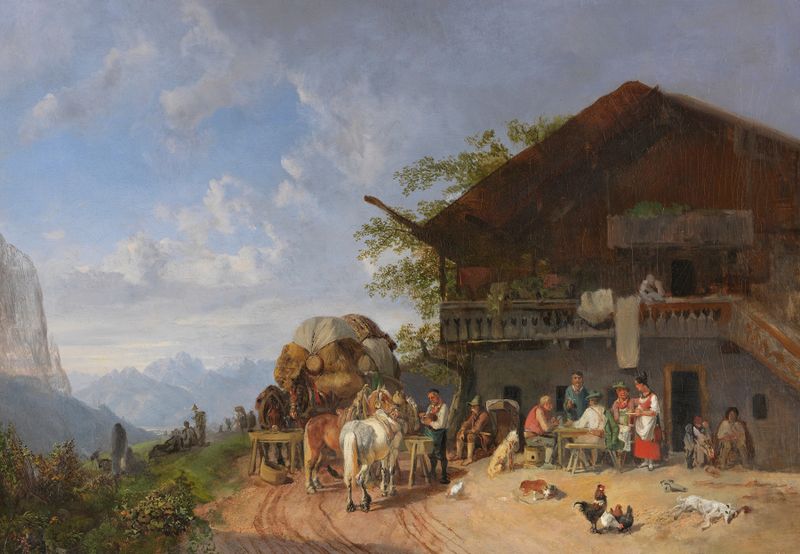
Rast vor einem Gasthof in den Bergen
Heinrich Bürkel

Blick auf den Monte Circeo
Heinrich Bürkel

Out To Pasture
Heinrich Bürkel





