
Baumbestandenes Felsenufer am Parahyba — History & Facts
In the stillness of a moment captured, illusion dances upon the surface of the artwork, inviting the viewer to peer deeper into a world where nature meets artistry with poignant authenticity. Look to the left at the bold shadows that envelope the rugged cliffs, revealing the texture of the stone as if it could crumble beneath your touch. Focus on the gentle play of light that reflects off the rippling waters of the Parahyba, its hues shifting from deep emerald to shimmering turquoise. The meticulous brushstrokes breathe life into the foliage, with each leaf rendered in vibrant greens, whispering the secrets of the tropical landscape.
Keller’s choice of a balanced composition draws the eye naturally across the canvas, creating an invitation to explore every nook of this serene scene. Yet, within this idyllic portrayal lies a tension between the tranquility of nature and the ephemeral nature of life itself. The juxtaposition of the solid, imposing cliffs against the fluidity of the water hints at the contrast between permanence and transience. The artist subtly weaves a narrative of resilience in nature, perhaps encouraging reflections on human existence amid the relentless flow of time.
Each detail, from the distant horizon to the intricate textures, serves as a reminder that beauty, though serene, is always caught in the act of fleeting. In 1860, while creating this piece, Ferdinand Keller was immersed in the Romantic movement, which sought to explore the sublime aspects of nature. Working in Germany after extensive travels in South America, he aimed to merge his experiences with the ideals of German landscape painting. At this time, the art world was witnessing a shift, with artists increasingly drawn to explore emotional depth and the interplay of light and shadow, marking a significant evolution in landscape representation.
More Artworks by Ferdinand Keller
Browse all →
Markt in Rio
Ferdinand Keller
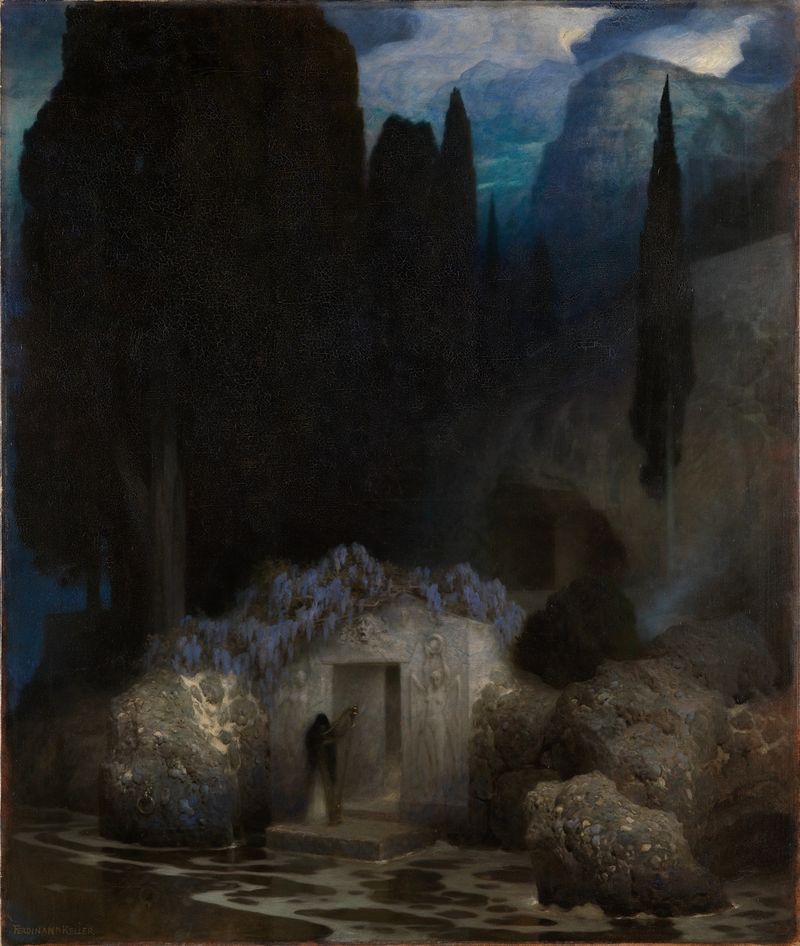
Böcklins Grab
Ferdinand Keller

Reisende in Brasilien
Ferdinand Keller
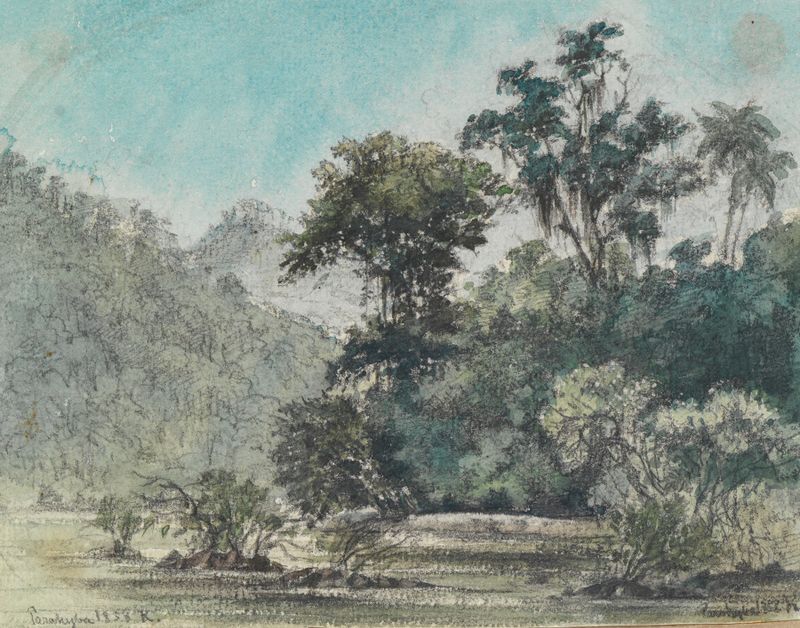
Blick auf das bewaldete Flussufer
Ferdinand Keller

Seestück- Segel und Ruderboote auf bewegtem Meer
Ferdinand Keller
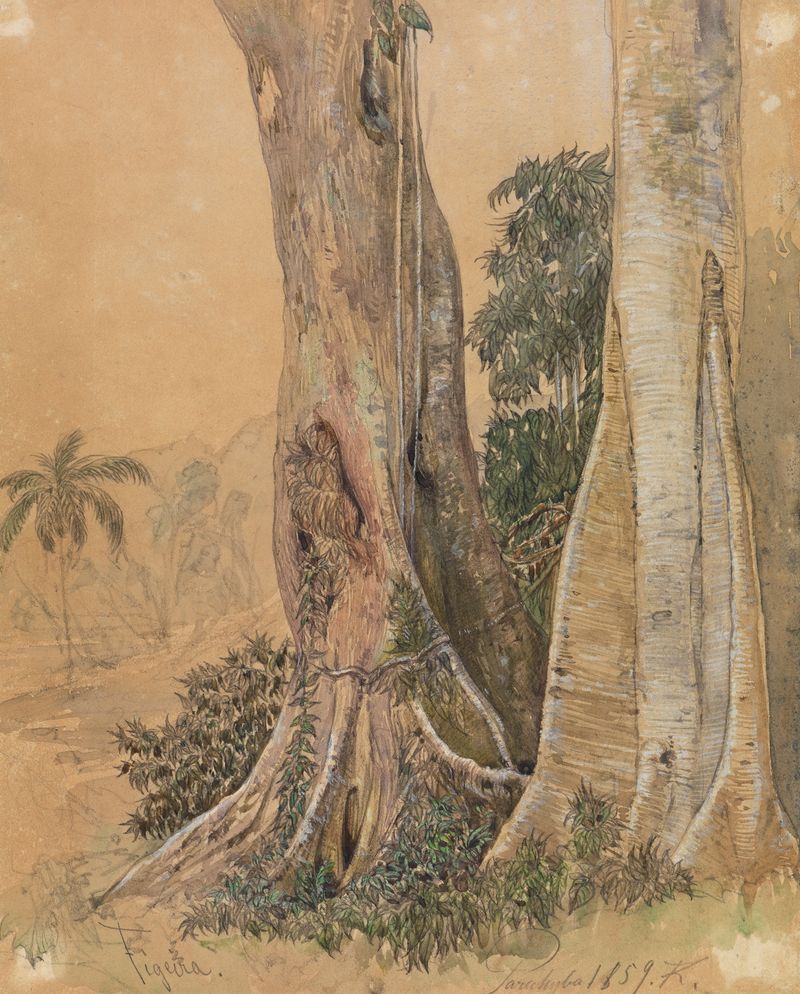
Figeira-Stämme am Ufer des Parahyba
Ferdinand Keller

Flusslauf mit aufragender Felswand
Ferdinand Keller
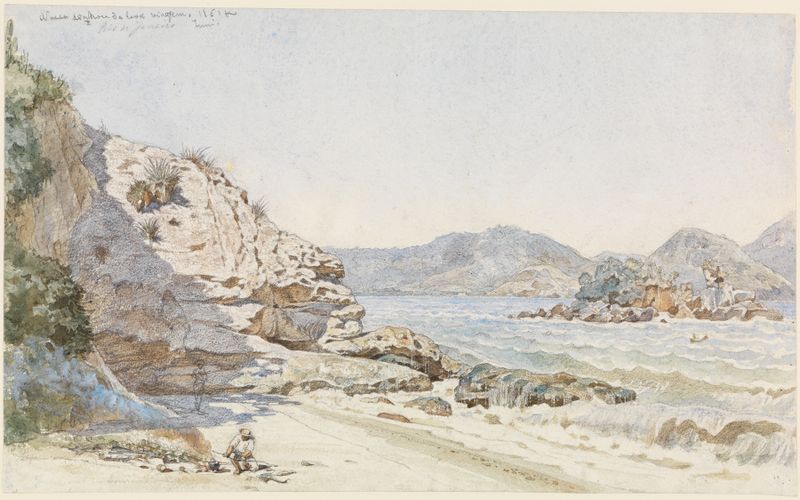
Meeresbucht bei Rio de Janeiro
Ferdinand Keller
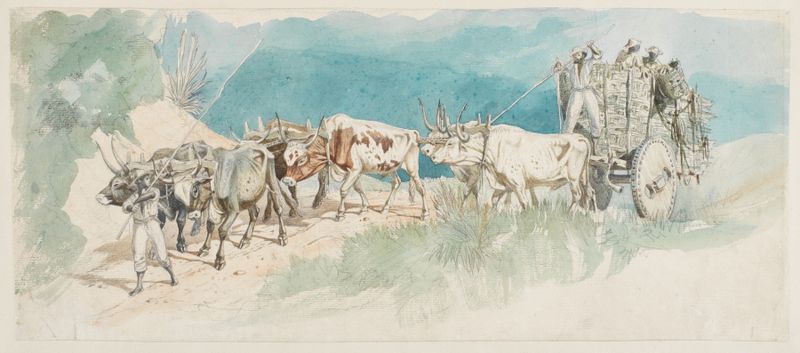
Zweiradgespann, von sechs Büffeln gezogen
Ferdinand Keller
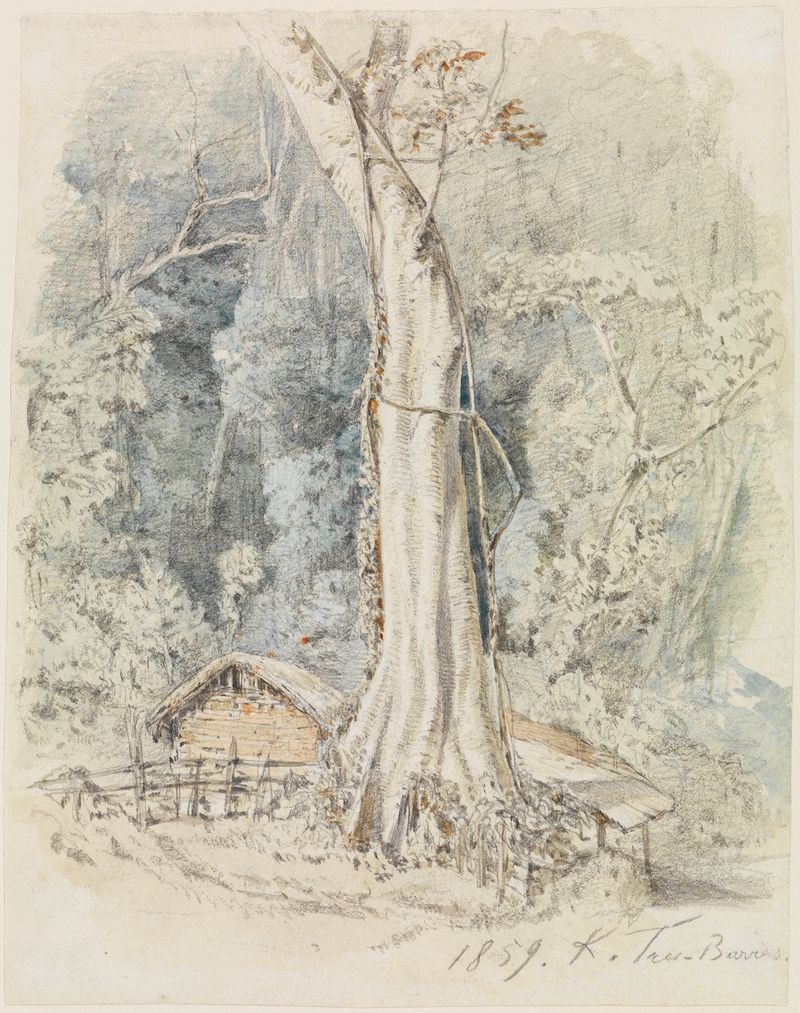
Haus mit Unterstand im Urwald bei Tres-Barras
Ferdinand Keller





