Beach Öland — History & Facts
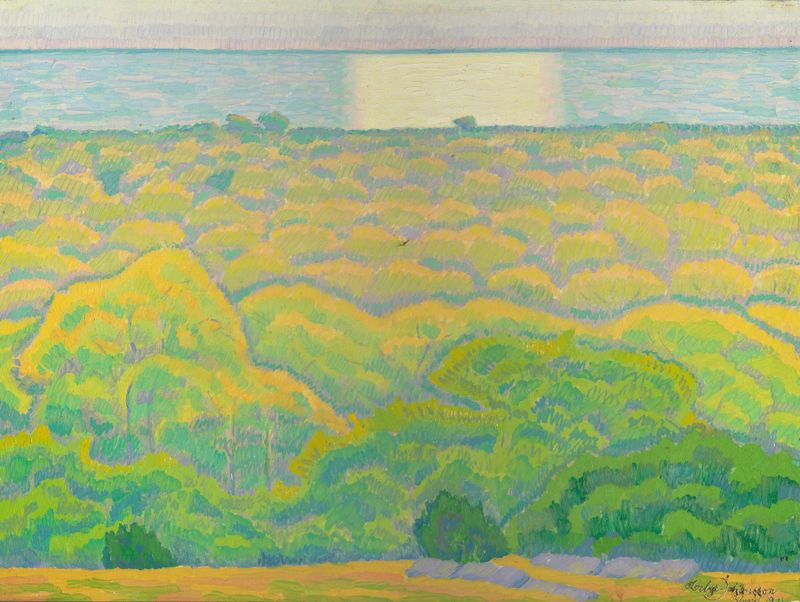
Could beauty survive in a century of chaos? In Beach Öland, Helge Johansson invites us to ponder this question, as a tranquil landscape unfurls before us, evoking a profound sense of yearning. Look to the foreground, where soft, golden sands stretch across the canvas, inviting bare feet to tread upon them. The gentle lapping of waves is almost audible, their rhythmic dance reflecting the sunlight in glimmers of cerulean and white. Notice how the horizon, painted in faded pastels, creates a delicate balance between sky and sea, drawing the eye into a world that feels both serene and elusive.
The careful brushwork captures the fleeting moment when day meets dusk, a reminder of nature's ephemeral beauty. Within this idyllic scene lies a contrast between the idyllic tranquility of the beach and the chaotic world beyond it. The distant figures, small and almost insignificant against the vastness of nature, represent humanity’s search for solace amid the relentless tide of modernity. The delicate interplay of light and shadow signifies the fragility of joy, suggesting that moments of peace are precious yet transient.
In this landscape, Johansson captures a longing for connection — to each other and to the natural world that provides refuge. Created in 1911, Beach Öland reflects a time when Johansson was immersed in the art movements of early 20th-century Sweden. This period was marked by significant shifts, both socially and artistically, as traditional forms began to give way to more modernist approaches. As Europe teetered on the brink of upheaval, Johansson sought solace in the natural beauty of Öland, a reminder that amidst impending chaos, beauty can still flourish.