St.Cloud — History & Facts
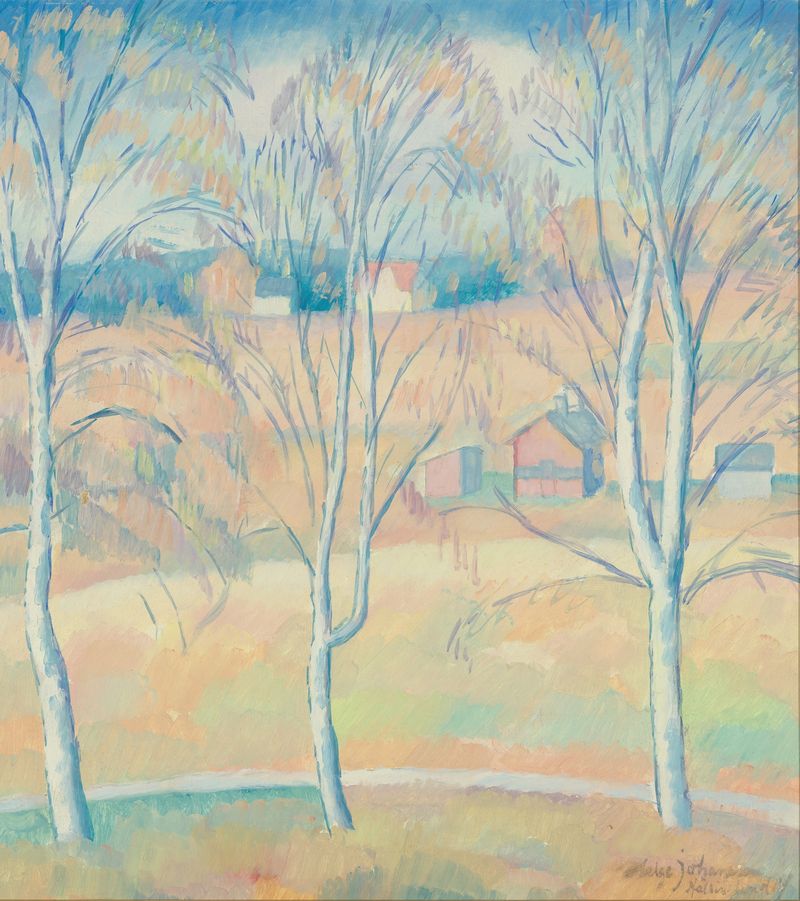
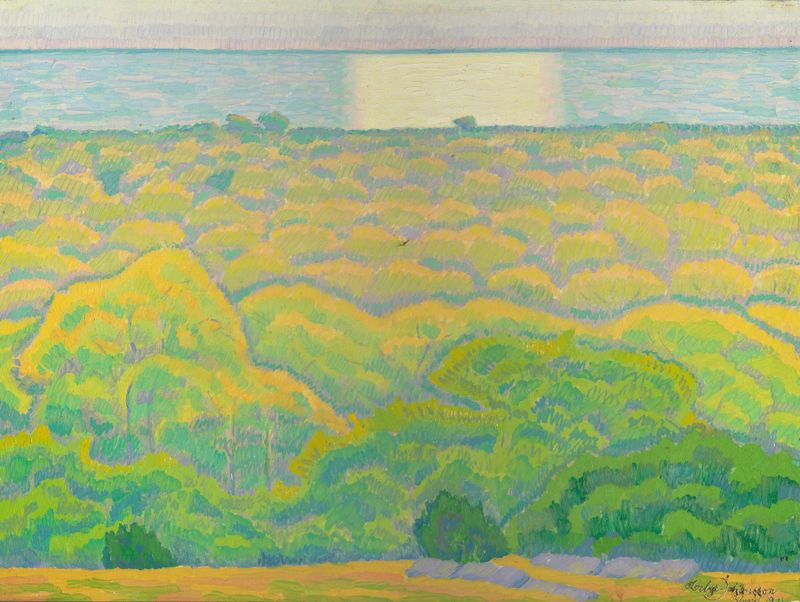
Is this a mirror — or a memory? In St.Cloud, Helge Johansson paints a poignant exploration of solitude, enveloping the viewer in a world where the boundaries between reflection and reality blur. Look to the center of the canvas, where a solitary figure stands, gazing out over a placid lake. The rippling water mirrors the muted hues of dusk, a delicate interplay of blues and grays that convey a sense of stillness and introspection. Johansson's brushstrokes are both precise and tender, inviting the eye to dance across the surface, revealing the intricate details of the figure's posture as they lean slightly forward, as if yearning for something just out of reach. The loneliness of the scene resonates deeply, amplified by the surrounding landscape.
Notice how the soft light of twilight envelops the figure, casting long shadows that stretch into the unknown. The stark contrast between the smoothness of the water and the roughness of the shoreline evokes a tension between serenity and isolation, suggesting that while the figure is physically present, they remain emotionally distant. This duality encapsulates the human experience of seeking connection yet grappling with an inherent solitude. In 1914, Johansson painted this work during a time of great social upheaval, as World War I loomed over Europe.
The artist, then living in Sweden, was part of an artistic movement that sought to reflect profound emotional truths amidst a rapidly changing world. St.Cloud stands as a testament to that era, capturing the essence of human longing and the quiet struggle against the tides of loneliness.