
Becalmed off Halfway Rock — History & Facts
Can beauty exist without sorrow? In Becalmed off Halfway Rock, the answer lingers like the stillness of the water, reflecting a profound, delicate balance between tranquility and the weight of the unseen depths. Look to the left, where a lone sailboat drifts; it stands as a stark silhouette against the warm, inviting hues of the sky. The artist’s meticulous brushwork captures the gentle interplay of light and shadow, allowing the soft pastels to breathe life into the scene. Notice how the horizon blurs, almost dissolving into the water, creating a seamless connection between the earth and the heavens.
This harmonious composition draws the eye across the canvas, inviting contemplation of the ethereal expanse beyond. Yet, beneath this calm surface lies an emotional complexity. The stillness of the water speaks of waiting, of hope and uncertainty. The absence of wind suggests a moment suspended in time, where the promise of movement is curiously withheld.
The interplay of light not only illuminates the scene but also hints at the divine—each ray a gentle reminder of the interwoven fates of man and nature, beauty and despair. Created in 1860, this work reflects a pivotal time in Fitz Henry Lane's life. He was based in Gloucester, Massachusetts, a bustling hub for maritime art, where he was deeply influenced by the Romantic movement. At this time, the world was on the cusp of monumental change—industrialization loomed, shifting perceptions of nature and beauty.
Lane’s dedication to capturing the sublime in serene moments was a response to that changing tide, asserting that in stillness, one might find a glimpse of the divine.
More Artworks by Fitz Henry Lane
Browse all →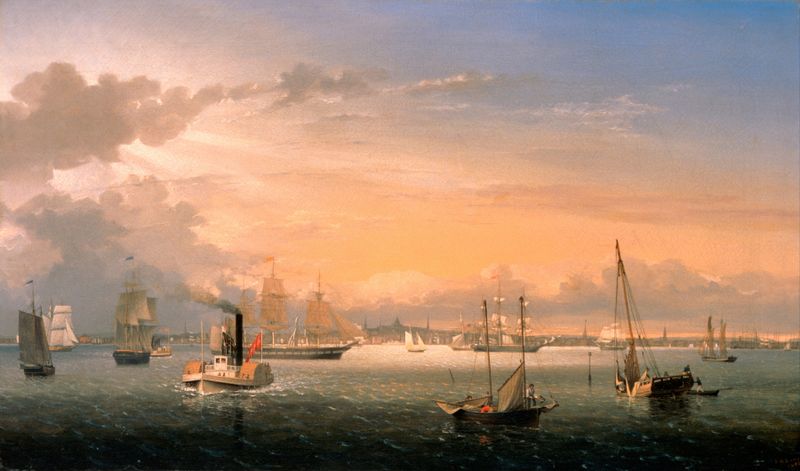
Boston Harbor
Fitz Henry Lane

Owl’s Head, Penobscot Bay, Maine
Fitz Henry Lane

Stage Fort across Gloucester Harbor
Fitz Henry Lane
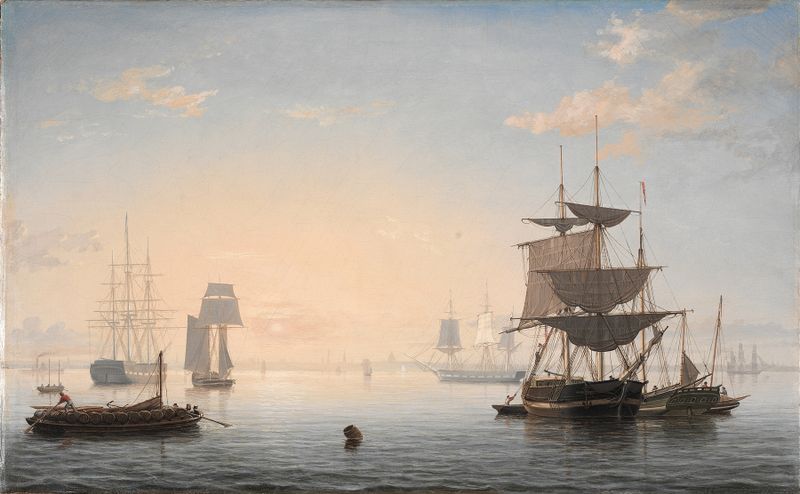
Harbor of Boston, with the City in the Distance
Fitz Henry Lane

The Ships ‘Winged Arrow’ and ‘Southern Cross’ in Boston Harbor
Fitz Henry Lane
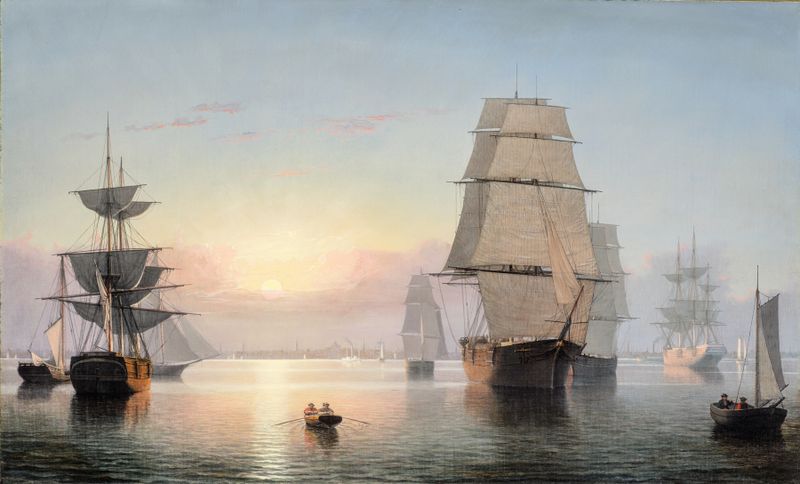
Boston Harbor, Sunset
Fitz Henry Lane

Brig Off the Maine Coast
Fitz Henry Lane
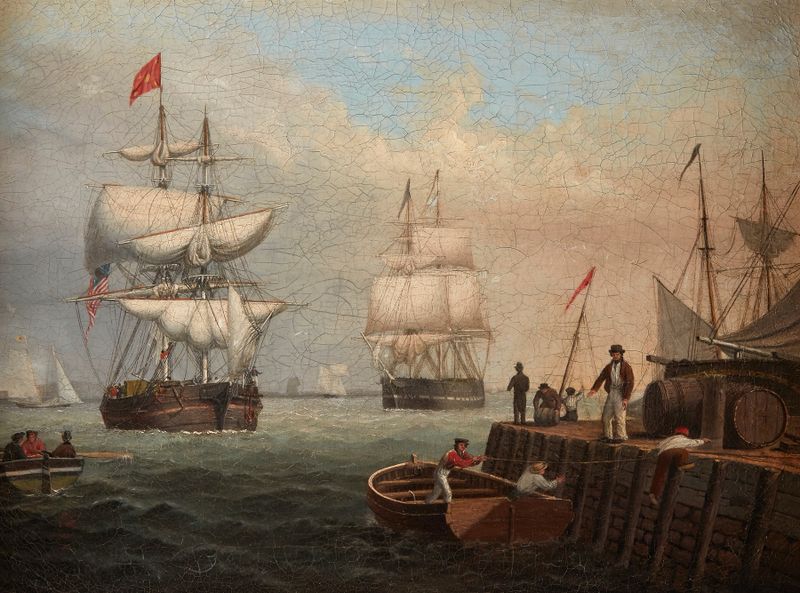
Boston Harbor
Fitz Henry Lane

Brace’s Rock, Brace’s Cove
Fitz Henry Lane

Lighthouse at Camden,Maine
Fitz Henry Lane





