
Boston Harbor — History & Facts
In a world awash with noise, the stillness of a harbor speaks volumes, whispering secrets of time and tide. Focus on the deep blues and greens of the water, the vibrant yet muted colors that evoke a sense of calm. Notice how the sunlight dances upon the waves, creating a shimmering path that draws the eye into the distance. The distant silhouettes of ships stand in stark contrast to the horizon, their forms both solid and ethereal, embodying the essence of maritime life.
Each stroke of paint captures the delicate balance between nature and human endeavor, a testament to the artist’s mastery over light and shadow. Beneath the serene surface lies a tension between the beauty of the scene and the fleeting nature of existence. The juxtaposition of the softly painted clouds with the sharp outlines of the vessels hints at the impermanence of both life and labor. This interplay invites the viewer to reflect on their own journey, contemplating the transient moments that shape our experiences.
The artwork invokes a quiet introspection, urging us to seek the deeper truths often obscured by the din of everyday life. In 1840, the artist found inspiration while immersed in the lively maritime culture of New England. This period marked a significant evolution in American art, where Romanticism began to flourish. Lane, deeply influenced by the surrounding landscapes and the industrial growth of the region, painted Boston Harbor as both a personal reflection and a broader commentary on the relationship between humanity and nature, capturing a moment in time that resonates with timeless significance.
More Artworks by Fitz Henry Lane
Browse all →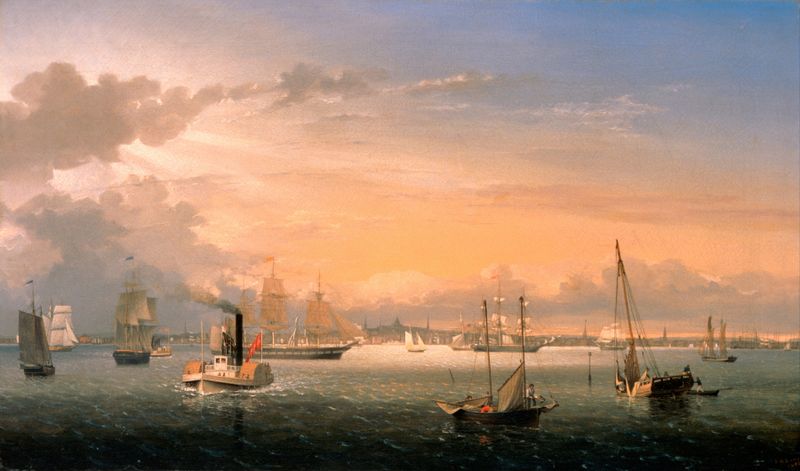
Boston Harbor
Fitz Henry Lane

Becalmed off Halfway Rock
Fitz Henry Lane

Owl’s Head, Penobscot Bay, Maine
Fitz Henry Lane

Stage Fort across Gloucester Harbor
Fitz Henry Lane
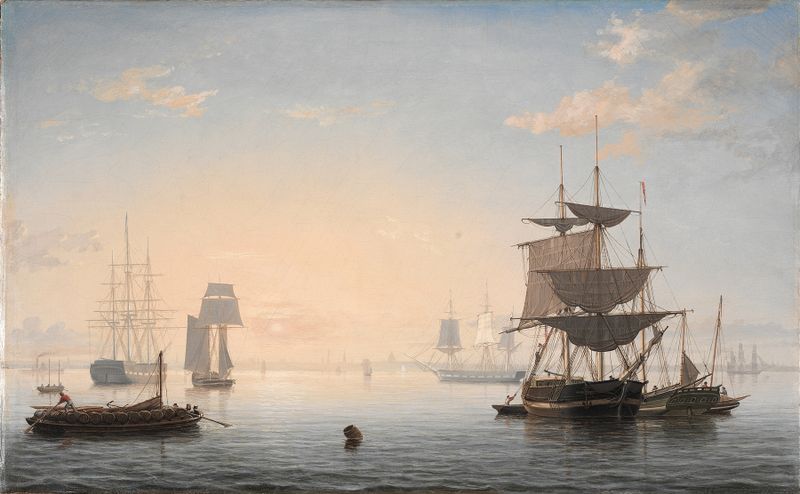
Harbor of Boston, with the City in the Distance
Fitz Henry Lane

The Ships ‘Winged Arrow’ and ‘Southern Cross’ in Boston Harbor
Fitz Henry Lane
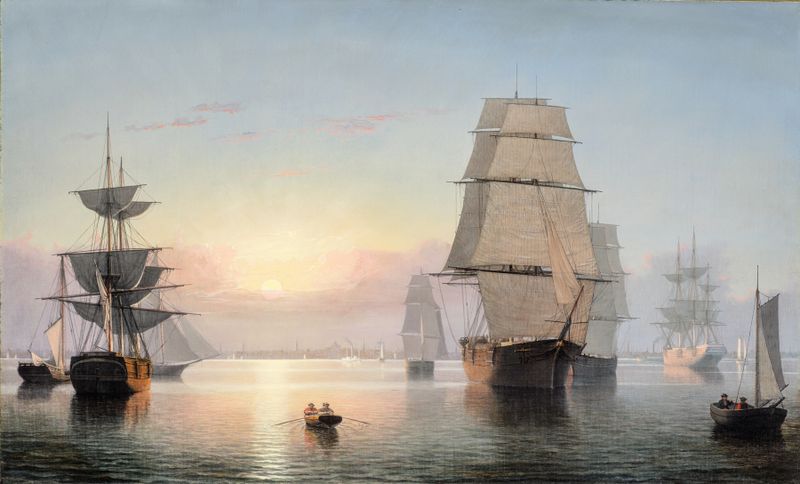
Boston Harbor, Sunset
Fitz Henry Lane

Brig Off the Maine Coast
Fitz Henry Lane

Brace’s Rock, Brace’s Cove
Fitz Henry Lane

Lighthouse at Camden,Maine
Fitz Henry Lane





