
Überlingen — History & Facts
What secret hides in the quiet of the canvas? In Überlingen, the stillness belies an undercurrent of chaos, inviting the viewer to reflect on the complexities of nature’s serene facade. Look to the left at the lush, verdant foliage, where brushstrokes dance like whispers in the wind. The vibrant greens contrast sharply with the tranquil lake, which captures the soft blues of the sky above, creating an illusion of boundless depth. Notice how the light breaks through the clouds, illuminating patches of the water's surface, while darker hues around the edges suggest an impending storm, hinting at nature’s duality.
The composition draws the eye towards the distant horizon, where land meets sky, evoking a sense of infinite possibility. Delve deeper into the interplay of vibrant colors and subdued tones; they reflect a spectrum of emotions, from serenity to tension. The calm surface of the lake juxtaposed with the encroaching storm clouds reveals a world teetering between tranquility and chaos. These contrasting elements evoke feelings of anticipation, as if the viewer is suspended in a moment just before the tempest breaks, a reminder that peace can often coexist with impending turmoil. In 1871, Hans Gude painted Überlingen during a period of notable change in the art world, as realism was gaining prominence alongside romantic ideals.
Living in Germany, Gude was heavily influenced by the natural landscapes around him, combining his love for the Norwegian scenery with the allure of German lakes. This piece emerged amid his exploration of light, atmosphere, and the tension between serenity and chaos in the natural world, reflecting his evolving mastery of landscape painting.
More Artworks by Hans Gude
Browse all →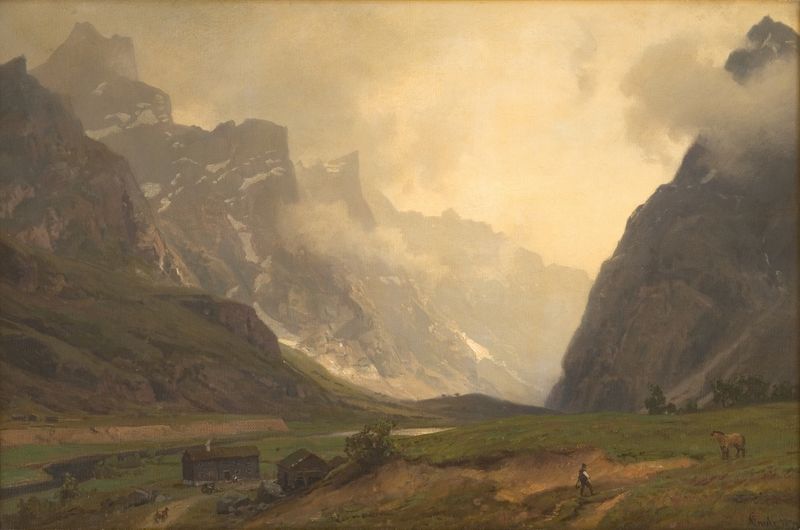
The Troll Peaks in Romsdalen, The Foot of Romsdalshorn to the Right
Hans Gude
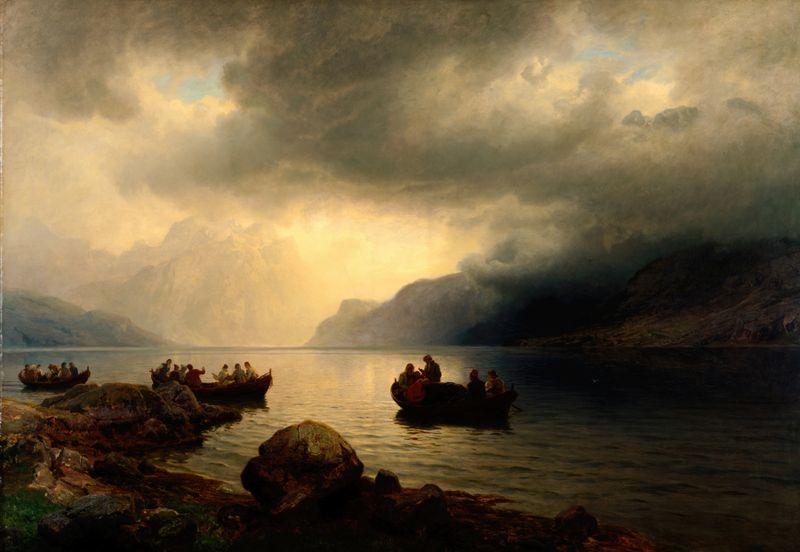
Funeral Procession on the Sogne Fjord
Hans Gude
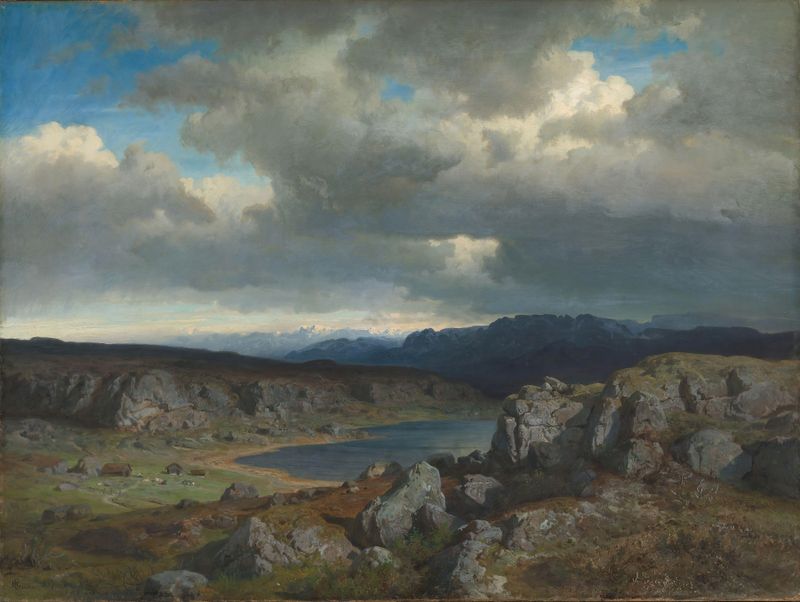
Norwegian Highlands
Hans Gude
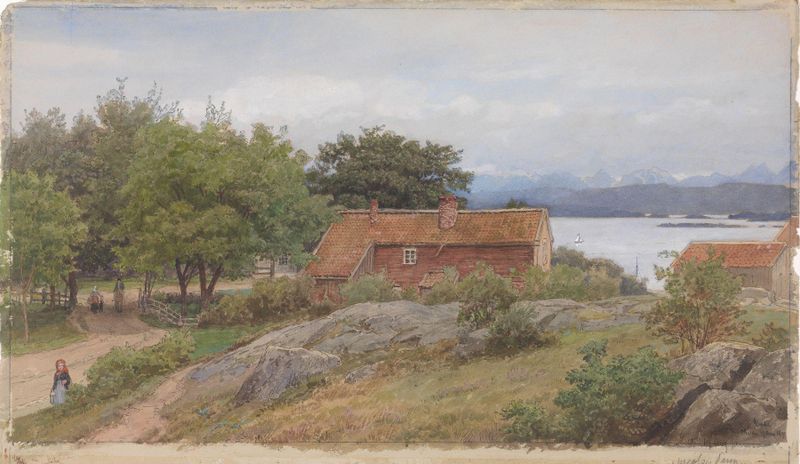
Landskap med bondegård ved Molde
Hans Gude
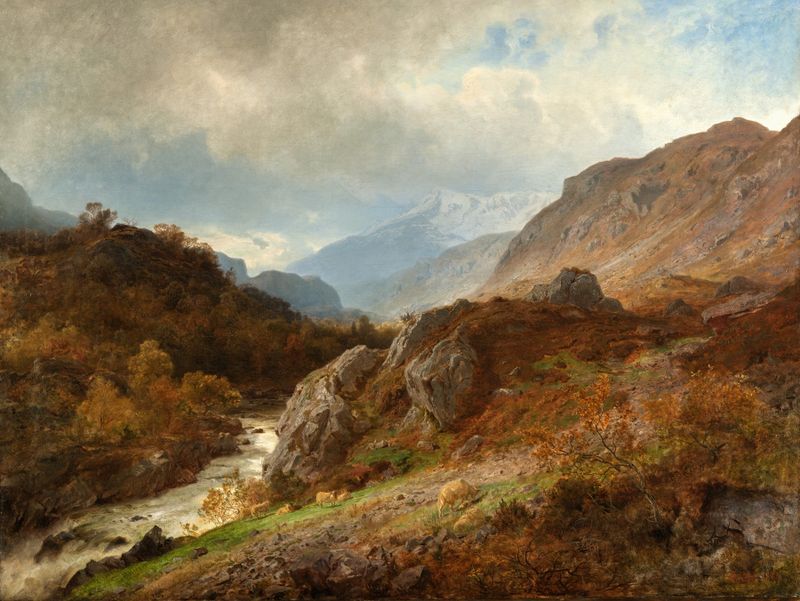
Mountain Landscape
Hans Gude
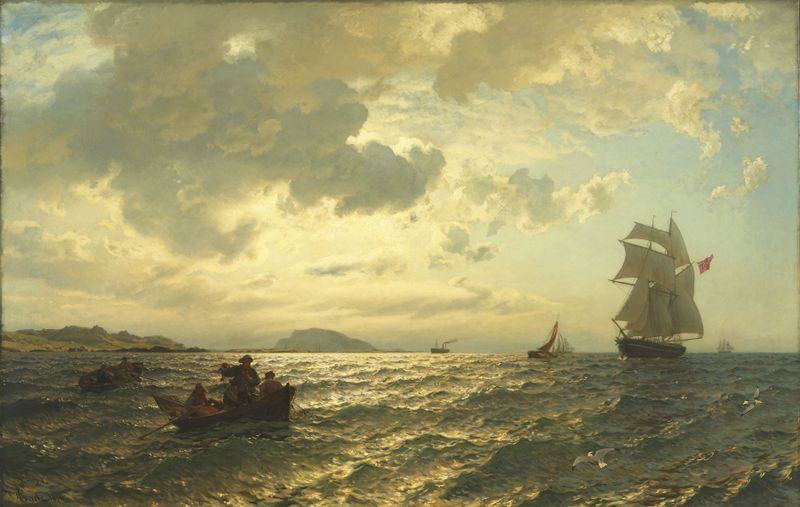
Fresh Breeze on the Norwegian Coast
Hans Gude
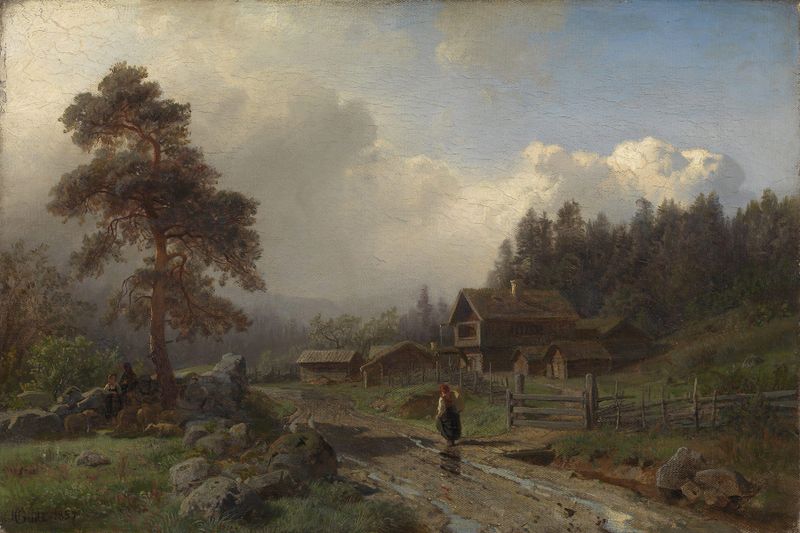
Norwegian Landscape in Rain
Hans Gude
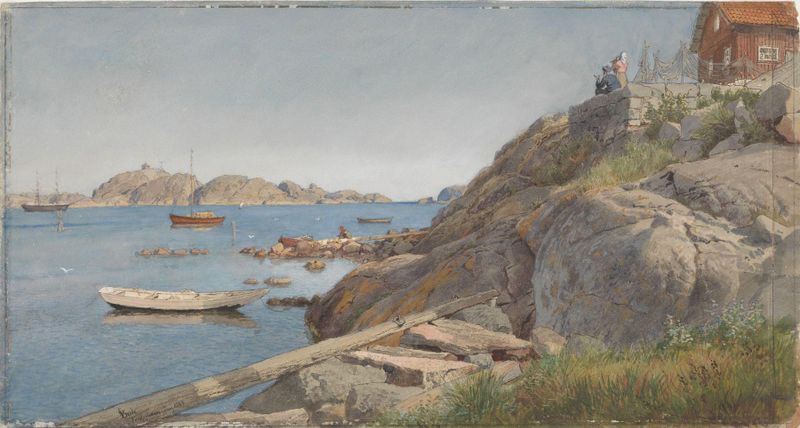
Landscape by Stavern
Hans Gude
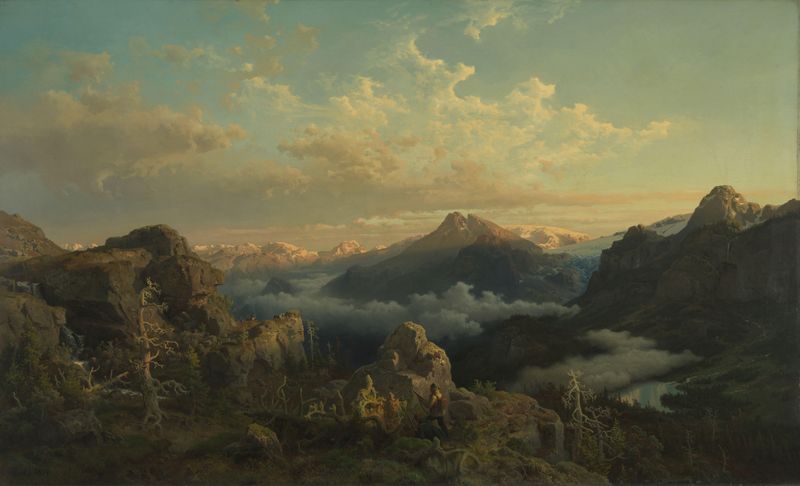
Norwegian Highlands in Sunrise
Hans Gude
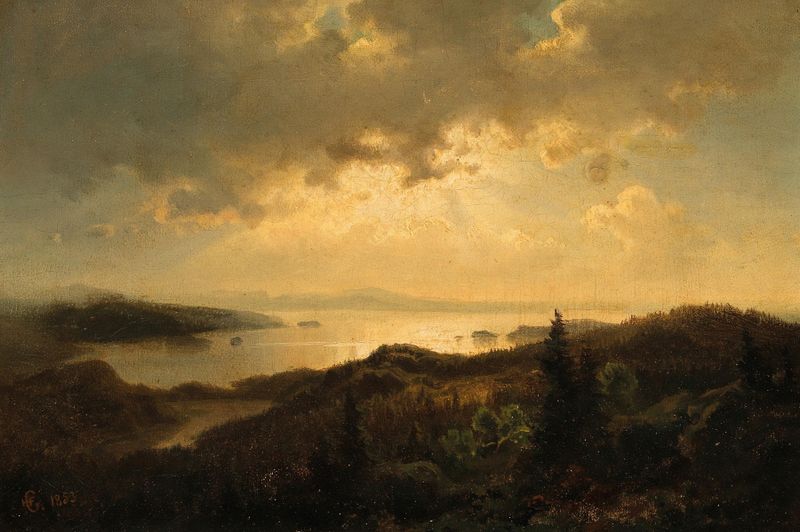
A Scene at Dusk in Norway
Hans Gude





