Bevroren stadsgracht met schaatsers — History & Facts
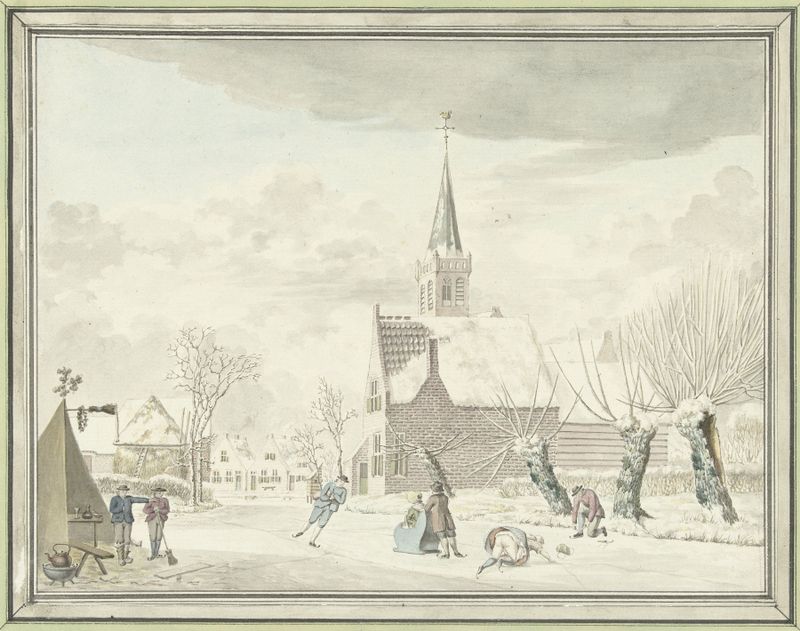
Could beauty survive in a century of chaos? Bevroren stadsgracht met schaatsers invites us to ponder this question, capturing the delicate balance between life and mortality amidst the frozen stillness of winter. Look closely at the center of the piece where skaters glide gracefully across the ice, their joyous movements contrasting starkly with the frosty landscape surrounding them. The vibrant hues of their clothing stand out against the icy blues and whites, while the soft sunlight filters through, casting gentle shadows that hint at hidden depths beneath the surface—both of the ice and of life itself. Notice how the artist employs delicate brushwork to outline the figures, creating a sense of motion that breathes life into this serene tableau. Yet, amidst the cheerful scene, a contemplative silence lingers.
The surrounding architecture speaks of time passing—its sturdy, weathered structures juxtaposed with the ephemeral joy of the skaters, suggesting that happiness is fleeting. The contrasting themes of joyous activity and the chilly embrace of mortality are woven throughout the composition, prompting viewers to consider what lies beyond the surface of this picturesque scene. In 1769, Cornelis van Noorde painted this work during a period when the Netherlands was experiencing both economic growth and cultural enrichment. Emerging from a tumultuous era, he sought to capture the beauty of everyday life, reflecting the era's optimism while subtly acknowledging the fragility inherent in all existence.
His artistic vision resonated with the shifting tides of society, leaving a lasting impression that continues to provoke thought and evoke emotion.