Black Forest Landscape — History & Facts
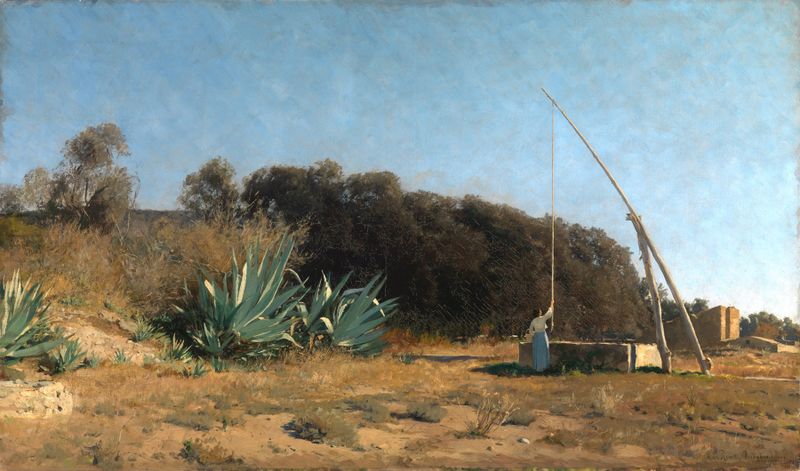
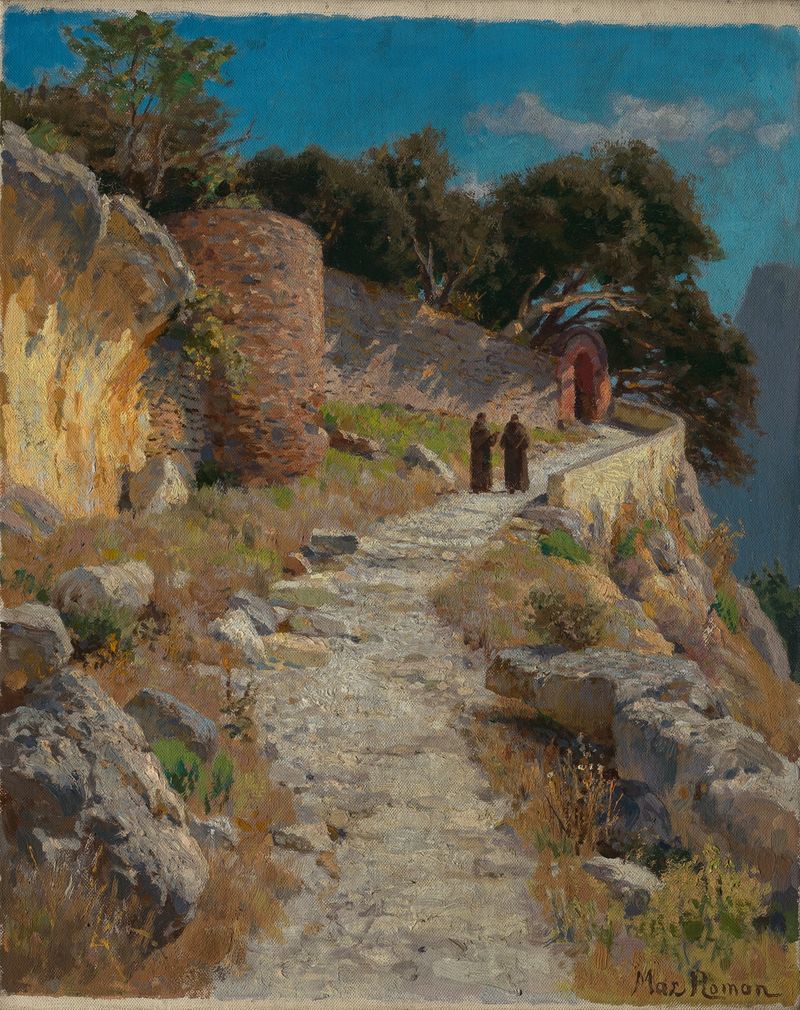
In this eternal stillness, Max Wilhelm Roman captures a fleeting moment that resonates deep within the soul, where nature becomes ecstasy incarnate. Look to the center of Black Forest Landscape, where dense, towering trees rise majestically, their verdant foliage dancing in wild abandon against the backdrop of an azure sky. The brushwork is deliberate yet fluid, allowing light to filter through the leaves, casting a gentle luminescence on the forest floor. Notice how the painter’s palette embraces rich greens and earthy browns, while hints of gold and soft blue illuminate hidden pathways, inviting you to wander deeper into the scene. The landscape speaks of contrasts; the harmony of light and shadow reflects a duality of serenity and chaos.
Each tree stands as a silent guardian, witnessing both the tranquility and the vibrant life that thrums beneath its bark. There’s a sense of ecstasy, captured in the vibrant greens which pulse with energy, juxtaposed against the calm, cool shadows, suggesting a world alive with secrets yet to be unveiled. In 1899, Roman created this work as he delved into the beauty of the German countryside, reflecting the late Romantic ideals that characterized his era. Amidst a growing fascination with nature, the artist sought to portray the emotional resonance of landscapes, diverging from urban themes that dominated the art world.
It was a time when artists began to explore emotional depth through natural scenes, paving the way for modern interpretations of landscape painting.