Landschaft bei Olevano — History & Facts
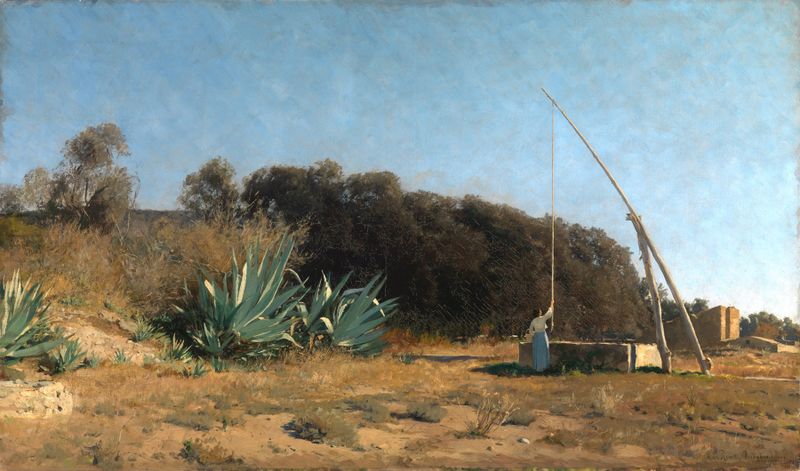
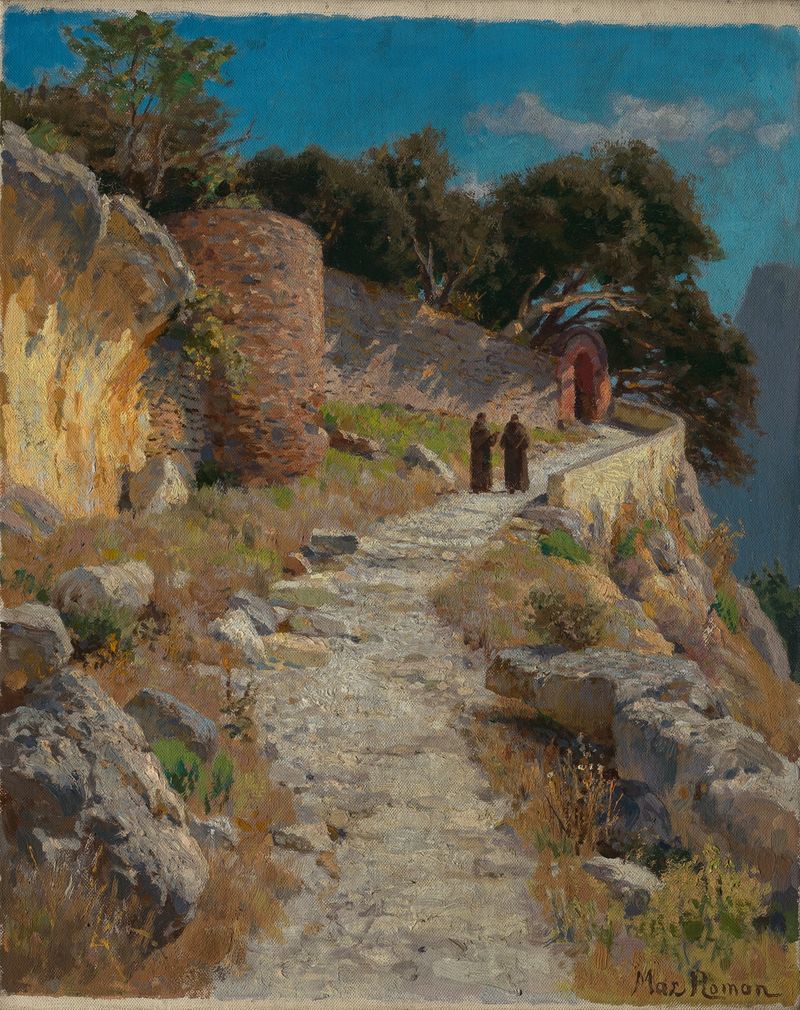
Where does light end, and longing begin? In the delicate interplay of nature’s breath and the human spirit, we find a whisper of fragility. Look to the horizon, where soft, undulating hills cradle the sky in a gentle embrace. The colors meld artfully: emerald greens and warm ochres dance beneath a cerulean expanse, inviting the viewer’s gaze to wander. Notice how the sun filters through the clouds, casting a golden hue over the landscape that seems to pulse with life.
Each brushstroke breathes tenderness, while the lightly textured surface mirrors the ephemeral nature of the scene. As you delve deeper, observe the subtle contrasts between light and shadow that reveal an underlying tension. The foreground, alive with blossoming wildflowers, embodies a sense of fleeting beauty, a reminder of life's transient moments. In the distance, the silhouetted mountains stand resolute and eternal, juxtaposing fragility with permanence.
This duality evokes a poignant sense of longing, as if the artist captures not just a place, but a fleeting emotion, the bittersweet essence of existence. Max Wilhelm Roman painted Landschaft bei Olevano in 1872 during a transformative period in the art world, as Romanticism was giving way to Impressionism. Living in an era of exploration and burgeoning emotional expression, Roman sought to convey the intimate connection between humanity and nature. His experiences in the Italian countryside, particularly around Olevano, inspired a deep appreciation for the landscape's ethereal beauty, making this work a testament to both his artistry and the world’s enchanting fragility.