Italienische Landschaft — History & Facts
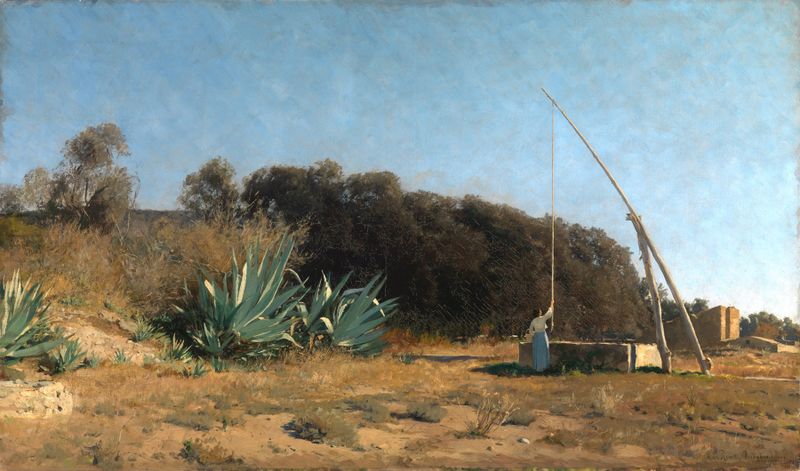
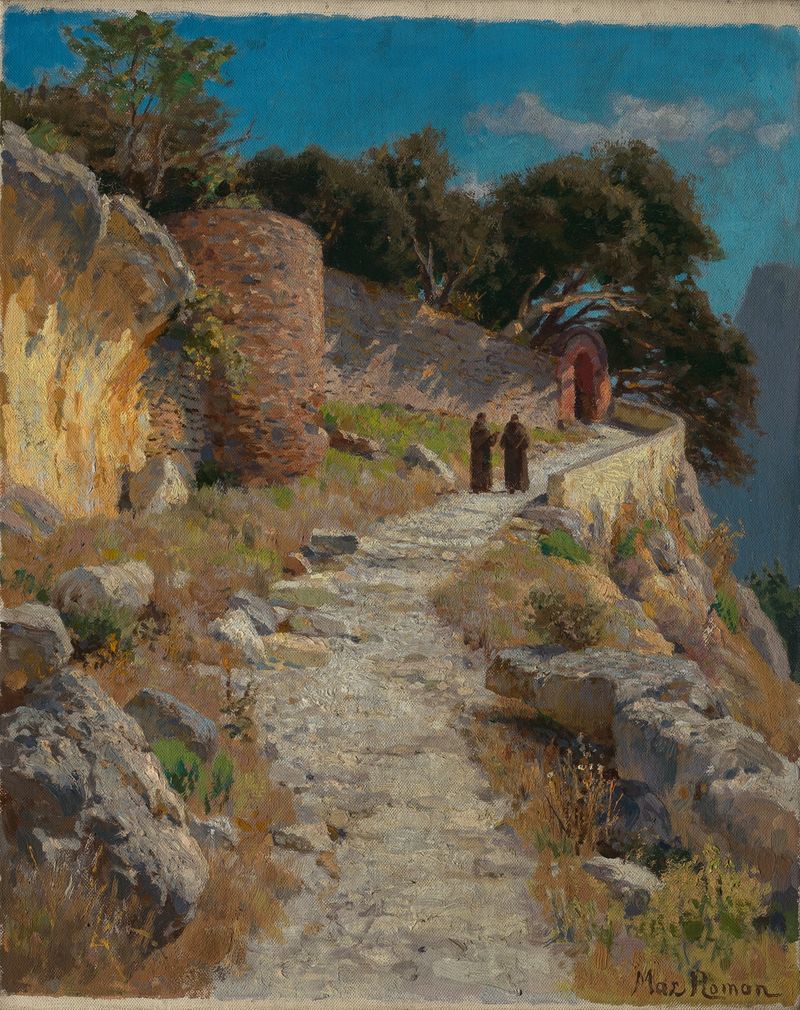
In that delicate space between despair and hope, we find the essence of creativity itself. The brush strokes, colors, and compositions breathe life into visions that speak to the heart, reminding us of the beauty that exists even amidst chaos. Focus first on the horizon, where the gentle undulation of hills meets a serene sky, swirling with soft hues of blue and gold. The landscape unfurls in a tapestry of greens and browns, representing the steadfastness of nature.
Notice the delicate balance between light and shadow, as sunlight cascades through wisps of clouds, illuminating the scene and inviting the viewer into this tranquil world. The artist's meticulous brushwork, combined with a harmonious palette, creates an inviting depth that draws your gaze deeper into the landscape. Yet, beneath this idyllic façade lies a contrast of emotions. The sweeping lines of the hills evoke a sense of continuity and endurance, while the fleeting clouds suggest the impermanence of time.
It is as if the artist captures not just a moment, but a memory of hope, invoking a longing for connection to the natural world. Each detail, from a solitary tree to the shimmering reflections on a distant lake, whispers of resilience and serenity, striking a poignant balance between stillness and the passage of time. Max Wilhelm Roman painted Italienische Landschaft during a period marked by rapid changes in the art world, embracing the transition between Romanticism and Impressionism. Working in the late 19th century, Roman was influenced by the lush Italian landscapes, which he sought to immortalize on canvas.
As the world around him evolved, he pursued an expression of hope through nature, capturing the essence of a dreamlike world infused with light and possibility.