Black Forest Landscape with House — History & Facts
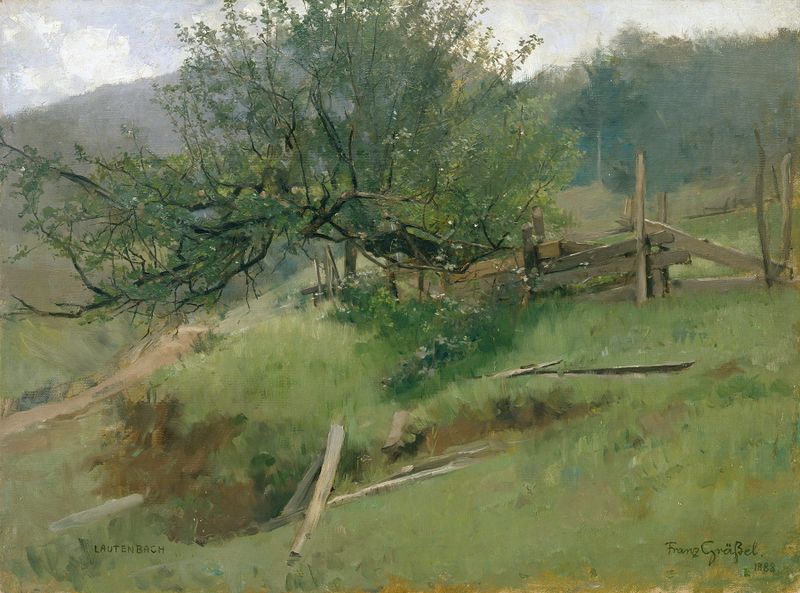
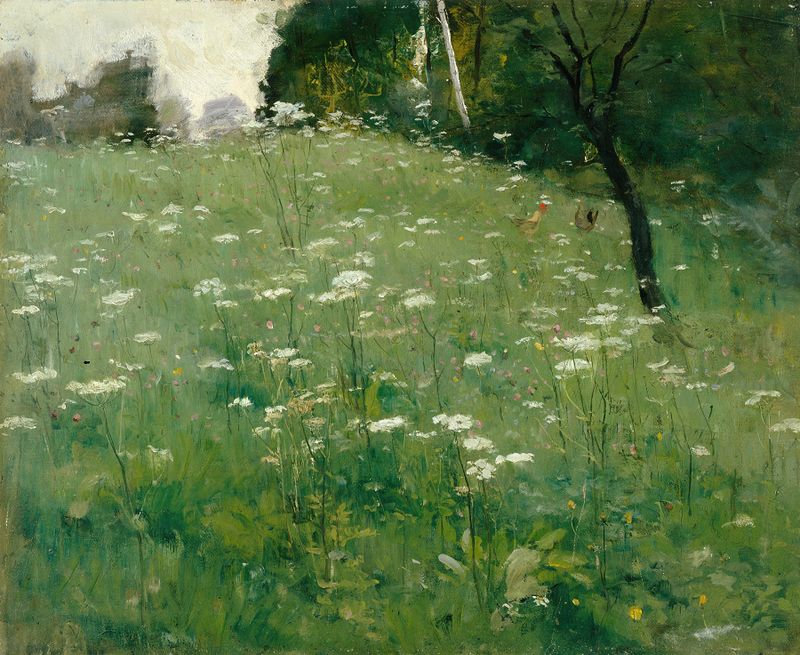
In the heart of the Black Forest, where emerald greens collide with the earthy hues of the forest floor, tranquility emerges from a wild, untamed landscape. Look to the center of the canvas, where a quaint house nestles among towering trees, its warm, inviting tones standing out against the darker palette of the surrounding forest. Notice how the dappled sunlight filters through the leaves, casting intricate patterns on the ground below. The artist’s brushwork, vigorous and expressive, imbues the scene with a sense of movement, as though the very air vibrates with life.
The juxtaposition of the soft outlines of the house against the chaotic backdrop of nature creates a harmonious balance that draws the viewer in. At first glance, the painting radiates peace, yet it also encapsulates the tension between human habitation and the overwhelming force of nature. The lush foliage suggests a chaotic splendor, while the sturdy structure of the house symbolizes resilience amidst this wild setting. Each brushstroke reveals the struggle to find harmony in a world where chaos reigns, reflecting the duality of existence—both inviting and intimidating. In 1890, Franz Xaver Gräßel painted this piece during a period when he was deeply influenced by the natural world surrounding him in Germany.
This era marked a transition in artistic expression, as the shift toward Impressionism began to permeate the art scene. Gräßel was exploring the possibilities of light and texture, aiming to capture the essence of landscapes through a lens that embraced spontaneity and emotion.