Blühende Mandelbäume, Taormina — History & Facts
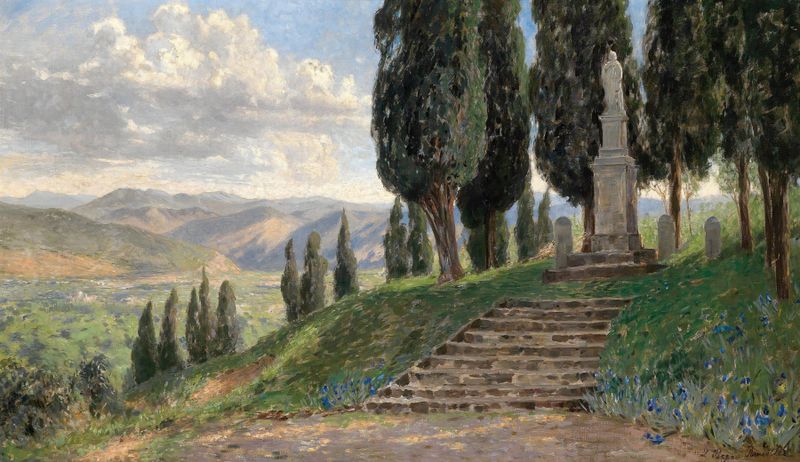
In a world where nature's vibrancy can evoke both joy and sorrow, color becomes a profound language of emotion. Look to the heart of the canvas, where blossoms burst forth in hues of soft pinks and whites, each petal a fragile whisper of spring’s arrival. Notice how the artist employs a gentle touch, allowing the shades to bleed into one another, creating a sense of warmth and tenderness. The branches, dark and twisted, cradle these blossoms, suggesting a contrast between the harshness of life and the delicate beauty of fleeting moments.
The background, a serene blend of blues, amplifies the vibrancy of the flowers, drawing the eye into an embrace of color that feels both uplifting and melancholic. Delve deeper, and you might sense an ache within the beauty. The juxtaposition of the blossoms against the gnarled branches reflects a tension between renewal and decay, a reminder of life's impermanence. Each bloom appears as a celebration and a farewell, capturing the duality of joy and longing.
The textured strokes hint at an emotional history, inviting the viewer to explore their own memories intertwined with nature, love, and loss. At the time this work was created, Begas-Parmentier was establishing herself in an artistic landscape that was beginning to embrace femininity and soft emotional expression. The exact date of this piece remains elusive, yet it resonates with the late 19th century's fascination with nature and the Impressionist movement’s emphasis on color and light. Emerging from a backdrop of societal change, she sought to articulate her inner world through the vibrant lens of floral imagery.