Blühender Obstgarten — History & Facts
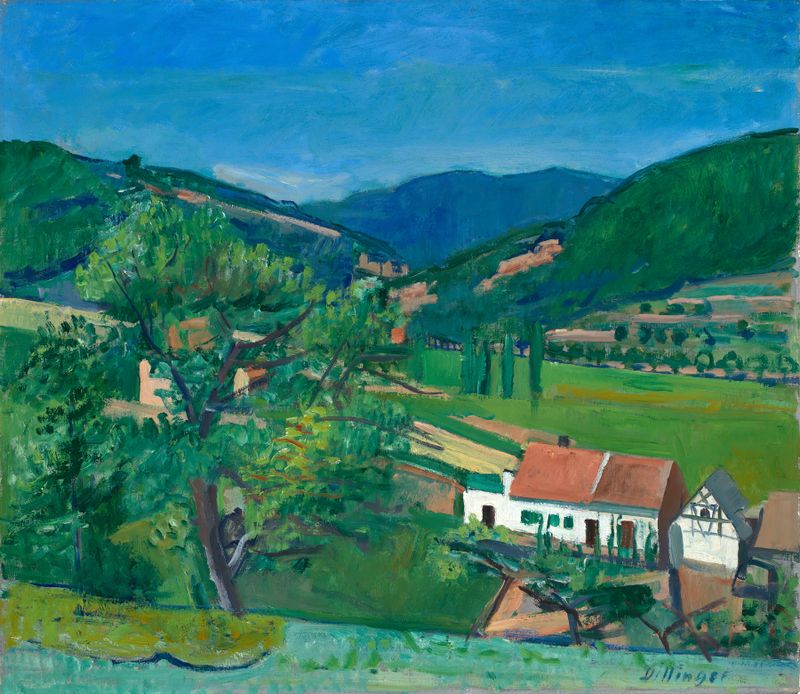
In the fragile beauty of life, the blossoms remind us of our fleeting existence, urging us to embrace the present moment. Look to the left at the tree laden with vibrant pink blossoms, their delicate petals almost vibrate with the promise of spring. Notice how they contrast against the soft greens of the foliage and the gentle earth tones of the ground below. The artist employs a harmonious palette, using light brushstrokes that evoke a sense of vitality, inviting viewers to immerse themselves in the lushness of nature.
The composition draws the eye toward the horizon, where the sun casts a golden hue over the entire scene, symbolizing the cyclical nature of life and death. In the interplay of light and shadow, there exists a profound meditation on mortality. The blossoms, while rich with life, also foreshadow their inevitable decay, creating a poignant tension. The fading light of day, juxtaposed against the vibrancy of the garden, speaks to the transient nature of beauty and existence.
Each stroke encapsulates a moment that is both alive and ephemeral, bridging the gap between creation and dissolution. Created in 1927, the piece reflects the artist's deep connection to the natural world during a time of personal introspection. Working in Germany, Dillinger was influenced by the artistic movements of the period that celebrated expression and emotional resonance. Amidst the turbulence of a changing society, he found solace and clarity in the blossoming orchard, encapsulating a timeless reminder of life's beauty and fragility.