Blick auf die Burgruine von Canossa — History & Facts
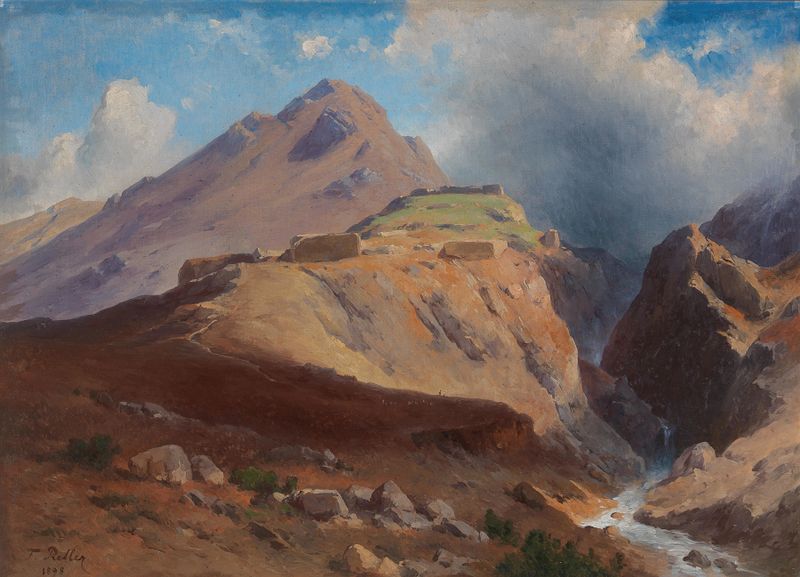
What secret hides in the quiet of the canvas? The play of light reveals not only the landscape but also the whispers of history etched into its soil. Focus first on the striking interplay of light and shadow that dances across the ancient stones of the castle ruins. The foreground, lush with greenery, draws the eye toward the crumbling architecture that stands resolute against a backdrop of soft, rolling hills. Notice how the golden hues of sunlight kiss the weathered walls, creating a vivid contrast between nature's vibrancy and the remnants of human endeavor.
Each brushstroke seems to pulse with the heartbeat of a long-forgotten time. As you explore further, ponder the contrasts woven into the scene: the fragility of the ruins juxtaposed with the enduring beauty of the landscape. The tranquil skies above, dappled with clouds, hint at a fleeting moment of serenity, yet the ruins suggest stories of conflict and resilience. This visual tension reflects not only the passage of time but also the inevitable cycle of decay and renewal that characterizes both nature and humanity. In 1872, Friedrich Preller The Younger painted this piece during a period of dramatic change in the art world, as the Romantic movement gave way to newer styles.
Working in Germany, he sought to capture the essence of his homeland’s landscapes, imbuing his work with a sense of nostalgia and awe. In this moment, the artist not only paid homage to the beauty of the past but also invited viewers to contemplate their own connection to history and the silence that often accompanies it.