Felsenlandschaft Mykene — History & Facts
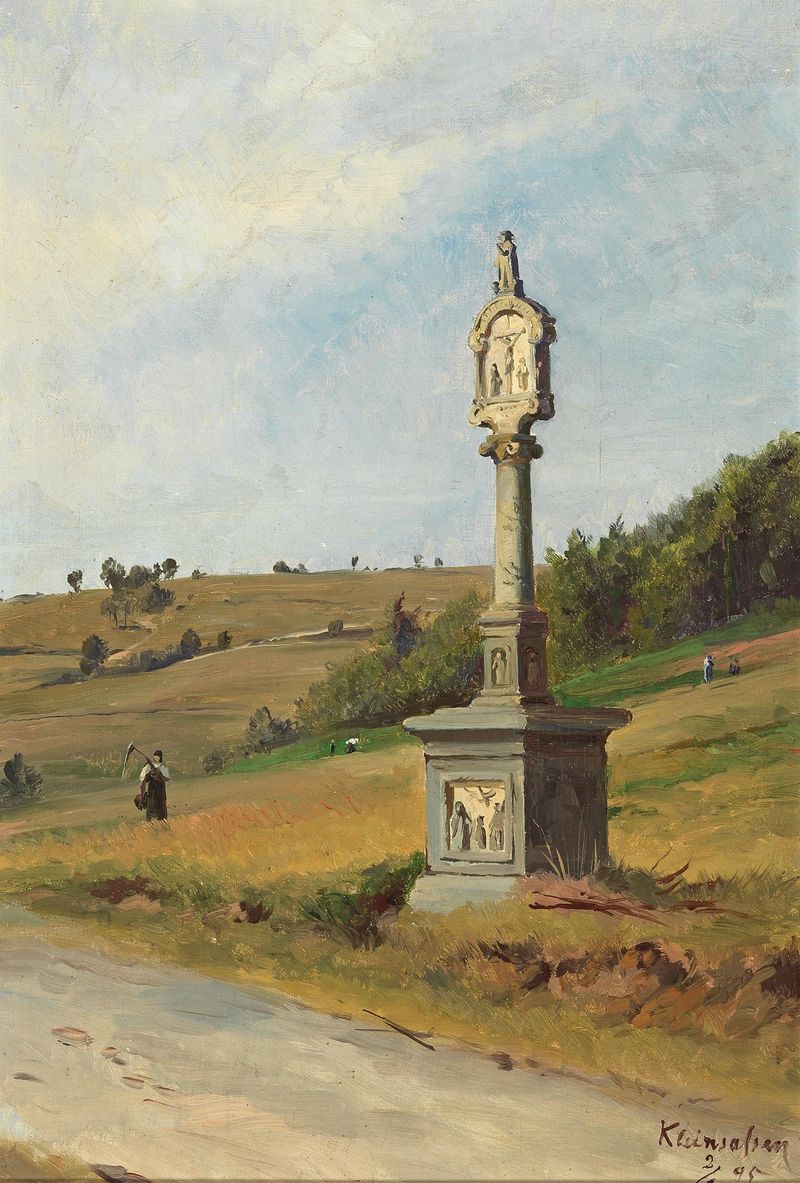
When did color learn to lie? Every hue in Friedrich Preller The Younger’s Felsenlandschaft Mykene whispers of desire, yet carries a weight of longing that feels almost palpable. The landscape beckons, a vivid reminder of nature's majesty, yet it is tinged with a melancholic yearning for something just out of reach. Look to the center of the canvas, where layers of rocky outcrops rise majestically against a soft, cerulean sky. The juxtaposition of warm ochres and deep greens creates a striking contrast, drawing the eye into a lush valley that seems alive with possibility.
Notice how the sunlight filters through the clouds, casting playful shadows that dance across the rugged terrain, highlighting the artist's masterful brushwork and attention to detail. Delve deeper into the painting's emotional essence; the buoyant colors suggest a world teeming with vibrancy, yet they also evoke a sense of isolation, as if this breathtaking landscape exists apart from human experience. The distant mountains loom like guardians, hinting at unreachable dreams, while the winding paths invite exploration yet lead nowhere definitive, resonating with the tension between aspiration and unattainable desire. In 1898, while creating Felsenlandschaft Mykene, Friedrich Preller The Younger was immersed in the artistic climate of late 19th-century Germany, where Romanticism and Impressionism intertwined. The period was marked by a fascination with nature, and Preller, influenced by his predecessors, sought to capture the spiritual essence of the landscape.
He painted in the tranquil setting of Weimar, reflecting his quest for beauty amidst the rapid changes of his time.