Bilderstock bei Kleinsassen — History & Facts
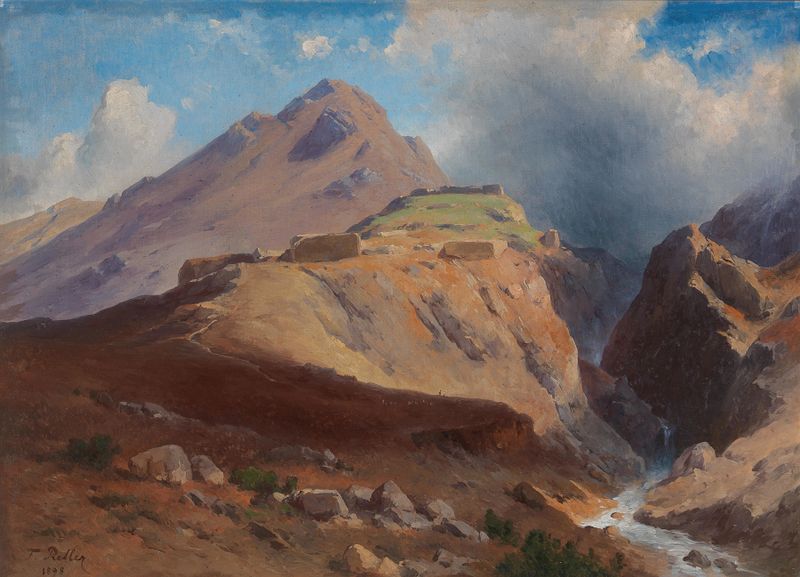
Did the painter know this moment would outlive them? The wistful yearning captured on the canvas speaks to the eternal dance between nature and memory, echoing the quiet hopes of all who gaze upon it. Look to the left at the aged stones, their weathered surfaces narrating stories of countless seasons. The lush greenery surrounds them, vibrant and alive, while dappled sunlight filters through the trees, creating a tapestry of light and shadow. Notice how the delicate brushwork brings the foliage to life, each leaf tinged with hues of deep green and warm gold, inviting the viewer to explore the hidden corners of this serene landscape. Beneath the tranquil surface lies a profound sense of nostalgia.
The juxtaposition of sturdy stones against the softness of the trees evokes a longing for permanence amidst the impermanence of life. The gentle curve of the path suggests a journey that may be both physical and emotional, guiding the viewer not just through the landscape, but also through the layers of memory and desire intertwined with nature's beauty. In 1895, Friedrich Preller The Younger was deeply rooted in the traditions of German Romanticism, painting from his studio in Weimar. This period marked a significant time in art, with a shift toward exploring emotional depth and individual experience.
The artist's work reflected a growing fascination with the sublime power of nature as a means of personal reflection, capturing the essence of wistfulness that resonates through Bilderstock bei Kleinsassen.