Golf von Nauplia — History & Facts
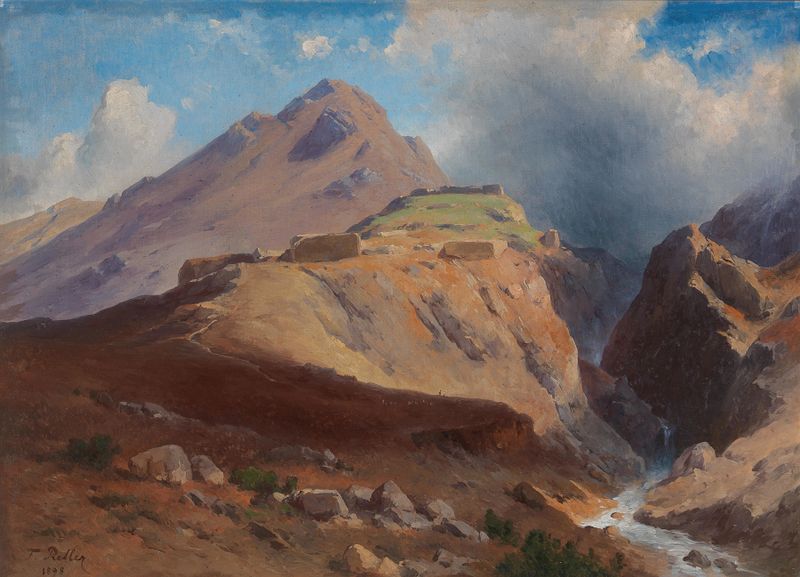
In the hands of the artist, colors coalesce, forging a serene yet powerful landscape that whispers secrets of nature’s majesty. The palette, rich and resplendent, invites contemplation while suggesting that beauty often emerges from disorder. Look to the center of the canvas where a tranquil bay glimmers under the caress of warm sunlight. The play of light dances upon the water’s surface, drawing the eye immediately to its shimmering hues of emerald and azure.
Notice how the distant mountains rise majestically, their muted tones of lavender and gray providing a harmonious backdrop, framing the vibrant foreground. Each brushstroke reflects the artist's deftness, blending colors with a delicate balance that brings the scene to life. Delve deeper, and you may find an emotional tension between serenity and tumult. The contrast of the calm waters against the rugged cliffs hints at the duality of nature—a reminder of its power and fragility.
Shadows cast by the mountains create a dynamic interplay, suggesting fleeting moments of time and memory, while the warm tones of the sky evoke a sense of hope and renewal amidst the chaos of life's uncertainties. At the time this piece was created, the artist was navigating his career in the mid-19th century, likely inspired by the Romantic ideals prevalent in European art. He was based in Germany, where movements of the era emphasized the sublime nature of landscapes. During this period, the exploration of color and light was paramount, reflecting the shifting perception of the natural world, and this work stands as a testament to those evolving artistic philosophies.