
Blick auf die Donau und Klosterneuburg — History & Facts
Can paint confess what words never could? In Blick auf die Donau und Klosterneuburg, the essence of loss resonates in silent brushstrokes, as if capturing the ache of memories slipping into the past. Look to the left at the shimmering waters of the Danube, where hues of blue and green blend seamlessly, mirroring the sky's reflections. The undulating landscape draws your eye toward the gentle slopes of Klosterneuburg, with its earthy tones counterpointing the vibrant river. Notice how the light falls upon the monastery, highlighting its ethereal presence, while the trees appear to cradle it in a protective embrace.
This delicate interplay of color and light invites contemplation, urging viewers to reflect on the passage of time. Amidst the serenity, the tension of loss lingers like a whisper. The faded edges of the monastery suggest memories that fade into distance, while the tranquil waters might symbolize uncharted emotions, hidden beneath the surface. Each brushstroke evokes a sense of longing, and the overlapping colors create a sense of depth that hints at narratives untold, encapsulating both beauty and melancholy in a single frame. Maximilian Suppantschitsch crafted this piece in 1919, during a transformative period in Europe marked by the aftermath of World War I.
Living in Vienna, he was influenced by the shifting tides of modernism as artists sought new ways to express the complexities of a changing world. In this context, the painting serves as both a personal reflection and a broader commentary on loss, capturing a moment that is as much about memory as it is about place.
More Artworks by Maximilian Suppantschitsch
Browse all →
Wien vom Bisamberg
Maximilian Suppantschitsch
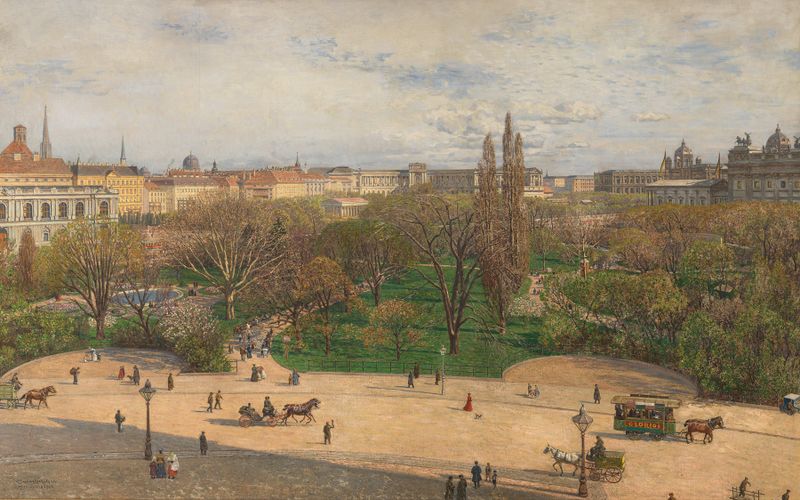
Blick vom Rathaus auf den neuen Trakt der Hofburg und dessen Umgebung
Maximilian Suppantschitsch

Franz-Josephs-Kai mit Donaukanal
Maximilian Suppantschitsch
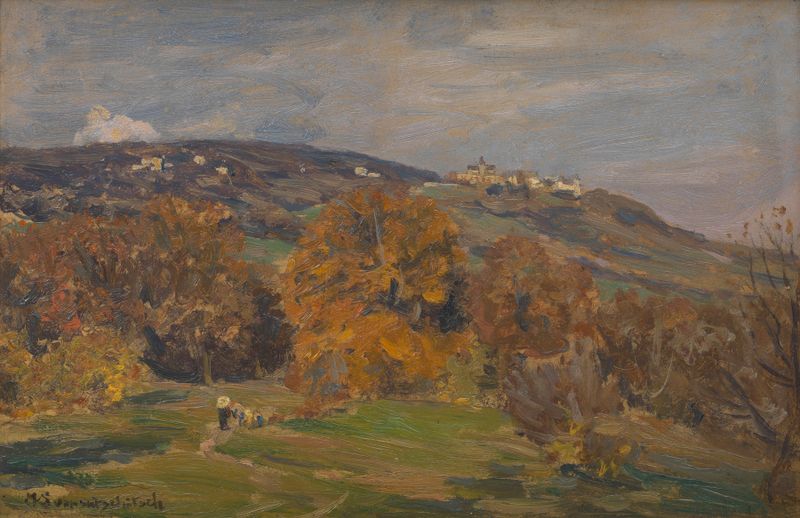
Der Kahlenberg vom Kobenzl aus
Maximilian Suppantschitsch
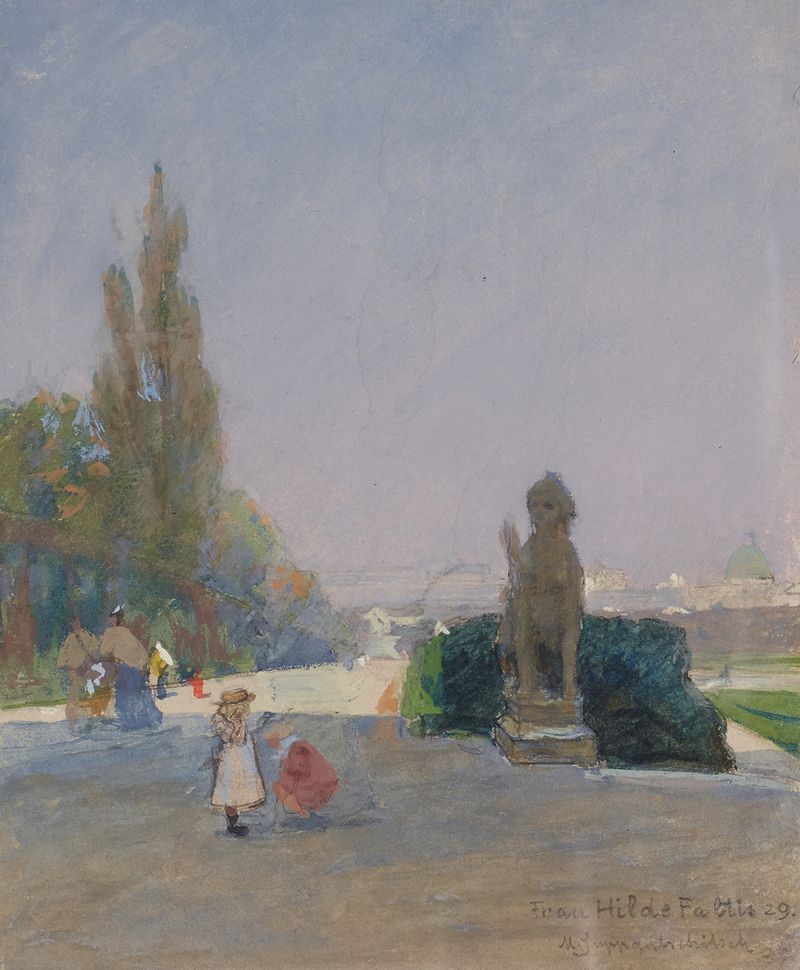
Blick vom Oberen Belvedere auf Wien
Maximilian Suppantschitsch
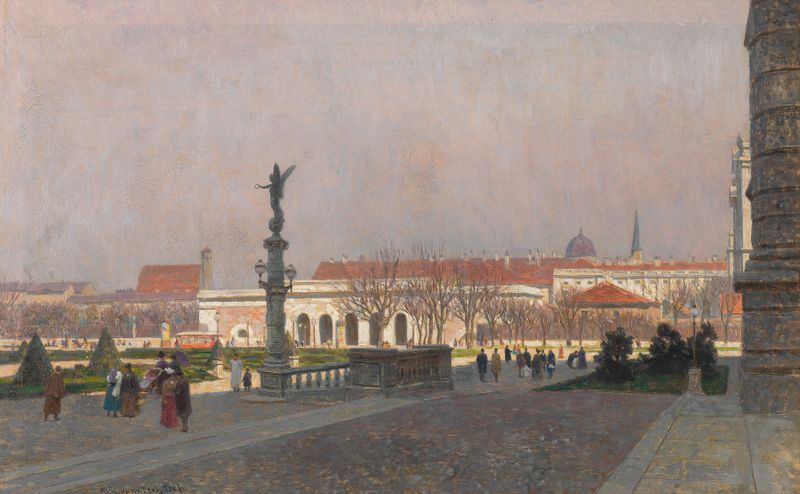
Blick auf die Hofburg vom Kunsthistorischen Museum
Maximilian Suppantschitsch
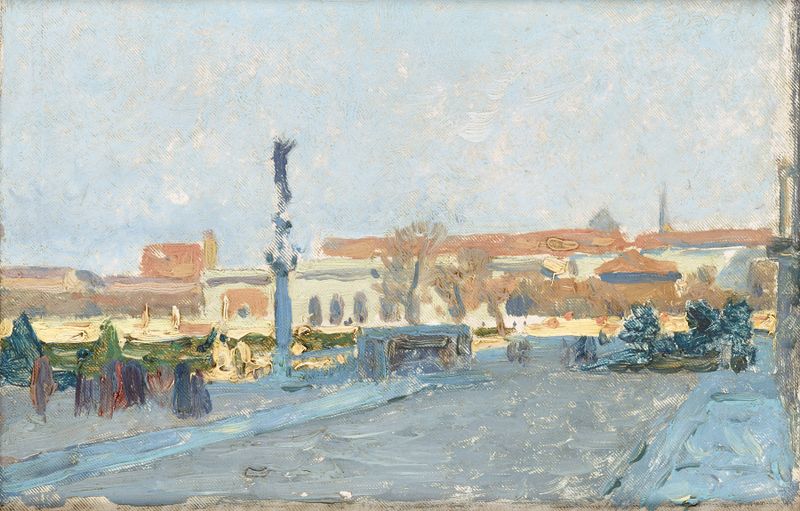
Blick auf Wien vom äußeren Burgtor
Maximilian Suppantschitsch

Blick auf den Ring gegen das Rathaus und Parlament
Maximilian Suppantschitsch
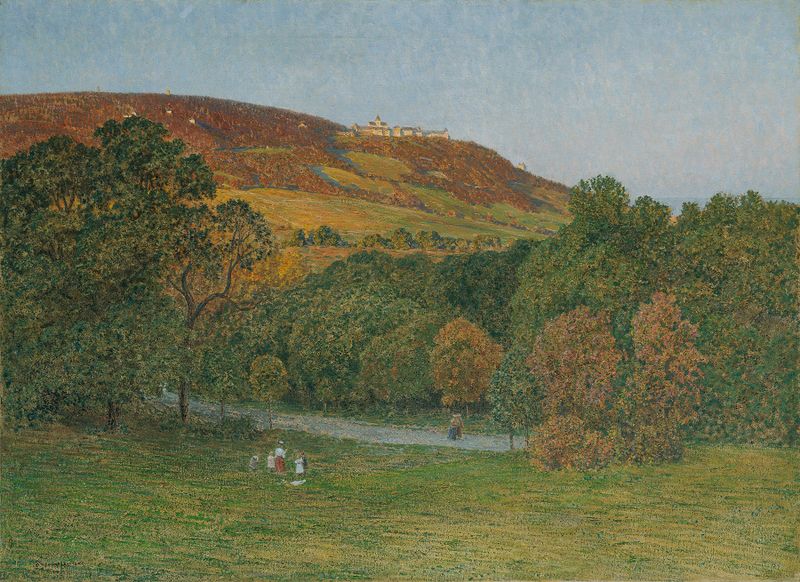
Blick vom Cobenzl auf den Kahlenberg bei Wien
Maximilian Suppantschitsch
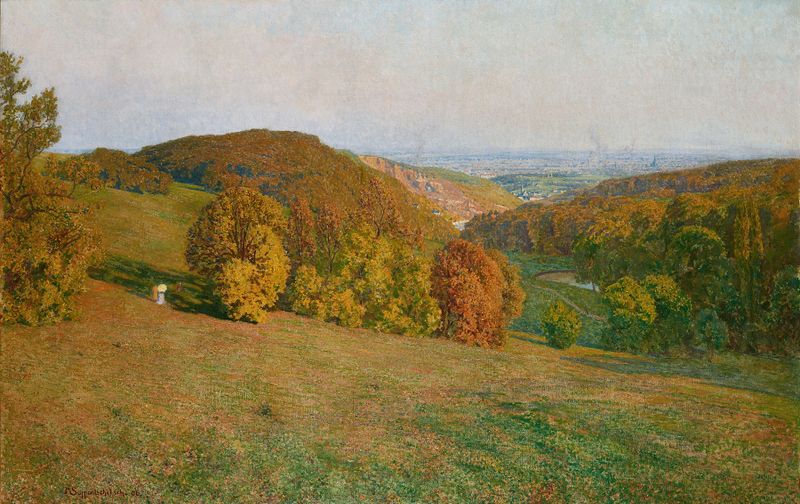
Wien vom Kobenzl aus
Maximilian Suppantschitsch





