Blick auf die Schülzburg — History & Facts
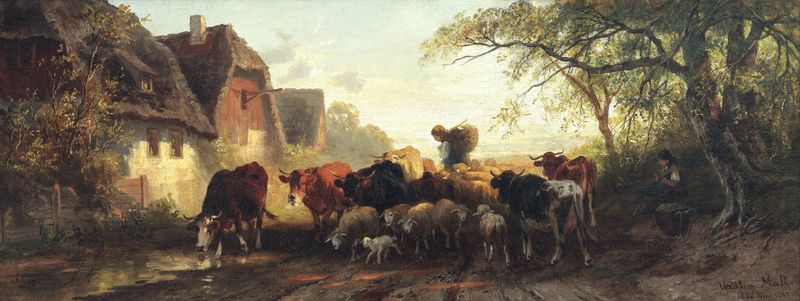
What if silence could speak through light? In Blick auf die Schülzburg, the artist captures this profound notion, revealing a moment suspended in time, where the very essence of tranquility resonates through the delicate interplay of shadow and illumination. Look to the left, where the soft glow of sunlight bathes the Schülzburg, highlighting its historic architecture. The meticulously layered brushstrokes create a sense of depth, inviting the viewer’s gaze to wander across the landscape. Notice how the cool blues and warm ochres harmonize, contrasting the solidity of the castle against the fluidity of nature.
The gentle curves of the hills and the tranquil sky serve as the painting's backdrop, enhancing the calm yet contemplative mood. Yet, beneath this serene exterior lies a complex narrative of revolution and change. The castle, a symbol of power, stands resilient against the encroaching forces of modernity—an unyielding witness to the transformations of time. The juxtaposition of light and shadow suggests a tension between the past and future, inviting reflections on the persistence of history.
The delicate blossoms in the foreground hint at hope and renewal, subtly whispering of a world poised on the brink of change. In 1859, Christian Mali painted this work while immersed in the artistic movements of his time, characterized by Romanticism's embrace of nature and sentiment. Living in Germany, he was influenced by the burgeoning nationalism and the sociopolitical shifts sweeping across Europe, as artists sought to capture the essence of their cultural identity amid moments of upheaval. This context provides a rich backdrop to the artwork, infusing it with layers of meaning that resonate even today.