
Blick aus einer Scheune — History & Facts
Can paint confess what words never could? In Blick aus einer Scheune, chaos dances at the edges of perception, where the mundane transforms into a landscape of unspoken truths. Look to the left, where the rough wooden beams of the barn frame the scene, their texture rich with age and story. The light streams in, illuminating patches of earth and casting elongated shadows that stretch across the floor. Notice how the colors blend — the muted browns of the barn, the intense greens of the outdoors, and the specks of sunlight that break through, creating a dynamic contrast that symbolizes the tension between the enclosed and the open.
Each stroke reveals a fleeting moment, one filled with both tranquility and unrest. Delve deeper into the interplay of elements: the outside world teeming with life juxtaposed against the stillness within. It is a visual metaphor for confinement and freedom, where the viewer feels the weight of the barn's walls yet is beckoned by the vibrant promise of the landscape beyond. The chaotic energy of nature contrasts sharply with the static structure of the barn, suggesting an internal struggle that resonates with the viewer’s own experience of seeking balance amidst the disorder. Between 1885 and 1890, Wilhelm Busch painted Blick aus einer Scheune during a time of growing artistic experimentation, reflecting the shifts in society and a burgeoning modernity.
As he worked in Germany, his art began to echo the complexities of life infused with humor and social commentary. This piece encapsulates his ability to capture emotional subtleties and the unspoken chaos that lies just outside the frame of daily life.
More Artworks by Wilhelm Busch
Browse all →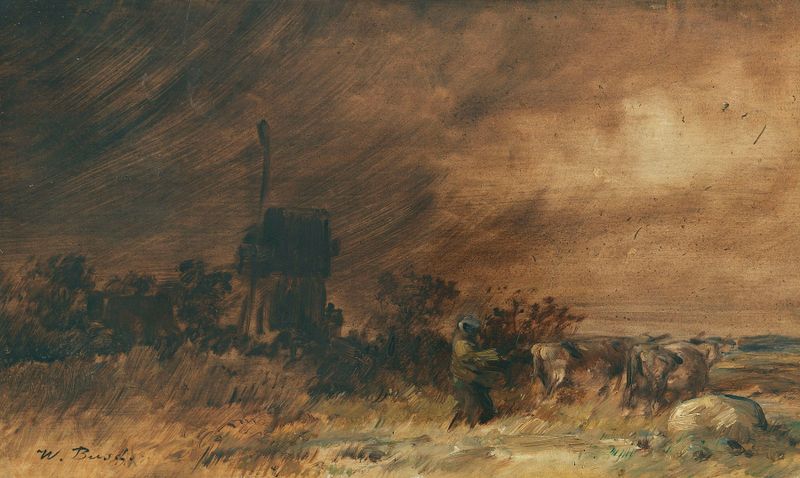
Wiedensahler Bockmühle bei aufziehendem Sturm
Wilhelm Busch

Niedersächsische Landschaft
Wilhelm Busch
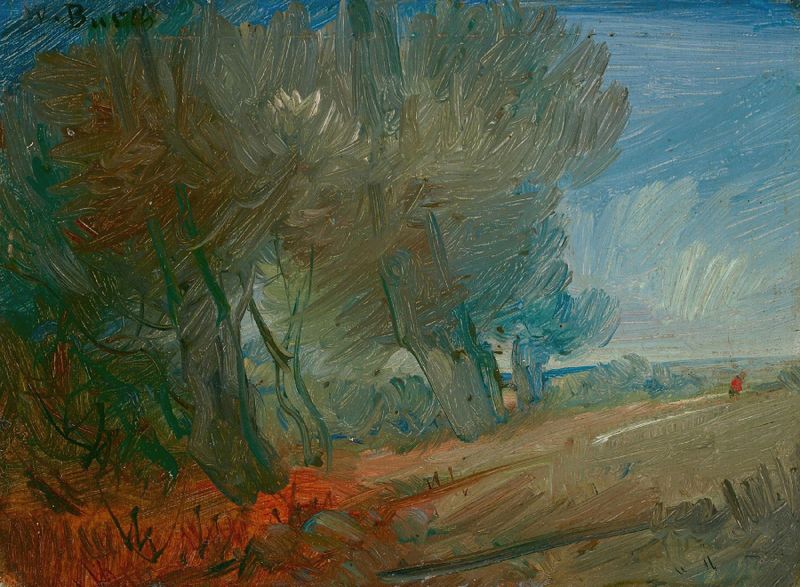
Waldrand mit Rotjacke
Wilhelm Busch

Weg zwischen Kornfeld und Sträuchern mit Katen im Hintergrund
Wilhelm Busch

Waldrand mit sonnenbeschienener Baumgruppe
Wilhelm Busch
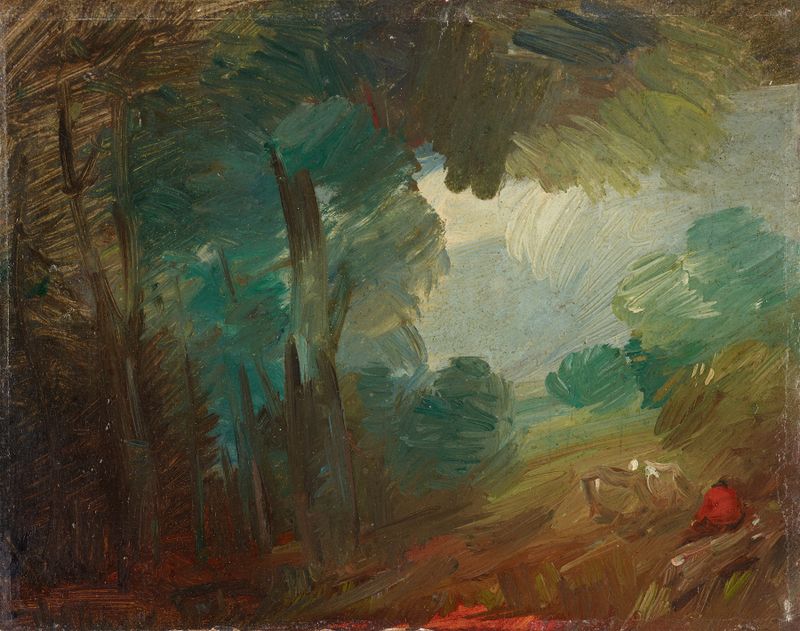
Waldlandschaft mit Kühen und Bauern
Wilhelm Busch
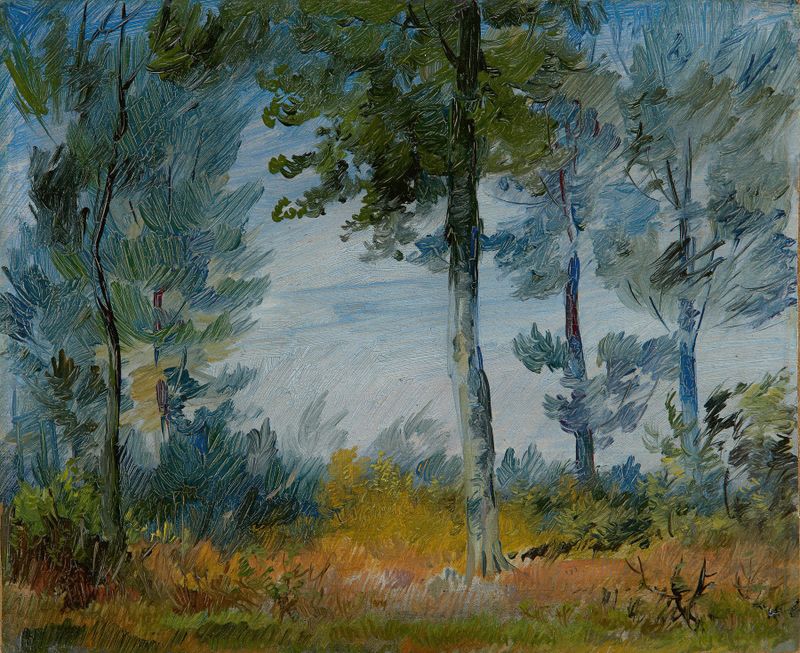
Waldrand
Wilhelm Busch





